
SEO Summary:
- Contrary to popular belief, your bones are not built simply by consuming Calcium; they are built by the actions of Vitamin K2, the nutrient responsible for directing calcium to the right places.
- K2 activates key proteins that bind calcium to the bone matrix (preventing osteoporosis) and inhibit its deposition in soft tissues and arteries (preventing dangerous arterial calcification).
- Modern Western diets are critically deficient in K2, particularly the most potent form (MK-7), because it requires deep bacterial fermentation.
- Longevity experts swear by one specific “weird” fermented food—Natto—a traditional Japanese dish that contains the highest concentration of K2 (MK-7) in the world. Click to learn how to access this vital nutrient.
The Calcium Paradox: Bone Scarcity, Artery Excess

For decades, the health message has been simple: “Consume more calcium for stronger bones.” Yet, despite unprecedented consumption of calcium-rich foods and supplements, rates of osteoporosis remain high, and arterial calcification—the hardening of the arteries—is a growing public health crisis.
This is the Calcium Paradox.
The Problem of Misplaced Calcium
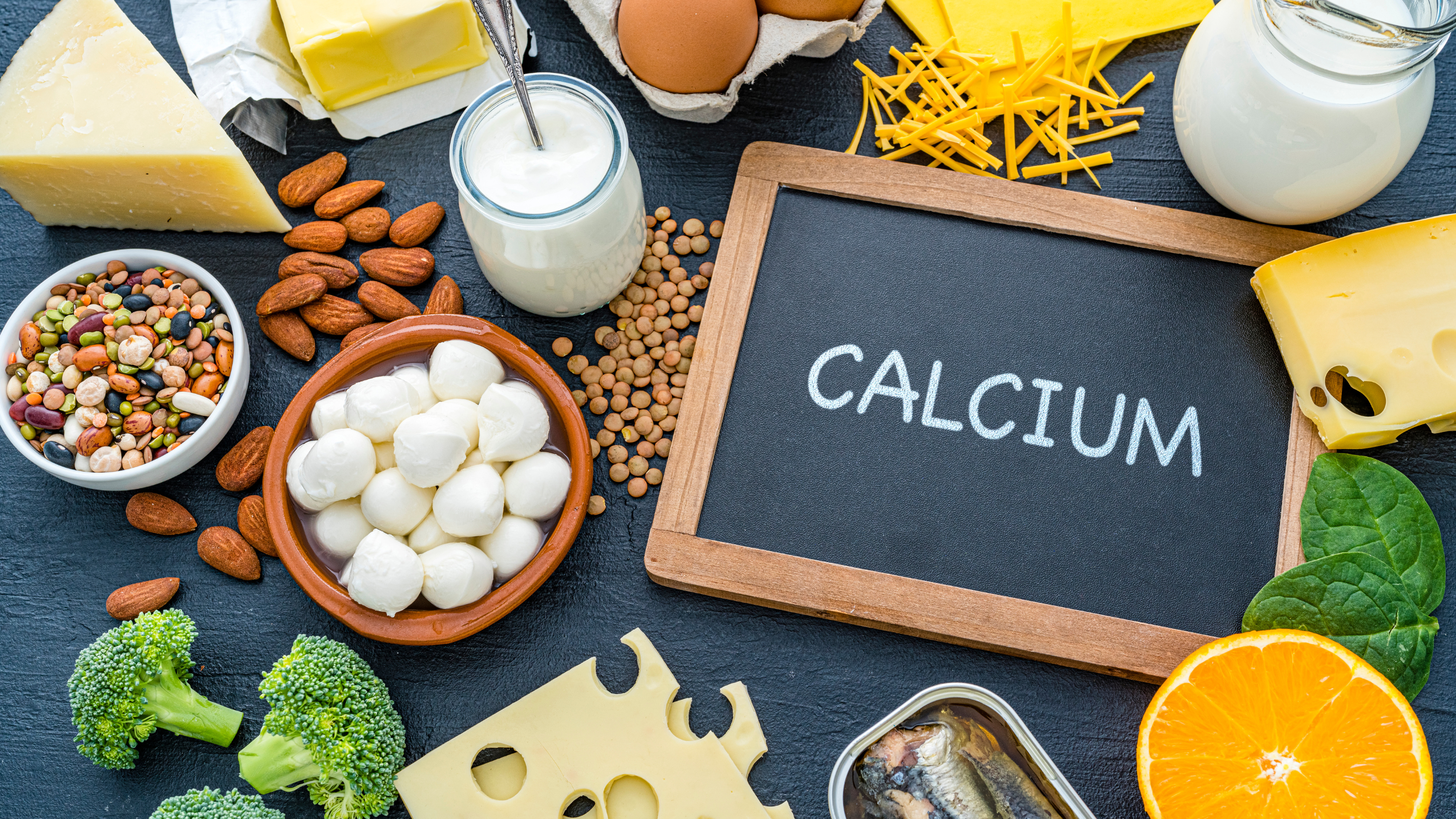
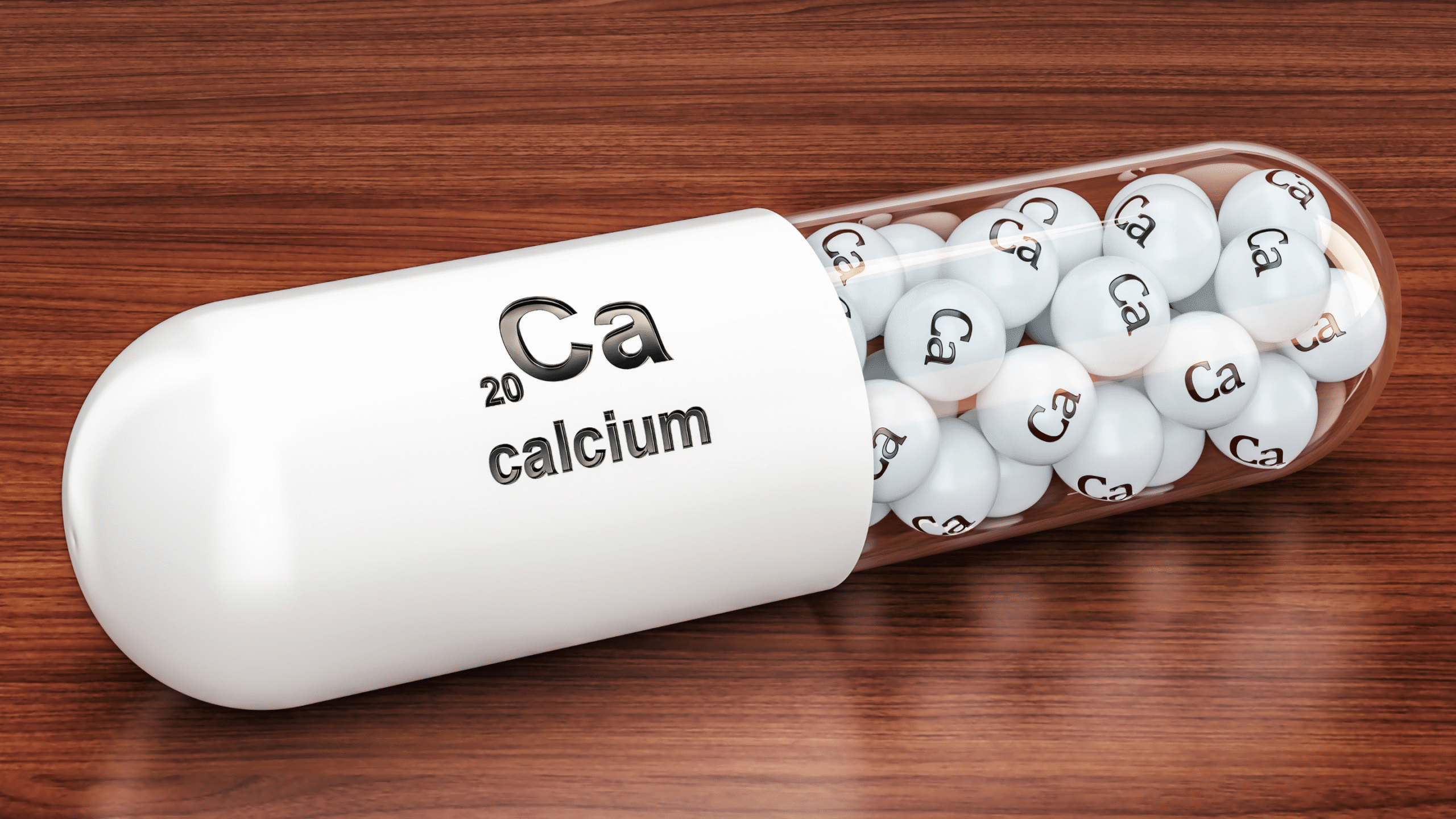
Calcium is vital, but without proper guidance, it becomes a structural liability:
- Bone Scarcity: Without the right signals, calcium fails to incorporate into the bone matrix, leaving bones weak and brittle.
- Artery Excess: Instead, the excess calcium deposits in the delicate linings of blood vessels, heart valves, and soft tissues. This calcification stiffens the arteries, promoting hypertension and dramatically increasing the risk of heart attack and stroke.
The problem is not the calcium itself; it is the absence of the nutrient that acts as the traffic cop, directing calcium to the bone and away from the arteries. That nutrient is Vitamin K2.
Vitamin K2: The Traffic Cop of Calcium
Vitamin K2 is a fat-soluble vitamin (a group called menaquinones, or MKs) whose function is entirely distinct from Vitamin K1 (which is primarily for blood clotting). K2 is the master regulator of calcium metabolism.
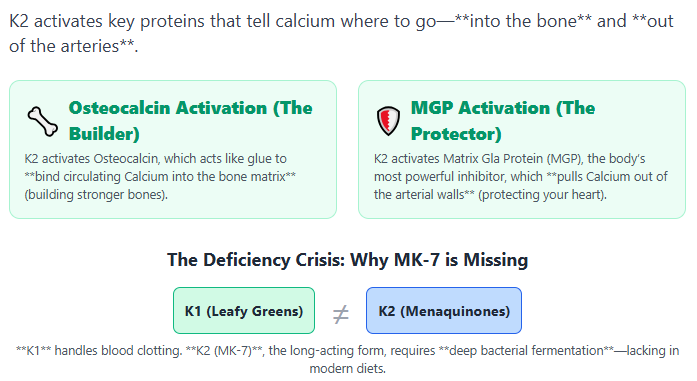
K2’s Dual-Action Mechanism
Vitamin K2 activates two key proteins through a process called carboxylation, fundamentally changing where calcium ends up:
- Osteocalcin Activation (The Builder): K2 activates Osteocalcin, a hormone produced by bone-building cells. Once activated, Osteocalcin acts like glue, binding the free calcium circulating in your blood into the bone matrix, improving bone density and reducing fracture risk.
- MGP Activation (The Protector): K2 activates Matrix Gla Protein (MGP), the most powerful inhibitor of soft tissue calcification known to science. Activated MGP binds to calcium in the arterial walls, effectively pulling it out and preventing the formation of dangerous plaque, as validated by research like the 2006 study in the Journal of Nutrition.
In simple terms, Vitamin K2 is what your bones are made of—it is the nutrient that determines the quality and organization of the calcium structure.
The Deficiency Crisis: Why Modern Diets Fail K2
Why is the Calcium Paradox so prevalent? Because our modern diet is critically deficient in the forms of Vitamin K2 that perform this vital function—specifically Menaquinone-7 (MK-7).
The Source Problem
Vitamin K2 is primarily found in two distinct forms:
- MK-4: Found in certain animal products, particularly the fat of animals that ate K1-rich grass (grass-fed butter, egg yolks). These sources are often insufficient in modern low-fat diets.
- MK-7: The long-chain form, which remains active in the bloodstream for a much longer period. MK-7 is produced almost exclusively through deep bacterial fermentation.
The shift away from traditional, fermented foods and the preference for industrially produced, low-fat, and non-grass-fed animal products has left the vast majority of the Western population K2-deficient, contributing to the dual crisis of soft bones and hard arteries.
The Longevity Protocol: Sourcing MK-7
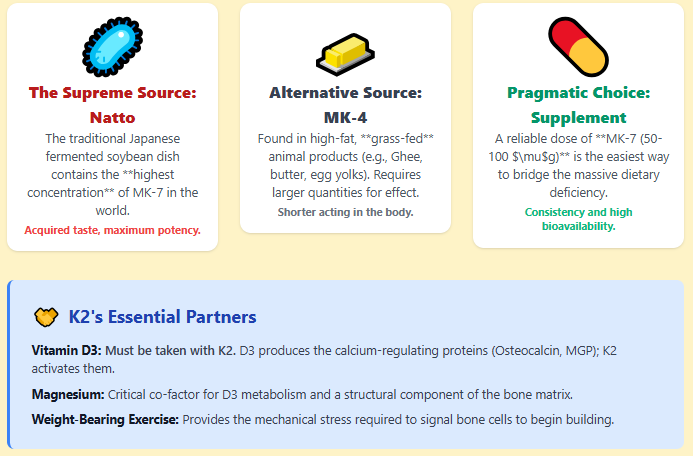
To effectively activate Osteocalcin and MGP, we need a reliable source of highly bioavailable, long-acting Vitamin K2 (MK-7). There is one food that stands alone as the supreme source.
The Weird Food: Natto
The traditional Japanese fermented soybean dish known as Natto is the richest source of Vitamin K2 (MK-7) in the world.
- Concentration: Natto contains hundreds of micrograms of MK-7 per serving—a dose far beyond what any other food can deliver. The specific Bacillus subtilis bacteria used in the fermentation process are incredibly efficient at synthesizing MK-7.
- Longevity Link: Epidemiological studies in Japan have consistently linked high Natto consumption with lower rates of osteoporosis and heart disease.
The Advocate’s K2 Activation Checklist
| Component | Target Amount | Source | Rationale |
| Vitamin K2 (MK-7) | 50 to 100 $\mu$g per day. | Natto (Small daily dose) or a high-quality MK-7 supplement. | Activates the proteins that build bone and inhibit arterial calcification. |
| Vitamin D3 | Optimal Blood Levels (via sun or supplement). | Must be taken with K2. | D3 increases the production of Osteocalcin and MGP, but K2 is required to activate them. |
| Magnesium | Daily RDA (via food or supplement). | Dark leafy greens, seeds, nuts. | Essential co-factor for Vitamin D metabolism and a key structural component of the bone matrix itself. |
The Protocol: The most potent method is consuming a small amount of Natto daily. If the powerful, acquired taste is prohibitive, a high-quality MK-7 supplement is the most reliable alternative for bridging the massive deficiency gap.
Beyond Natto: K2’s Synergistic Partners
Vitamin K2 is a crucial, single piece of the longevity puzzle. Its effectiveness is multiplied when combined with its natural partners and a lifestyle that promotes bone and arterial health.
Strategies for Comprehensive Bone and Vascular Health
- Vitamin D3 Synergy: K2 and D3 are inseparable partners. Vitamin D tells the body to produce the proteins (Osteocalcin and MGP), and K2 tells the body to activate them. They must be consumed together for full bone and heart protection.
- Weight-Bearing Exercise: Mechanical stress on the bones (walking, running, lifting weights) signals the bone cells to start building. K2 and Calcium provide the materials, but exercise provides the blueprint and the stimulus.
- High-K2 Dairy Alternatives: For those who cannot tolerate Natto, the richest animal sources of K2 (MK-4) are found in the fat of full-fat, grass-fed dairy products like high-quality Ghee, butter, and certain hard cheeses (like Gouda).
My Personal Advice as a Health Advocate
I understand that recommending Natto is a big ask. Its powerful, stringy, ammonia-like profile is not for the faint of heart.
My advice is to be pragmatic:
- If you are brave, start small: Mix a tiny amount of Natto into a strongly flavored food like scrambled eggs or a spicy stir-fry to mask the powerful taste.
- If you are pragmatic, choose a supplement: For maximum reliability, choose a supplement that combines Vitamin D3 (around 5,000 IU) and Vitamin K2 (MK-7, around 100 $\mu$g). This combination is the easiest way to ensure you are meeting the biological requirement to build bone and protect your arteries simultaneously.
The time to worry about arterial calcification and bone density is now. Don’t let the Calcium Paradox define your aging.
Myths vs. Facts: Bone Health Misconceptions
The importance of K2 is still relatively new to mainstream nutrition, leading to confusion with the traditional K1 messaging.
| Myth | Fact |
| Myth: All Vitamin K is the same; K1 (from spinach) is sufficient. | Fact: False. K1 is mainly used for blood clotting. K2 (MK-4 and MK-7) is the form responsible for activating the proteins that regulate calcium in bones and arteries. |
| Myth: More Calcium intake will fix my osteoporosis. | Fact: More calcium without enough Vitamin K2 and D3 may actually increase the risk of arterial calcification. The direction of calcium is more important than the amount. |
| Myth: K2 will thin my blood and cause bleeding issues. | Fact: K2 supports normal clotting, but it is not a blood thinner. However, because Vitamin K affects clotting factors, if you are taking a prescribed blood-thinning drug like Warfarin (Coumadin), you must consult your doctor before starting K2. |
| Myth: Natto is the only source of K2. | Fact: Natto is the richest source of MK-7. Other foods like grass-fed dairy (MK-4) and some fermented products (e.g., sauerkraut) contain K2, but Natto remains the most potent therapeutic source. |
FAQs (Frequently Asked Questions)
- What is the difference between Vitamin K1 and K2?Vitamin K1 (Phylloquinone) is found in leafy greens and directs liver synthesis of clotting factors. Vitamin K2 (Menaquinones, MK-4/MK-7) directs calcium metabolism in the bones and arteries. They are functionally distinct.
- What is Osteocalcin?Osteocalcin is a protein produced by bone cells. It must be activated by Vitamin K2 to function. Once active, it binds calcium ions to the bone matrix, making the bone structure strong and organized.
- Is arterial calcification reversible?While challenging, studies show that sustained, high-dose Vitamin K2 (MK-7) intake can halt further progression of calcification and, in some cases, induce a reduction in existing calcium deposits over time, especially when combined with magnesium and D3.
- If I take a Calcium supplement, should I definitely take K2?Yes. Taking calcium supplements without adequate Vitamin K2 is highly discouraged by longevity experts, as it dramatically raises the risk of calcium being deposited in the arteries. K2 is the essential co-factor.
- Are there any side effects to taking Vitamin K2?K2 is generally well-tolerated at nutritional doses. The primary contraindication is for individuals taking the anticoagulant Warfarin (Coumadin), as K2 can interfere with its action. Consult a physician immediately.
Conclusion & A Final Word of Encouragement
The strength of your bones and the flexibility of your arteries are not a matter of chance—they are a direct reflection of your intake of the long-forgotten nutrient, Vitamin K2.
By accepting that Calcium alone is insufficient, and by strategically ensuring your body has enough of the K2 “traffic cop,” you gain control over the most critical structural process of aging: where calcium is deposited.
Whether you embrace the unique challenge of Natto or opt for a concentrated MK-7 supplement, commit to adding this vital nutrient to your daily regimen. It is the single most powerful step you can take today to build strong bones while simultaneously safeguarding the health of your cardiovascular system.
Disclaimer: I am a health advocate and writer, not a medical doctor. The information in this article is for informational purposes only. Consult your physician immediately if you are currently taking blood-thinning medication (anticoagulants) such as Warfarin (Coumadin), as Vitamin K can interfere with these drugs. Do not use this information to self-diagnose or treat any medical condition.