
- The Hidden Villain: Discover how drinking coffee on an empty stomach triggers your body’s stress response, spiking cortisol and glucose.
- The Physiological Switch: Learn how this stress response fuels systemic inflammation, leading to anxiety, afternoon energy crashes, and weight gain.
- The 60-Second Fix: The simple, zero-effort solution: a tiny protein and fat barrier you must consume before your first cup to turn the inflammation switch off.
The Invisible Fire in Your Body
If you are struggling with chronic low energy, brain fog, unexplained aches and pains, or stubborn weight gain around your midsection, you are likely fighting an invisible war inside your body: chronic systemic inflammation.
We often blame inflammation on obvious culprits: sugar, processed food, or lack of sleep. And while those things certainly contribute, they are rarely the trigger that flips the switch every single day.
Today, I need to talk to you about the true daily culprit—a sacred, non-negotiable ritual that millions of people engage in every morning believing it is healthy, productive, or necessary:
Drinking coffee on an empty stomach.
This single, incredibly common habit is one of the most powerful systemic stressors we impose on ourselves daily. It is the action that flips your body’s internal “Inflammation Switch” from ‘Off’ to ‘High Alert,’ setting the stage for a cascade of hormonal and metabolic problems that last the entire day.
The good news is that I’m not here to tell you to quit coffee. I’m here to tell you how to change the ritual—a change that is so easy, it takes literally 60 seconds—and in doing so, you can turn that inflammation switch back off and harness the true benefits of coffee.
What is the Switch? The Cortisol and Adrenaline Response
To understand the problem, you have to understand your body’s natural morning rhythm, which is governed by the hormone Cortisol.
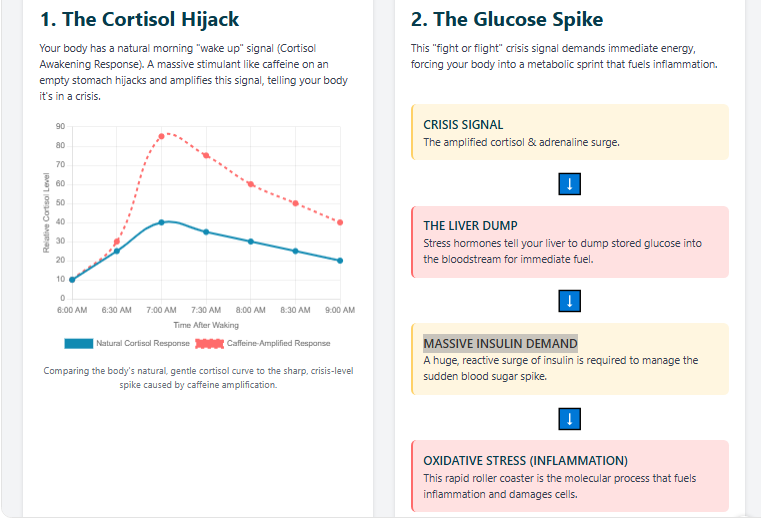
Cortisol is not inherently bad; it’s your central stress and survival hormone. Every morning, your body goes through a natural, vital phase called the Cortisol Awakening Response (CAR). Cortisol levels naturally peak about 30–45 minutes after you wake up, signaling to your body: “Wake up! The day is starting! Time to activate energy stores!”
This is a beautiful, natural rhythm. But here is where the problem lies: Caffeine is a powerful stimulator of the central nervous system.
The Caffeine Amplification
When you consume a massive stimulant like caffeine while your natural cortisol is already peaking (or before), you hijack and drastically amplify that response.
Your body registers this massive surge as a crisis. It sends an emergency signal: “ALERT! Danger! We need fuel for escape!”
This flood of stress hormones (cortisol and adrenaline) is the flip of the inflammation switch. It’s the physiological signal that tells your immune system to prepare for war. Chronic, daily signaling of this level of stress keeps your body in an inflamed, defensive state.
Fueling the Fire: The Glucose Spike
The second, and perhaps most damaging, mechanism of this habit is its direct impact on your metabolism and blood sugar.
When your body enters that emergency stress state—the “fight or flight” mode triggered by the caffeine/cortisol bomb—it needs immediate energy to run or fight.
Where does it get that energy?
- The Liver Dump: Your stress hormones tell your liver to immediately dump its stored glucose (glycogen) into the bloodstream. This is a survival mechanism to ensure your muscles have immediate fuel.
- The Insulin Demand: Because you are consuming this coffee on an empty stomach (with no fiber or fat to buffer the absorption), that sudden, huge glucose spike requires a massive, reactive surge of insulin from your pancreas to bring it back down.
- The Oxidative Stress: This rapid roller coaster of glucose spiking and insulin demanding creates a temporary, but damaging, state of oxidative stress in your body. Oxidative stress is the molecular process that fuels inflammation and damages your cells and blood vessels over time.
You are effectively forcing your body into a metabolic sprint the moment you wake up. This chronic, unnecessary inflammation and glucose spike, repeated daily for years, is what leads to:
- Chronic anxiety and mood swings.
- That terrible 2 PM energy crash (the sugar spike’s hangover).
- Eventual insulin resistance.
- Weight gain around the midsection, as cortisol promotes the storage of visceral fat.
The 60-Second Fix: Turning the Switch Off
The good news is that you absolutely do not have to quit coffee. You only need to build a physiological barrier between the coffee and your empty stomach.
This solution is so simple, I sometimes worry people won’t believe it works—but the physiological proof is undeniable.
The Protein and Fat Barrier
The goal is to consume a tiny amount of protein and fat before your first cup. This achieves two things simultaneously:
- It Blunts the Liver Dump: By introducing stable macronutrients (protein/fat) into your stomach, your body receives a signal that resources are available. It recognizes it is not a starvation crisis, and the body doesn’t need to panic and dump emergency glucose from the liver.
- It Slows Absorption: Protein and fat are digested much more slowly than liquids. They slow the rate at which the caffeine reaches your small intestine and bloodstream, making the resulting hormonal surge gentler and more manageable.
My Go-To 60-Second Coffee Protocol
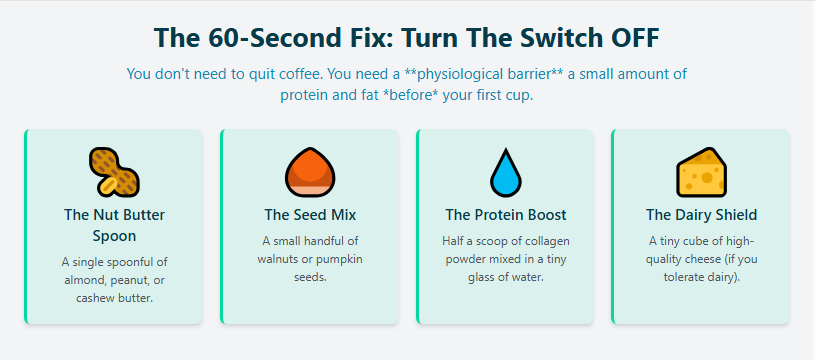
You don’t need a full meal. You need a shield. Try one of these options, consumed 5–10 minutes before your coffee:
- The Nut Butter Spoon: A single spoonful of almond, peanut, or cashew butter (protein and fat).
- The Seed Mix: A small handful of walnuts or pumpkin seeds.
- The Protein Boost: Half a scoop of collagen powder mixed into a tiny glass of water.
- The Dairy Shield: A tiny cube of high-quality cheese (if you tolerate dairy).
By consuming that small, strategic buffer, you neutralize the inflammatory spike, stabilize your energy, and turn that internal inflammation switch back to the ‘Off’ position—all without having to give up your favorite morning habit.
When to Worry (Signs of Chronic Cortisol Overload)
If the following symptoms are part of your daily life, you need to commit to the 60-second coffee fix, as your inflammation switch is likely stuck on high:
- The 10 AM Crash: You feel a burst of energy right after coffee, but crash violently a couple of hours later. This is the physiological drop following the sharp glucose/cortisol spike.
- Wired But Tired: You feel anxious, jittery, or on edge even when you’ve slept well. This is pure adrenaline overload.
- Mid-Section Weight Gain: Unexplained weight gain that settles stubbornly around your stomach is a classic signature of chronically elevated cortisol.
- Chronic Inflammation Symptoms: Unexplained joint pain, persistent low-grade muscle soreness, or brain fog that doesn’t lift until midday.
My Personal Strategy: The Coffee Rule
As a health advocate, I have completely reframed my relationship with caffeine. I love the taste, the ritual, and the cognitive boost—but I will never drink it on an empty stomach.
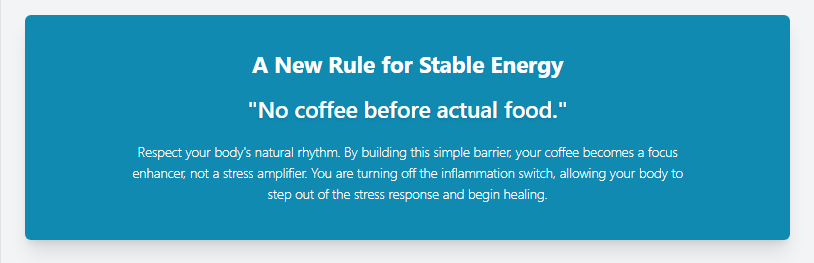
My rule is simple: No coffee before actual food.
I wake up, hydrate with water, and get 30–60 minutes of stable, natural cortisol-driven focus. I eat a real breakfast (eggs, or Greek yogurt with berries). Then, and only then, do I have my first cup of coffee.
This delay—this simple act of respecting my body’s natural rhythm—allows the coffee to work with my body’s biology, not against it. It becomes a focus enhancer, not a stress amplifier.
Myths vs. Facts: Busting Caffeine Misconceptions
Myth: “I do Bulletproof coffee (butter and oil). That works as the buffer.”
Fact: Bulletproof coffee does provide fat, which is great, but it contains zero protein and is typically very high in calories. While the fat blunts the glucose response, a small amount of fat and protein offers a more balanced, less caloric, and faster solution.
Myth: “Coffee is packed with antioxidants, so it’s a health food.”
Fact: Coffee is loaded with beneficial polyphenols and antioxidants. But those benefits are cancelled out when the delivery mechanism (an empty stomach) simultaneously triggers a massive, systemic inflammatory response. The benefits are maximized when the stress response is managed.
Myth: “I use cream and sugar in my coffee, so that counts as a buffer.”
Fact: Sugar is the absolute worst thing you can add to this morning ritual. It simply exacerbates the glucose spike caused by the cortisol, creating an even more violent blood sugar roller coaster and further fueling inflammation.
FAQs (Frequently Asked Questions)
1. Does tea have the same effect?
Tea (especially black tea) contains caffeine, but usually in much lower doses than coffee. However, if you are highly sensitive to stimulants, yes, consuming black tea on an empty stomach can still stimulate the cortisol response. Herbal teas are generally caffeine-free and safe.
2. I use artificial sweeteners in my coffee. Is that better than sugar?
While you avoid the calorie spike, some artificial sweeteners have been shown to impact glucose metabolism and gut bacteria, and they still do nothing to address the fundamental problem of the cortisol/adrenaline spike from the caffeine itself. Focus on the protein/fat buffer.
3. If I have to wait to eat, how long should I wait before drinking coffee?
The best advice is to wait until after you have consumed stable food. If you practice intermittent fasting (IF), many people delay coffee until they break their fast, or they simply consume the small protein/fat buffer (which won’t break a fast if it’s pure fat/protein) and then have their coffee.
4. What about energy drinks?
Energy drinks are typically loaded with far more sugar and caffeine than coffee. They are designed to create a massive, immediate stress/glucose spike. I recommend avoiding them entirely, especially on an empty stomach.
Conclusion
Your body is not a machine that needs to be constantly revved up with stress hormones. It is a delicate, self-regulating ecosystem that thrives on stable energy and calm signals.
If you are fighting chronic inflammation, the most powerful tool you have isn’t a supplement or a restrictive diet—it’s the power to say, “I will not start my day in crisis mode.”
Commit to the 60-second fix. Build the protein and fat barrier. Respect your natural cortisol rhythm. By making this tiny shift, you are turning off your body’s most powerful internal inflammation switch, allowing your body to finally step out of the stress response and begin the healing process.
Medical Disclaimer: I am a health advocate and writer, not a medical doctor. The information in this article is for informational purposes only and is not a substitute for professional medical advice, diagnosis, or treatment. Always seek the advice of your physician or other qualified health provider with any questions you may have regarding a medical condition.