
- The Brain-Nut Connection: Why walnuts are the ultimate superfood for memory, focus, and Alzheimer’s prevention.
- The Science: Understanding Alpha-Linolenic Acid (ALA) and how it fights brain inflammation.
- Practical Tips: How to store them correctly (hint: stop leaving them in the pantry) and 5 delicious ways to eat them daily.
Nature’s Most Obvious Clue
Have you ever really looked—I mean really looked—at a walnut?
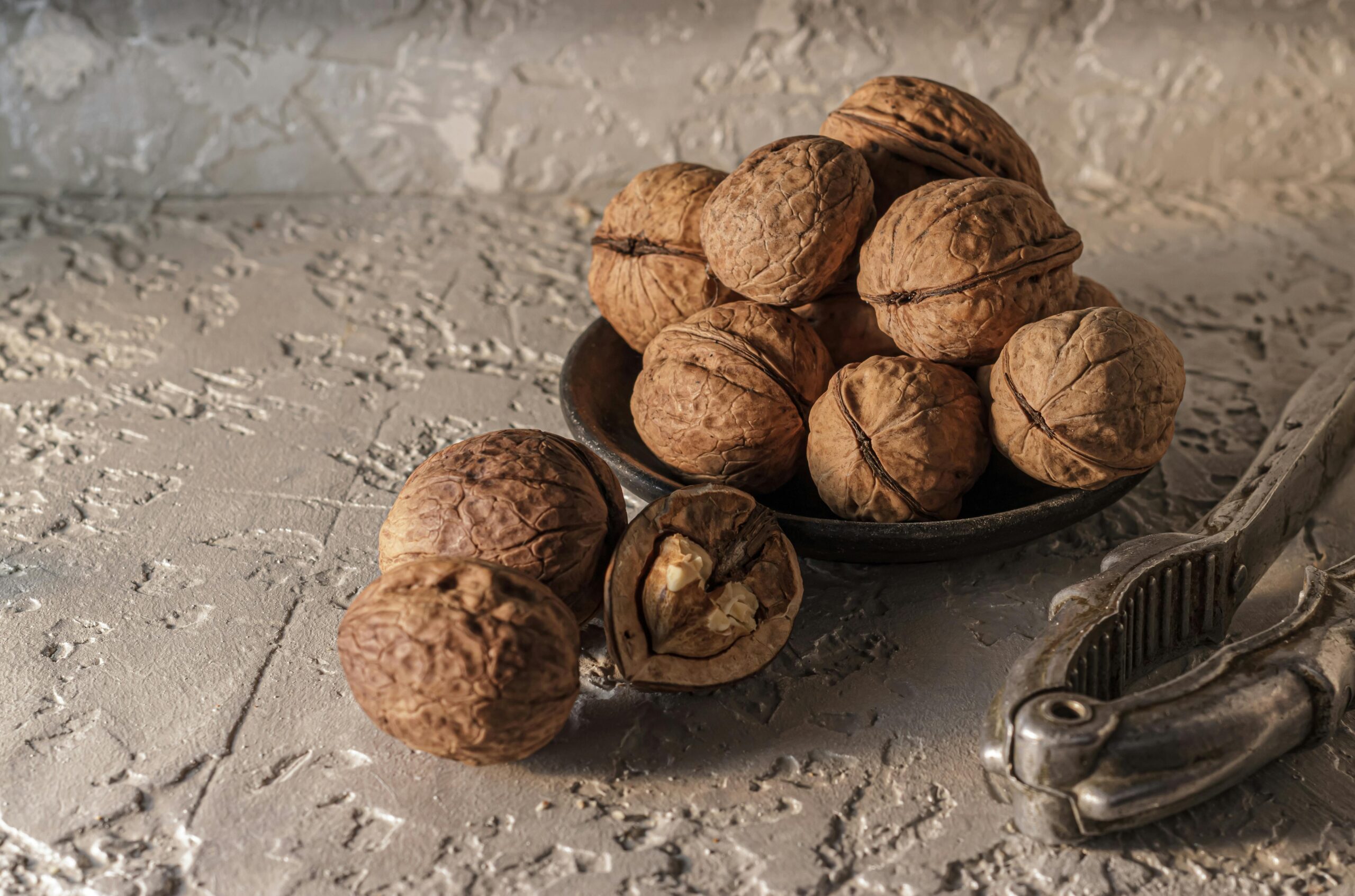
Crack open that hard shell, and what do you see? It has a left hemisphere. It has a right hemisphere. It has upper cerebrums and lower cerebellums. It even has those distinct wrinkles and folds, just like the neo-cortex.
It is the only food in the world that looks exactly like a human brain.
Ancient herbalists followed a philosophy called the “Doctrine of Signatures,” which believed that plants were designed to look like the part of the body they were meant to heal. Usually, this was just folklore. But when it comes to walnuts, modern science has confirmed that the ancients were shockingly right.
These tiny, crinkly nuts are quite possibly the most powerful brain food on the planet.
In a world where we are terrified of cognitive decline, Alzheimer’s, and “senior moments,” the answer might not be a pharmaceutical breakthrough. It might be sitting in the bulk bin of your local grocery store.
Let’s crack open the science behind why this nut is the ultimate fuel for your mind.
The Science: Why Your Brain Craves This Nut
The human brain is roughly 60% fat. It is the fattiest organ in your body. Because of this, it is incredibly susceptible to oxidative stress and inflammation—basically, your brain can “rust” over time.
To protect itself, your brain needs specific types of healthy fats to repair cells and maintain the myelin sheaths (the insulation around your nerves).
Enter the walnut.
While almonds and cashews are great, walnuts are the king of the nut family for one specific reason: Alpha-Linolenic Acid (ALA).
The Omega-3 Powerhouse
Walnuts are the only tree nut that contains a significant amount of ALA, a plant-based Omega-3 fatty acid. Just one ounce (about a handful) provides 2.5 grams of ALA.
Here is what that fatty acid does when it hits your system:
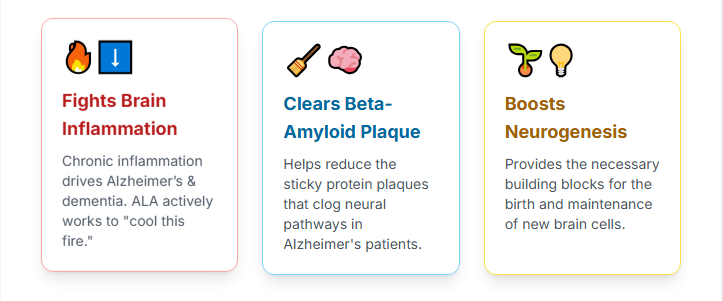
- It fights inflammation: Chronic inflammation in the brain is a primary driver of Alzheimer’s and dementia. ALA helps cool this fire.
- It clears the “junk”: Research suggests that walnut consumption can help reduce the buildup of beta-amyloid protein—the sticky plaque that clogs up neural pathways in Alzheimer’s patients.
- It boosts neurogenesis: This is the birth of new brain cells. Yes, you can grow new brain cells, and walnuts provide the building blocks to do it.
A landmark study from UCLA (published in the Journal of Alzheimer’s Disease) found that eating walnuts was associated with significantly better memory scores, concentration, and information processing speed. The researchers noted that the group eating walnuts had cognitive function scores comparable to people significantly younger.
In simple terms? Eating walnuts might just buy your brain more time.
It’s Not Just About the Future (Immediate Benefits)
We often talk about “preventing Alzheimer’s” as a distant goal for when we are 80. But I’m interested in how you feel today.
If you struggle with brain fog, mid-afternoon crashes, or difficulty focusing, your diet is likely the culprit. The brain requires a steady stream of energy. Sugary snacks give you a spike and a crash (brain fog).
Walnuts provide a “slow burn” energy. The combination of healthy fats, fiber, and protein means that after you eat a handful, your brain gets a steady drip-feed of fuel for hours.
The Mood Connection
Interestingly, walnuts also impact mental health. The neuro-inflammation that causes cognitive decline is the same inflammation that contributes to depression and anxiety.
I’ve seen clients add walnuts to their diet and report feeling more stable and less “frazzled” within a few weeks. It makes sense—a nourished brain is a resilient brain.
The Bitter Truth About the Skin
I have to address a common complaint: “But walnuts taste bitter!”
That bitterness comes from the papery skin covering the nut. I know it’s tempting to try to rub it off, or to buy those processed, skinless walnuts. Please don’t.
That skin is where the magic lives.
Approximately 90% of the phenols (potent antioxidants) in walnuts are found in that flaky skin. It includes tannins and flavonoids that are rare in other foods.
If you throw away the skin, you are throwing away the medicine.
Instead of peeling it, pair it. The bitterness of the walnut balances perfectly with sweet foods (like dates or maple syrup) or savory foods (like basil and garlic). Lean into the flavor profile rather than fighting it.
How to Buy and Store Them (You’re Probably Doing It Wrong)
This is the most important section of this entire guide.
Most people hate walnuts because they are eating rotten walnuts.
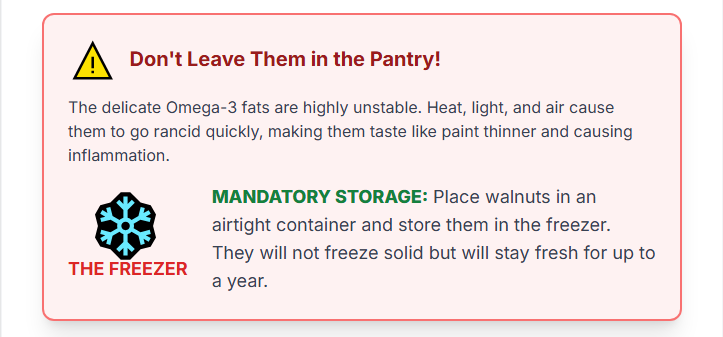
Remember how I said walnuts are full of delicate, healthy Omega-3 fats? Those fats are highly unstable. When exposed to heat, light, and oxygen, they go rancid very quickly.
A rancid walnut tastes like paint thinner. A fresh walnut tastes buttery, earthy, and mild.
The Storage Rules:
- Never buy from the open bulk bin: Those bins sit open to the air and light for weeks. The nuts are likely already oxidizing. Buy vacuum-sealed bags instead.
- The Freezer is your friend: The moment you bring walnuts home, put them in an airtight container and throw them in the freezer. They won’t freeze solid (because of the oil), but the cold stops the spoilage. They will stay fresh for a year in the freezer, compared to a few weeks in the pantry.
- Smell test: Before you eat them, sniff. If it smells like old oil or chemicals, toss them. Do not eat oxidized fats—they cause the very inflammation we are trying to prevent.
5 Ways to Eat Your Daily Handful
You don’t need to just snack on raw nuts like a squirrel (though that works). Here are five culinary ways to get your brain medicine in.
1. The “Brain-Boosting” Pesto
Pine nuts are expensive. Walnuts are affordable and healthier.
- Ingredients: 2 cups fresh basil, ½ cup walnuts, ½ cup parmesan, garlic, olive oil, lemon juice.
- Method: Blend it all up. The walnuts give the pesto a rich, creamy texture. Serve it over pasta or roasted veggies. It is a fat-bomb of goodness.
2. Walnut “Meat” Tacos (Plant-Based Favorite)
This sounds strange, but the texture of crushed walnuts mimics ground meat incredibly well.
- Ingredients: 1 cup walnuts, 1 tbsp soy sauce, cumin, chili powder.
- Method: Pulse the walnuts in a food processor until they look like crumbs. Sauté them in a pan with the spices and soy sauce for 5 minutes. Use as a filling for tacos. It’s savory, filling, and deeply satisfying.
3. The “Smart” Oatmeal Topper
Texture is everything.
- Method: Don’t just throw whole nuts on your oats. Roughly chop them and toast them in a dry pan for 2 minutes until they smell fragrant. The heat brings out a maple-like sweetness. Sprinkle over oatmeal with some blueberries.
4. Stuffed Dates (Nature’s Candy)
This is my go-to snack when I want sugar but know I shouldn’t have it.
- Method: Slice open a Medjool date, remove the pit, and shove a walnut half inside.
- Why it works: The extreme sweetness of the date perfectly cancels out the slight bitterness of the walnut skin. It tastes like a caramel turtle candy.
5. The Smoothie thickener
If you want a creamy smoothie without dairy or bananas, use walnuts.
- Method: Soak a handful of walnuts in water for 20 minutes (to soften), then blend them into your berry smoothie. They add creaminess and help you absorb the fat-soluble vitamins from the fruit.
Myths vs. Facts
Myth: “Nuts make you fat.”
Fact: While walnuts are calorie-dense, studies consistently show that people who eat nuts regularly actually tend to weigh less than those who don’t. Why? Because they are incredibly satiating. When you eat fat and fiber, your hunger hormones shut down. You stop snacking on garbage because you are actually full.
Myth: “Roasted is better than raw.”
Fact: For flavor? Maybe. For health? No. High-heat roasting can damage the delicate Omega-3s. Raw is always best. If you want that roasted flavor, toast them very lightly at home just before eating, rather than buying pre-roasted ones which have been sitting on a shelf oxidizing.
Myth: “I can just take an Omega-3 pill.”
Fact: Supplements are great, but whole foods offer synergy. The fiber, Vitamin E, melatonin, and polyphenols in the walnut work with the Omega-3s to produce the benefit. You can’t isolate the magic.
FAQs
1. How many walnuts should I eat a day?
The studies suggest that roughly 1.5 ounces (about a handful, or 12-14 halves) is the sweet spot for cognitive and cardiovascular benefits.
2. Can I give walnuts to my kids?
Yes! (Assuming no allergies). Their brains are developing rapidly. Getting them hooked on walnuts early is one of the best gifts you can give their academic future. Just be careful with whole nuts as a choking hazard for very young children; walnut butter is a great alternative.
3. Is walnut oil just as good?
Walnut oil is delicious on salads, but it lacks the fiber and the skin (where the antioxidants are). Use it in addition to whole nuts, not as a replacement. Also, never cook with walnut oil—it burns way too easily.
4. Do I need to soak them?
Some health enthusiasts soak nuts to remove “phytic acid” and improve digestion. While not strictly necessary for everyone, if you find nuts hurt your stomach, soaking them in salt water overnight and then dehydrating them can make them easier to digest.
Final Thoughts: The Daily Ritual

I want you to try a simple experiment for the next 30 days.
Go to the store. Buy a bag of raw, organic walnuts. Put them in your freezer.
Every morning, take out a small handful.
Look at them. Acknowledge that they look like a brain.
Eat them.
It takes 30 seconds. It costs pennies compared to medical bills.
But with that one small act, you are telling your body—and your brain—that you are in this for the long haul. You are feeding the engine.
Nature left us a clue. It’s time we took the hint.
Medical Disclaimer: I am a health advocate and writer, not a medical doctor. The information in this article is for informational purposes only and is not a substitute for professional medical advice, diagnosis, or treatment. Always seek the advice of your physician or other qualified health provider with any questions you may have regarding a medical condition.