
- The Anti-Inflammatory Showdown: How Curcumin, the active compound in Turmeric, matches the potency of many NSAIDs without the gastrointestinal side effects.
- The Absorption Problem: The essential hack to increase Curcumin’s bioavailability by 2000% using black pepper and fat.
- Actionable Rituals: Simple recipes for Golden Milk and anti-inflammatory paste to integrate into your daily routine.
When Your Spice Rack Becomes Your Medicine Cabinet
I remember the first time I realized how much I was relying on my medicine cabinet. A stiff neck. A sore knee after a run. A pounding headache on a Tuesday. I’d reach for the bottle of NSAIDs (non-steroidal anti-inflammatory drugs) without thinking, popping a pill to shut down the pain signal.
It felt like the only way to manage the aches and stiffness that life inevitably brings. But every time I took them, I felt that familiar, dull ache in my stomach—the tiny warning signal that these powerful drugs were doing collateral damage to my gut lining.
If you’ve been there—reliant on pills just to keep the inflammation at bay—I want to introduce you to an alternative that is thousands of years old, smells like sunshine, and works on the root cause of your pain, not just the symptom.
I’m talking about turmeric.
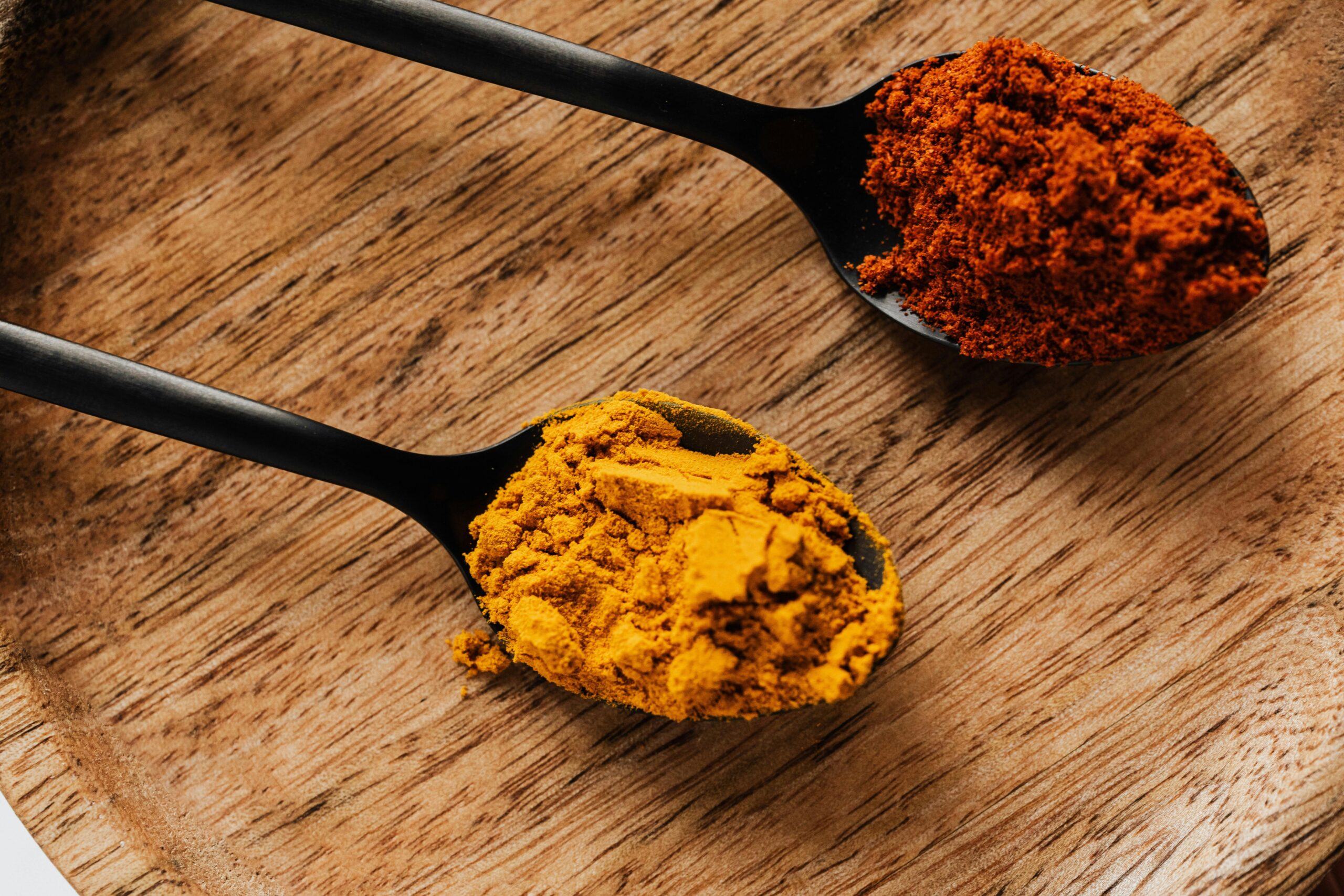
This ancient yellow powder, a staple in Ayurvedic and Indian cuisine, contains an active ingredient called curcumin that is, in my opinion, one of the greatest natural anti-inflammatory agents on earth. Groundbreaking research has shown that curcumin is so powerful, it can rival the effects of common anti-inflammatory drugs. The difference? Turmeric heals; painkillers suppress.
Let’s unpack the science of this “legal drug” and, crucially, how to actually absorb enough of it to make a difference.
The Villain: Why Inflammation is Your Biggest Problem
Before we talk about the hero, we must understand the villain.
We often think of inflammation only in terms of pain—a swollen ankle, a red cut. That is acute inflammation, and it’s good! It’s your body’s rescue team rushing to the scene.
The real problem is chronic, low-grade inflammation.
This is a silent, smoldering fire that doesn’t usually hurt outright, but it is constantly damaging your cells. Chronic inflammation is the root cause of nearly every disease we fear in the modern world:
- Heart Disease
- Type 2 Diabetes
- Alzheimer’s Disease
- Arthritis (Rheumatoid and Osteoarthritis)
- Many forms of Cancer
When you take a pill like Ibuprofen, you are putting a temporary wet blanket on that fire. When you take turmeric, you are addressing the faulty wiring that started the fire in the first place.
The Hero: How Curcumin Shuts Down the Fire
Curcumin is the yellow pigment found in the turmeric root. It’s what gives the spice its color, and it’s the bioactive compound responsible for 90% of its therapeutic power.
In a landmark study published in Phytotherapy Research in 2014, researchers found that curcumin was just as effective at reducing symptoms in patients with rheumatoid arthritis as a commonly prescribed anti-inflammatory drug. This wasn’t a small reduction; it was a head-to-head competition—and the spice held its own.
The Mechanism: Blocking the Command Center
Most anti-inflammatory drugs work by blocking specific enzymes, like COX-1 and COX-2. Curcumin does this too, but it goes deeper. It targets a major inflammatory switch in your body called NF-kB (Nuclear Factor-kappa B).
Think of NF-kB as the central command center for all inflammatory responses. When your body is stressed, infected, or eating poorly, NF-kB gets activated and sends out “emergency broadcast” signals to your cells, telling them to create swelling and pain.
Curcumin’s power lies in its ability to inhibit NF-kB activation. It effectively blocks the signal before it can even be sent, addressing the inflammation at the molecular level.
This is why, as a health advocate, I see it as a superior long-term solution: it doesn’t just relieve pain; it helps reset your body’s baseline inflammatory status.
The Biggest Mistake: The 2000% Solution
Here is the inconvenient truth about turmeric that most people (and even some cookbooks) get wrong: Curcumin has terrible bioavailability.
If you just sprinkle turmeric powder on your eggs, less than 5% of that curcumin will actually make it past your digestive system and into your bloodstream where it can fight inflammation. You are essentially paying for expensive yellow food coloring.
Fortunately, there is a simple, scientifically proven hack to overcome this barrier.
1. The Piperine Multiplier (The Black Pepper Key)
The key is piperine, the active compound found in black pepper that gives it its pungent taste.
- Piperine is proven to increase the absorption of curcumin by an astonishing 2000%.
- It works by temporarily slowing down the liver, which usually tries to metabolize and excrete the curcumin immediately. Piperine gives the curcumin time to enter your bloodstream.
My Rule: Never consume turmeric without black pepper. They are a physiological power couple.
2. The Essential Fat Layer
Curcumin is a fat-soluble compound. It needs fat to be properly dissolved and carried into your system.
- The Medium: Always consume your turmeric with a source of healthy fat, such as coconut oil, olive oil, milk (dairy or plant-based), or a handful of nuts.
When you combine curcumin with fat and piperine, you turn a weak spice into a powerful medicine.
Benefits Beyond Pain: The Gold Standard for Health
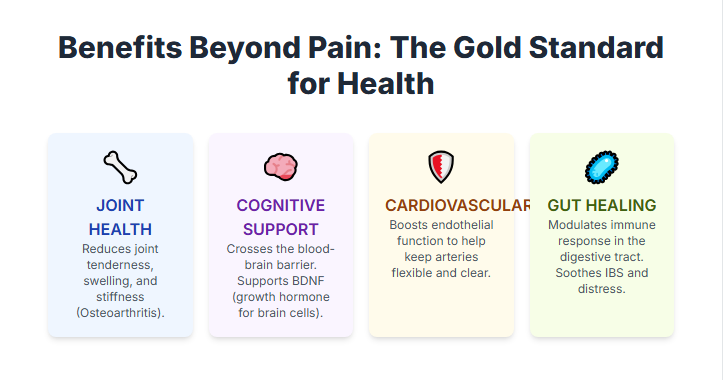
While we focus on its pain-relief capabilities, curcumin is a true “drug” in the best sense of the word, providing systemic benefits.
Joint Health and Arthritis Relief
This is the most well-known application. Chronic joint pain stems from the breakdown of cartilage and the resulting inflammation. By blocking NF-kB and COX enzymes, curcumin significantly reduces joint tenderness, swelling, and stiffness, making it an incredible ally for those with osteoarthritis.
The Brain’s Anti-Inflammatory Shield
The same chronic inflammation that causes joint pain also damages the brain. Curcumin has been shown to cross the blood-brain barrier.
- It supports the production of BDNF (Brain-Derived Neurotrophic Factor), a growth hormone that encourages the formation of new neural connections.
- By reducing inflammation, it supports the brain’s natural ability to clear plaque and maintain cognitive function, aligning with the focus of the longevity researchers I follow.
Gut Healing and Digestive Support
Inflammation of the gut lining leads to problems like leaky gut, IBS (Irritable Bowel Syndrome), and general digestive distress. Curcumin has a powerful, soothing effect directly on the gut. It helps modulate the immune response in the digestive tract, leading to less bloating, pain, and discomfort.
Cardiovascular Protection
Curcumin is a known booster of endothelial function—the health of the lining of your blood vessels. Healthy endothelium is vital for blood pressure regulation and overall heart health. By reducing systemic inflammation, curcumin helps keep your arteries flexible and clear.
The Daily Ritual: Golden Milk and Turmeric Paste
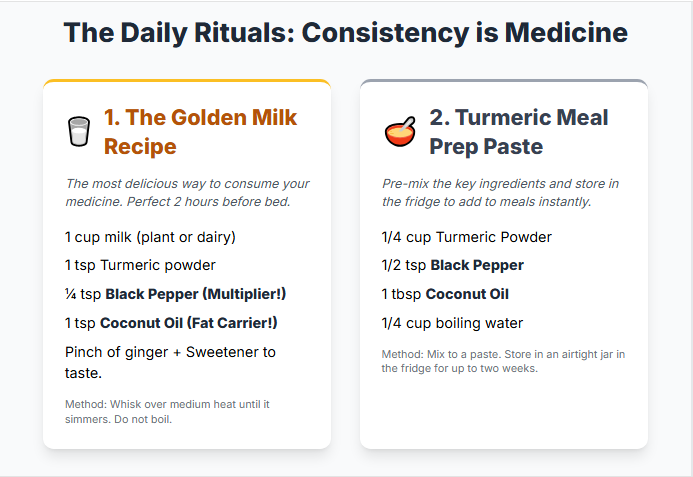
I always tell my clients: consistency is everything. You cannot expect to take one turmeric capsule and feel relief. You need to make it a daily habit.
1. The Golden Milk Ritual
This is the most delicious way to consume your medicine. I love drinking this warm cup 2 hours before bed.
- Ingredients: 1 cup milk (coconut, almond, or dairy), 1 tsp Turmeric powder, ¼ tsp black pepper, 1 tsp coconut oil (the fat!), a pinch of ginger, and honey/maple syrup to taste.
- Method: Combine all ingredients in a saucepan. Whisk continuously over medium heat until it simmers. Do not boil. Pour through a fine-mesh sieve (optional, but it removes the grainy texture). Sip slowly.
2. The Turmeric Paste for Meal Prep
You can pre-mix the key ingredients and store them in the fridge to add to meals instantly.
- Ingredients: 1/4 cup turmeric powder, 1/2 tsp black pepper, 1/4 cup boiling water, 1 tbsp coconut oil.
- Method: Mix turmeric, pepper, and boiling water to form a thick paste. Stir in the coconut oil. Store in an airtight jar in the fridge for up to two weeks. Add a teaspoon to rice, soups, sauces, or scramble eggs.
Dosage and The Supplement Question
Sometimes, lifestyle changes alone aren’t enough, especially if you are managing chronic, debilitating pain. This is when a high-quality supplement might be necessary.
Whole Spice vs. Supplement:
- Whole Turmeric/Powder: This is my preference for daily, long-term health maintenance (the 1-2 tsp daily range). You get the full spectrum of compounds, not just curcumin.
- Curcumin Extract: If you are actively managing a flare-up of arthritis or dealing with post-injury inflammation, a clinical dose of a high-quality extract is necessary. These supplements concentrate the curcumin far beyond what you can eat.
My Supplement Rules:
- Look for Piperine: The label must explicitly state it contains piperine (or Bioperine—the patented version). If it doesn’t, it’s a waste of money.
- Look for Liposomal Formulas: Some newer formulas encapsulate the curcumin in fat molecules (liposomes) for maximum absorption. These are usually more expensive but worth it.
- Check the Dose: Clinical doses used in studies for severe conditions are often 1,000–1,500 mg of curcuminoids daily.
Myths vs. Facts About Turmeric
Myth: Turmeric will stain my teeth yellow.
Fact: While it stains kitchen counters, the stain on your teeth is temporary and washes off quickly. In fact, many people use turmeric as a natural ingredient in oral care, as it is a powerful anti-bacterial and anti-inflammatory for gums.
Myth: It’s only good for Indian food.
Fact: Turmeric has a subtle, earthy flavor that disappears easily. You can add it to scrambled eggs, soups, rice, even smoothies, without making the dish taste like curry.
Myth: I don’t need the pepper if I cook it with oil.
Fact: You absolutely need the pepper. The oil is for solubility, but the piperine is for increasing the rate and amount of absorption into the bloodstream. Don’t skip the pepper.
FAQs
1. Can Turmeric interact with my medication?
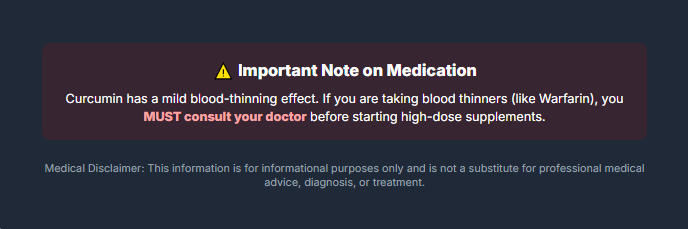
Yes, it can. Curcumin has a mild blood-thinning effect, similar to aspirin. If you are already taking blood thinners (like Warfarin), you must consult your doctor before starting high-dose curcumin supplements.
2. Can pregnant women take Turmeric?
In culinary amounts (as a spice), it is fine. However, high-dose therapeutic supplements are usually advised against during pregnancy and breastfeeding. Always consult your OB-GYN.
3. Does it help with hangovers?
Turmeric supports liver function by boosting detoxification enzymes, so adding it to your system before or after drinking may help your body process alcohol metabolites more efficiently.
4. How long does it take to feel the anti-inflammatory effects?
For acute pain, supplements may start working within a few hours. For chronic joint stiffness, most people report noticeable differences after 4 to 8 weeks of consistent daily use.
Conclusion & A Final Word of Encouragement
I want you to change the way you see that yellow jar in your cabinet. It’s not just a dusty spice; it is a profound natural medicine.
You don’t need a prescription to start fighting inflammation, protecting your heart, and safeguarding your brain health. You just need to be mindful, purposeful, and consistent.
Start with the Golden Milk ritual tonight. Add the pepper. Add the fat. And trust that the solutions to many of our modern health struggles were provided to us by nature long ago.
Your body is ready to heal. Give it the tools it needs.
Medical Disclaimer: I am a health advocate and writer, not a medical doctor. The information in this article is for informational purposes only and is not a substitute for professional medical advice, diagnosis, or treatment. Always seek the advice of your physician or other qualified health provider with any questions you may have regarding a medical condition.