
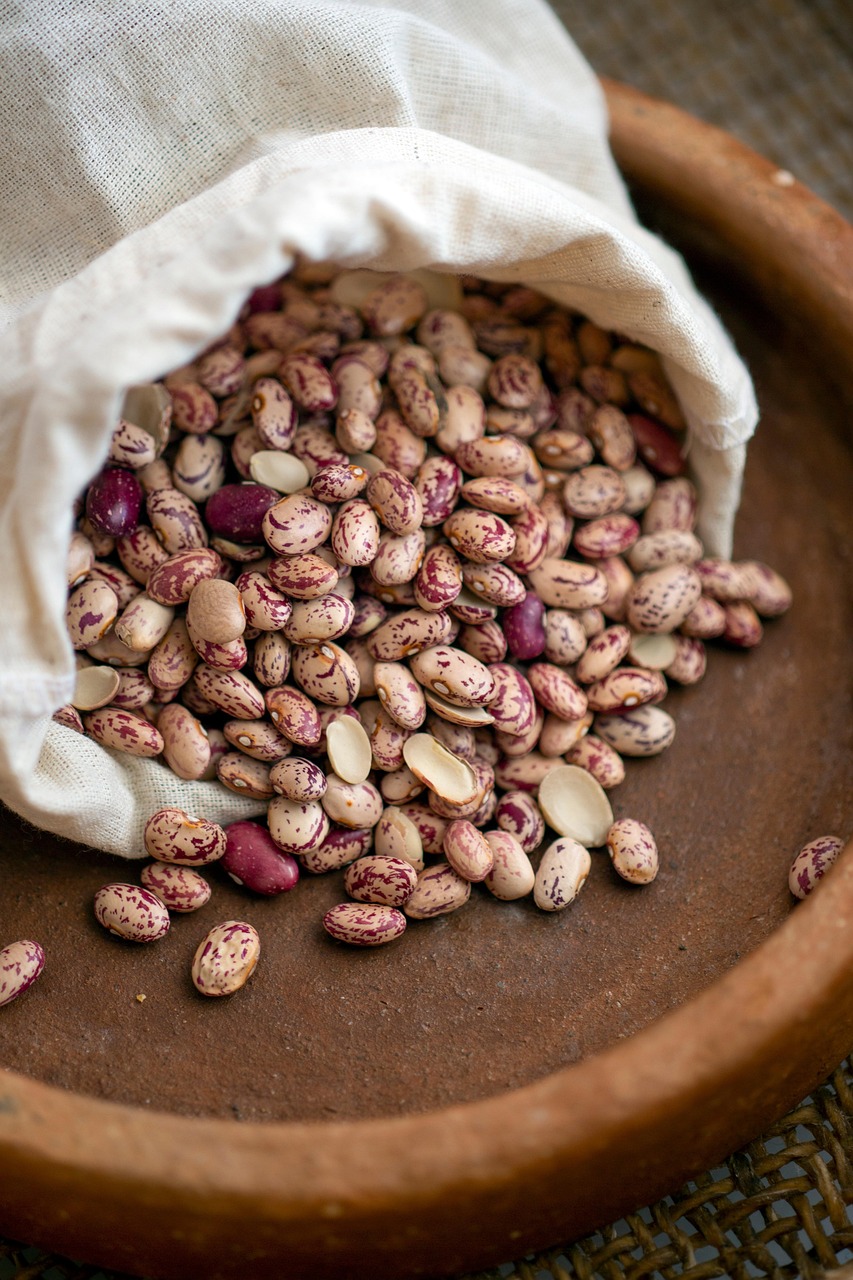
- The Blue Zone Secret: Beans are the one staple food consumed daily by every community in the world known for exceptional longevity.
- Gut Health Foundation: How the resistant starch in beans creates short-chain fatty acids (SCFAs) that heal the gut and reduce systemic inflammation.
- The Practical Guide: Simple methods to prepare beans to eliminate gas and optimize nutrient absorption for less than $1 a day.
The Search for the Centenarian Secret
If you are like me, you’ve spent years searching for the great health secret. Is it a rare Himalayan berry? An expensive detox cleanse? A specific sequence of exercises?
The truth, as often happens with the most powerful medicine, is ridiculously simple, incredibly cheap, and often overlooked: It’s beans.
Think about the “Blue Zones”—those rare places on earth, identified by researcher Dan Buettner, where people routinely live vibrant, active lives past the age of 100. Places like Sardinia, Italy; Okinawa, Japan; and Loma Linda, California.
I’ve studied these diets for years, and while they vary culturally—some eat fish, some are strictly vegetarian—they all share one non-negotiable dietary cornerstone: legumes.
It is not fancy salmon or organic microgreens. It is the humble, inexpensive, and readily available bean.
Whether it’s the Sardinian minestrone soup thick with fava beans, the Okinawan diet heavy on soy, or the Nicoyan custom of black beans and rice, the foundation of every longevity diet is the legume. They eat them every single day. Not occasionally, not once a week, but as the main source of plant protein and fiber at most meals.
Let’s unpack why this simple food is arguably the world’s most powerful and cheapest anti-aging secret—and how to overcome the common digestive hurdles that keep most people from harnessing its magic.
The Blue Zone Blueprint: Why Beans Win
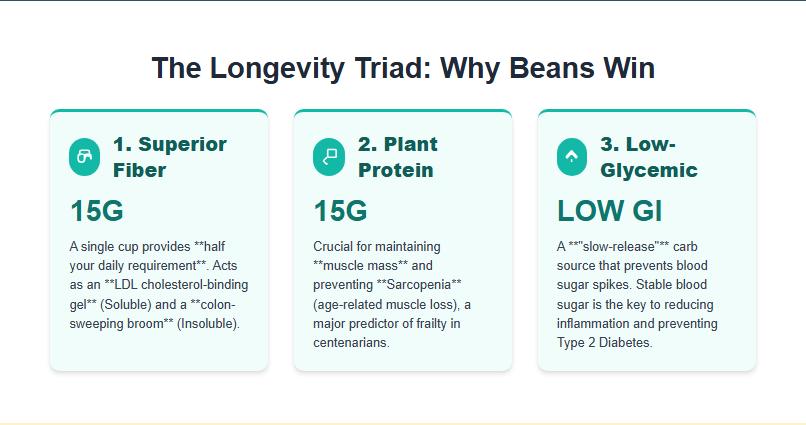
When I advocate for food as medicine, I look for foods that work on multiple fronts simultaneously. Beans deliver a powerful, balanced nutritional punch that few other foods can match.
They provide what I call the Longevity Triad:
1. Superior Fiber Content
Beans are absolute fiber champions. A single cup of black beans contains 15 grams of fiber—about half your daily requirement. This fiber comes in two crucial forms:
- Soluble Fiber: This turns into a gel in your stomach and binds to cholesterol in your digestive tract, carrying it out of your body. This is a powerful, drug-free way to lower dangerous LDL cholesterol.
- Insoluble Fiber: This adds bulk, acting like a broom to sweep waste through your colon, ensuring bowel regularity and drastically cutting the time toxins spend in contact with the colon lining.
2. High-Quality Plant Protein
Beans contain about 15 grams of protein per cup, making them a foundational source of amino acids for people who eat less meat (which is another common Blue Zone trait). Adequate protein intake is vital for maintaining muscle mass as we age—a condition called sarcopenia—which is one of the biggest predictors of frailty and falls in centenarians.
3. The Low-Glycemic Advantage
Beans are considered a “slow-release” carbohydrate. They have a very low Glycemic Index (GI). This means they are digested slowly, preventing the sharp blood sugar spikes that trigger chronic insulin release. Stable blood sugar is the key to preventing Type 2 Diabetes, protecting your blood vessels, and reducing the inflammation that leads to heart disease.
The Gut Secret: Resistant Starch
This is where the magic truly happens, and it is why beans are non-negotiable for longevity.
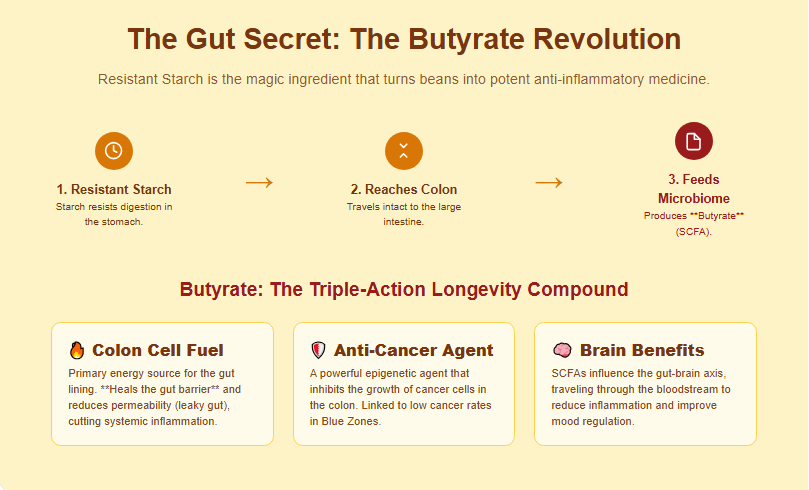
The most potent compound in beans is Resistant Starch. As the name implies, this starch resists digestion in your stomach and small intestine, traveling all the way down to your large intestine completely undigested.
Once there, it meets your gut microbiome—the trillions of bacteria living in your colon. The resistant starch is their feast.
The Butyrate Revolution
When your gut bacteria feed on resistant starch, they produce powerful compounds called Short-Chain Fatty Acids (SCFAs). The most important of these is butyrate.
Butyrate is nothing short of miraculous:
- Colon Cell Fuel: Butyrate is the primary fuel source for the cells lining your colon. It heals and protects the gut barrier, reducing the permeability that contributes to systemic inflammation (leaky gut).
- Anti-Cancer Agent: Butyrate is a powerful epigenetic agent that inhibits the growth of cancer cells in the colon. This link is so strong that researchers believe high bean consumption is a key reason for the low rates of colon cancer in Blue Zone populations.
- Brain Benefits: SCFAs travel through the bloodstream and influence the brain, reducing inflammation and improving mood regulation via the gut-brain axis.
Essentially, when you eat beans, you are not just feeding yourself; you are feeding the microbial community that controls your immune system, your weight, and your mental health.
Heart Health and Metabolic Mastery
The benefits of daily bean consumption show up clearly in two major areas of chronic disease prevention:
Lowering Blood Pressure and Stroke Risk
Beans are packed with essential minerals that work together to balance sodium levels and relax blood vessels.
- Potassium: Beans are one of the best sources of potassium, which counteracts the effects of sodium and helps keep blood pressure in check.
- Magnesium: This mineral is a natural muscle relaxer and helps regulate over 300 enzyme reactions in the body, including those that control vascular tone.
The LDL Cholesterol Scrubber
The soluble fiber found in beans acts like a sponge in the small intestine. It binds to bile acids (which are made from cholesterol) and ensures they are excreted rather than recycled. This forces the liver to pull more cholesterol out of the blood to make new bile acids, resulting in a measurable and lasting drop in dangerous LDL cholesterol.
In my professional experience, adding beans daily is one of the single most effective dietary interventions for clients struggling with mild to moderate high cholesterol, often rivaling the effects of medication.
The Stigma: How to Beat the Bloating and Gas

If beans are so amazing, why doesn’t everyone eat them? The answer is simple: gas and bloating.
This uncomfortable side effect is caused by complex sugars (oligosaccharides) in the beans. They are partially broken down by enzymes, but the remaining undigested portion ferments in the large intestine, releasing gas.
The good news is that there are several simple steps to minimize—and often eliminate—this problem.
1. The Soaking/Discarding Ritual
If you cook beans from scratch, this is the most effective method:
- Soak: Soak dried beans in water overnight (at least 8 hours).
- Discard: Throw away the soaking water. The oligosaccharides dissolve into this water. Cooking the beans in this water guarantees gas.
- Rinse and Cook: Cook the beans in fresh water.
2. The Simple Addition of Spice
Certain spices contain enzymes that break down the gas-causing sugars, making them easier to digest.
- Cumin and Fennel: Add a teaspoon of cumin or fennel seeds to the pot while cooking beans. This is a trick used in many traditional cultures.
- Kombu: Adding a strip of kombu (dried kelp, available at health stores) to the pot while cooking breaks down the fibers and adds minerals.
3. The Gradual Introduction
Your gut microbiome is a living ecosystem. If you go from zero beans to a cup a day, it will be a shock. Start slow (1/4 cup daily) and increase gradually. Your gut bacteria will adapt and produce the necessary enzymes to digest the beans smoothly.
My Personal Bean Protocol: From Dry to Done
I believe in making longevity easy. Here is how I ensure a daily, hassle-free dose of beans:
1. The Pressure Cooker/Instant Pot Advantage
If you cook dried beans, a pressure cooker is a game-changer. It drastically reduces cooking time and, crucially, breaks down more of the problematic sugars than stovetop cooking, leading to less gas. No soaking required!
2. The Freezer Trick
Cook large batches of beans (e.g., 5 cups of black beans) and freeze them in 1-cup portions in freezer bags. You now have the base for dinner, tacos, or chili, ready in 2 minutes, which is faster and cheaper than opening a can.
3. The Daily Meal Strategy
- Breakfast: Add black beans to your morning scramble or wrap.
- Lunch: Hummus or a simple lentil soup.
- Dinner: Beans as the centerpiece (chili, bean stews, or a side of edamame).
Myths vs. Facts About Beans
Myth: Canned beans are bad for you.
Fact: Canned beans are nutritionally equivalent to dried, cooked beans. They are excellent in a pinch! The only concern is high sodium, so make sure to rinse them thoroughly under cold water for one minute before using.
Myth: Beans are too high in carbs for a healthy diet.
Fact: Yes, they contain complex carbohydrates, but the high fiber and resistant starch content means they act like a “slow carb.” They do not spike your blood sugar like refined grains. The health benefits far outweigh any concerns about the complex carbohydrates.
Myth: Beans are an “incomplete” protein.
Fact: This is an outdated concept. While beans are lower in the amino acid methionine, if you eat a variety of plant foods throughout the day (beans plus grains, nuts, or seeds), your body easily gets all essential amino acids.
FAQs (Frequently Asked Questions)
1. Which bean is the healthiest?
Black beans and small red beans generally top the list for antioxidant content. Lentils and chickpeas are excellent all-arounders for protein and fiber. The best bean is the one you will eat regularly!
2. What about peanut butter? Is that a legume?
Yes, peanuts are botanically legumes, not true nuts. They offer protein, but they lack the same high fiber and resistant starch ratios of other beans. They are a good addition, but not a replacement for black beans or lentils.
3. Does cooking them reduce the nutrients?
Some heat-sensitive vitamins (like Vitamin C) are reduced, but the essential minerals, fiber, and protein are maintained. Cooking is necessary to deactivate lectins (compounds that can interfere with nutrient absorption), making cooked beans healthier than raw ones.
4. Can I use supplements to get the same fiber?
Fiber supplements can help, but they cannot replicate the effects of the resistant starch found in whole beans. The SCFAs produced by beans are the key to the anti-inflammatory and colon-protective benefits—you can’t get that from a capsule.
Conclusion
The pursuit of longevity doesn’t have to be complicated, costly, or exclusive. It’s found in the simple, deliberate habits of the world’s longest-living people.
The centenarians of the Blue Zones show us that we already have the most potent anti-aging tool available right now, sitting in our pantry. It costs less than a cup of coffee, and it directly programs your body for health, stable blood sugar, and a thriving gut.
I want you to make a commitment today. Start with just a half-cup of beans daily. Rinse them well, season them with cumin, and embrace the one food that has earned its place on every single longevity plate in the world.
Your journey to a healthier, longer life is just a few dollars—and a pot of beans—away.
Medical Disclaimer: I am a health advocate and writer, not a medical doctor. The information in this article is for informational purposes only and is not a substitute for professional medical advice, diagnosis, or treatment. Always seek the advice of your physician or other qualified health provider with any questions you may have regarding a medical condition.