

SEO Summary:
- The skin is protected by a crucial ecosystem of beneficial microorganisms (skin microbiome) and a protective layer of oil and sweat (acid mantle).
- Excessive washing, especially with harsh, alkaline soaps and surfactants (like SLS), aggressively strips the acid mantle and disrupts the delicate microbial balance.
- This barrier dysfunction triggers chronic inflammation, leading to conditions like eczema, rosacea, and accelerating signs of aging (fine lines and dullness).
- Click to learn the gentle skin care rules, prioritizing pH-balanced, non-foaming cleansers and limiting full-body washing to maintain your skin’s vital invisible shield.
The Invisible Shield: Why Skin Microbes are Your First Line of Defense

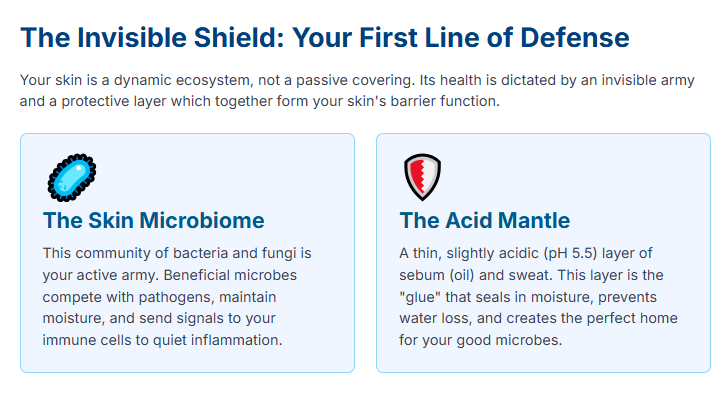
For most of history, we viewed skin as a simple covering—a passive organ. We now know it is a bustling ecosystem, a dynamic battlefield where your health is dictated by an invisible army: the skin microbiome. This community of bacteria, fungi, and viruses is not merely resting on your surface; it is an active, vital part of your body’s defense system.
This microbial community, along with the acid mantle (a thin, slightly acidic layer of sebum and sweat), forms your skin’s barrier function—your first line of defense against the world.
The Critical Role of Your Skin Microbiome
The bacteria on your skin are highly specialized and perform three critical functions that protect you from inflammation and aging:
- Pathogen Defense: The “good” bacteria, such as certain strains of Staphylococcus epidermidis, actively compete with and inhibit the growth of “bad” or pathogenic bacteria (like Staphylococcus aureus, often linked to eczema flare-ups). They are your personalized, natural antibiotics.
- Moisture and Barrier Maintenance: These microbes help process the natural oils on your skin into beneficial fatty acids that maintain the integrity of the stratum corneum (the outermost layer of your skin). A healthy microbiome is essential for preventing Transepidermal Water Loss (TEWL), which is the root cause of dryness.
- Immune Signaling: The microbiome communicates with your skin’s immune cells. A balanced community sends signals that quiet inflammation, keeping your skin calm, while a disturbed microbiome sends alarm signals, triggering redness and reactivity.
When we overwash or use harsh products, we brutally strip away this protective acid mantle and indiscriminately wipe out the beneficial microbial community. This leaves the skin exposed, vulnerable, and in a state of chronic alarm.
The Compromised Barrier: Signs of Overwashing
The signs that you have stripped your skin’s natural defenses are often mistakenly interpreted as signs that you need more cleansing or stronger products. They are, in fact, urgent warnings that your barrier is compromised.
When Your Skin’s Defenses Fail
When the acid mantle is gone and the good microbes are depleted, the symptoms are immediate and chronic:
- “Squeaky Clean” Feeling (The Deceptive Sign): That tight, dry feeling after washing is not cleanliness; it’s a sign that your skin’s natural oils and moisture factors have been aggressively removed. The skin is brittle and unprotected.
- Chronic Redness and Sensitivity: Your exposed nerve endings and stressed immune cells react immediately to environmental triggers (temperature changes, wind, pollution), leading to persistent flushing, reactivity, and sometimes the onset of rosacea.
- Persistent Dryness and Flaking: Without its protective lipid barrier, water evaporates rapidly from the skin, leading to TEWL and a perpetual state of dehydration that moisturizers struggle to penetrate.
- Unexplained Breakouts: This is counter-intuitive. Overwashing strips the good bacteria and can ironically lead to an overproduction of sebum (oil) as the skin tries to compensate for the dryness. This thick, compromised oil, combined with a lack of protective bacteria, creates the perfect environment for P. acnes and inflammatory breakouts.
- Accelerated Aging: A compromised barrier cannot effectively defend against environmental free radicals (from UV and pollution). Chronic inflammation and dehydration break down collagen and elastin faster, leading to premature fine lines, dullness, and a loss of elasticity.
If you are dealing with persistent skin issues despite using multiple products, the problem is not your lack of cleanliness; it’s likely your cleansing routine itself.
The Stripping Culprits: Products and Protocols to Avoid
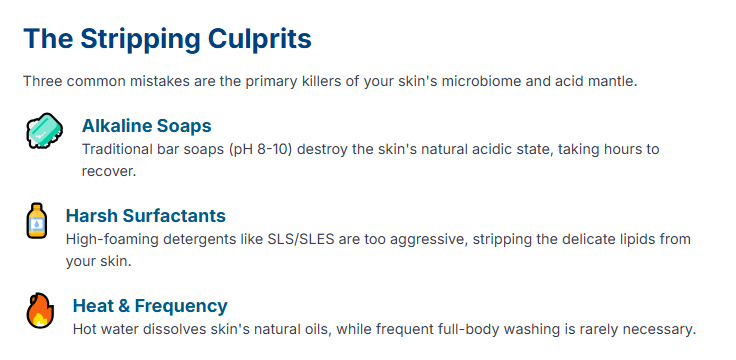
The damage to the skin barrier and microbiome is usually a consequence of three common mistakes related to product choice and frequency.
The Three Microbiome Killers
- Alkaline Soaps: Traditional bar soaps and harsh body washes often have a high pH (8–10). This destroys the skin’s natural, slightly acidic pH of 5.5—the optimal environment for the acid mantle and beneficial microbes. The skin takes hours to restore its natural pH after being exposed to alkaline products.
- Harsh Surfactants: Look for Sodium Lauryl Sulfate (SLS) and Sodium Laureth Sulfate (SLES) in your ingredient list. These are high-foaming detergents that are excellent at cutting grease, but they are far too aggressive for the delicate lipids in your skin barrier. They strip too much oil, leading to irritation and TEWL.
- Excessive Frequency & Temperature: The compulsion to shower, wash hands, or cleanse the face multiple times a day is a modern phenomenon. While hygienic necessity dictates hand washing, full-body washing twice a day, especially with hot water, is highly damaging. Hot water dissolves the natural oils in the lipid matrix faster than warm or cool water.
Protocol Mistake Checklist
- Daily Full-Body Washing: Unless you have exercised intensely, limit soap application to necessary areas (armpits, groin, feet). The rest of the body can benefit from a simple rinse.
- Daily Exfoliation: Whether chemical or physical, daily exfoliation prevents the stratum corneum from ever fully repairing itself. Limit strong exfoliation to 1–2 times per week at most.
- Using Body Soap on the Face: Body cleansers are almost always harsher than facial cleansers and should never be used on the delicate facial skin.
The Gentle Skin Care Rules: A Microbiome-Friendly Protocol
Restoring your skin’s defenses requires a radical shift toward a “less is more” philosophy. The goal is gentle, selective cleansing that preserves the acid mantle and nourishes the microbiome.
The Advocate’s Gentle Cleansing Protocol
| Area | Ideal Frequency | Product Focus | Key Action |
| Face | Once daily (PM) or just a water rinse (AM). | Use pH-balanced, non-foaming cream, gel, or oil cleanser. | Use lukewarm or cool water. Pat, don’t rub, skin dry. |
| Body (Full) | Every 2nd or 3rd day, or after intense sweat/dirt. | Use a soap-free wash designed for sensitive skin. Look for non-SLS/SLES. | Limit soap to key areas (armpits, groin, feet). Rinse remaining body with water only. |
| Post-Cleansing | Immediately after every wash. | Apply a moisturizer containing Ceramides and Hyaluronic Acid. | Moisturize within three minutes of stepping out of the shower to trap remaining moisture. |
The Selective Washing Rule:
Focus your soap usage only on the areas where sweat and bacteria accumulate rapidly (armpits, groin, and feet). The majority of your limbs and torso can simply be rinsed with water, allowing the beneficial oils and microbes to remain in place.
Product Selection is Crucial:
Look for cleansers marketed as pH-neutral, soap-free, or gentle creamy washes. You can also seek out products with prebiotics (food for the good bacteria) or probiotics (the good bacteria themselves) to actively restore the biome.
Beyond Cleansing: Restoring the Microbiome and Barrier
Once you have adopted a gentler cleansing approach, you must focus on rebuilding the physical barrier itself. This involves optimizing the structure that holds the skin cells together and ensuring adequate internal hydration.
The Barrier Repair Toolkit
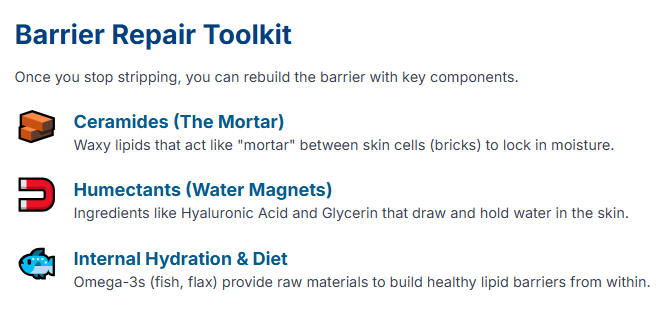
- Ceramides (The Mortar): Ceramides are the fatty, waxy lipids that act like the “mortar” between your skin cells (the “bricks”). They are essential for preventing TEWL. Look for moisturizers that explicitly list Ceramides in their ingredients.
- Humectants (The Water Magnets): Ingredients like Hyaluronic Acid and Glycerin act like magnets, drawing and holding water in the upper layers of the skin. Applying them to slightly damp skin dramatically boosts barrier function and elasticity.
- Internal Hydration and Diet: Skin hydration starts from the inside. Ensure you are drinking enough water. A diet rich in Omega-3 fatty acids (found in fish, flax, and walnuts) provides the raw materials your body needs to build healthy lipid barriers.
By providing the necessary components and removing the irritants, you give your skin the perfect environment to heal its defenses, calm inflammation, and regain its natural resilience.
My Personal Advice as a Health Advocate
The most revolutionary change I made in my own routine was accepting that my skin didn’t need to be “squeaky clean.” I, too, was addicted to the tight feeling, believing it meant my skin was purified. Once I switched to a non-foaming, pH-balanced cleanser and cut back my full-body soap usage, the transformation was undeniable. My chronic shoulder dryness disappeared, and the reactivity in my face calmed down.
I recommend one simple trick to transition: turn down the temperature. End every shower with a brief 30-second rinse of cool or lukewarm water. This closes the pores, signals the body to stop vasodilation, and prevents the hot water from further dissolving the protective oils as you exit the shower.
Remember, the skin is your largest organ and an incredible, complex ecosystem. Your job is not to sterilize it; it is to nurture it. Adopt the “less is more” motto, and you will find your skin becomes less needy, less reactive, and profoundly healthier.
Myths vs. Facts: Skin Cleansing Misconceptions
Misinformation about skin cleaning is rampant, often driven by marketing that promotes harsh, fast-acting products.
| Myth | Fact |
| Myth: Antibacterial soaps are best for healthy skin. | Fact: Antibacterial soaps are often harsh and indiscriminately kill the beneficial bacteria that protect you from pathogens. Stick to gentle soap for necessary areas. |
| Myth: Oily or acne-prone skin needs strong, stripping cleansers. | Fact: Stripping the skin worsens acne by causing it to overcompensate with excessive, poor-quality oil production. Acne-prone skin needs gentle, pH-balanced cleansing and non-comedogenic ingredients. |
| Myth: A cold shower is always better than a hot one. | Fact: Lukewarm (tepid) is the best. Extremely cold or hot temperatures can both be stressors. The goal is temperature moderation to avoid shocking the system or dissolving lipids. |
| Myth: If a moisturizer stings, it means it’s working. | Fact: If a product stings or burns, it means your skin barrier is likely already compromised, and the ingredients are irritating exposed nerve endings. Stop using the product immediately. |
FAQs (Frequently Asked Questions)
- Do I need to shower daily?From a pure health perspective, no. While social norms often dictate daily showering, unless you are very active, showering every other day or limiting daily washing to the pits, groin, and feet with soap is sufficient and better for your microbiome.
- Are facial cleansing brushes safe?For a compromised barrier, no. Brushes offer physical exfoliation, which is too much for an irritated or sensitive barrier. Stick to gentle fingertip cleansing until your barrier is fully healed.
- What is the “skin barrier,” exactly?The skin barrier is the top layer of skin cells (stratum corneum) cemented together by a lipid matrix (fats like ceramides, cholesterol, and fatty acids). It’s the protective wall that keeps water in and pathogens out.
- What should I use if I wear heavy makeup?Use the double cleansing method: first, an oil-based cleanser or balm to dissolve makeup, followed by a gentle, pH-balanced, water-based cleanser to remove residue. This is effective without being stripping.
- How long does it take for the microbiome to recover?If you stop using harsh products and adopt a gentle protocol, the acid mantle can start to normalize within hours. Full stabilization and re-establishment of a healthy microbial community can take 2 to 4 weeks.
Conclusion & A Final Word of Encouragement
The realization that less is more in skincare is truly liberating. Your skin is not inherently dirty; it is a complex, living ecosystem that is perfectly capable of defending itself—if you stop sabotaging it.
The vital microbes and the delicate acid mantle are your body’s greatest defense against inflammation, infection, and aging. By making the switch to gentle, pH-balanced cleansers and adopting the practice of selective cleansing, you are moving from a state of constant skin aggression to one of deep, therapeutic nurturing.
Give your skin a chance to heal itself. Embrace the gentle life, and enjoy the reward of a calmer, clearer, and truly resilient barrier.
Disclaimer: I am a health advocate and writer, not a medical doctor. The information in this article is for informational purposes only and is not a substitute for professional medical advice, diagnosis, or treatment. Always consult a dermatologist for severe or persistent skin conditions like chronic eczema or persistent, severe acne.