
For too long, we’ve relegated herbs and spices to the aesthetic corners of the kitchen—mere flavor enhancers, a finishing flourish for our meals. Yet, across ancient medical traditions, these potent botanicals were recognized as the true pharmacy of the pantry. Modern nutritional science is now confirming this ancient wisdom, revealing that the diversity of your spice cabinet is one of the most powerful, overlooked factors in strengthening your immune system and bolstering your overall health.
The secret isn’t found in one single “super spice” like turmeric or ginger, but in the principle of rotation and diversity. Your immune and microbial defenses thrive not on a steady, monotonous diet, but on the constant, varied input of different bioactive compounds found only in a wide array of herbs and spices. Most people, however, rely on the same four spices day in and day out, missing out on a profound opportunity to enhance their resilience.
This article will break down the science of why spice diversity acts as a powerful immune booster, explain the dangers of culinary monotony, and provide a simple, actionable 10-spice rotation to transform your kitchen into a powerhouse of defense.
https://www.youtube.com/watch?v=Ws_qwQPdxHs
💡 The Chemistry of Defense: Antioxidants and Polyphenols
The immune-boosting power of herbs and spices lies in their intense concentration of phytonutrients, especially polyphenols and antioxidants. These compounds are synthesized by plants as their own defense system against pests, pathogens, and environmental stressors. When we consume them, we inherit that sophisticated defense.
Antioxidant Capacity (ORAC Score)
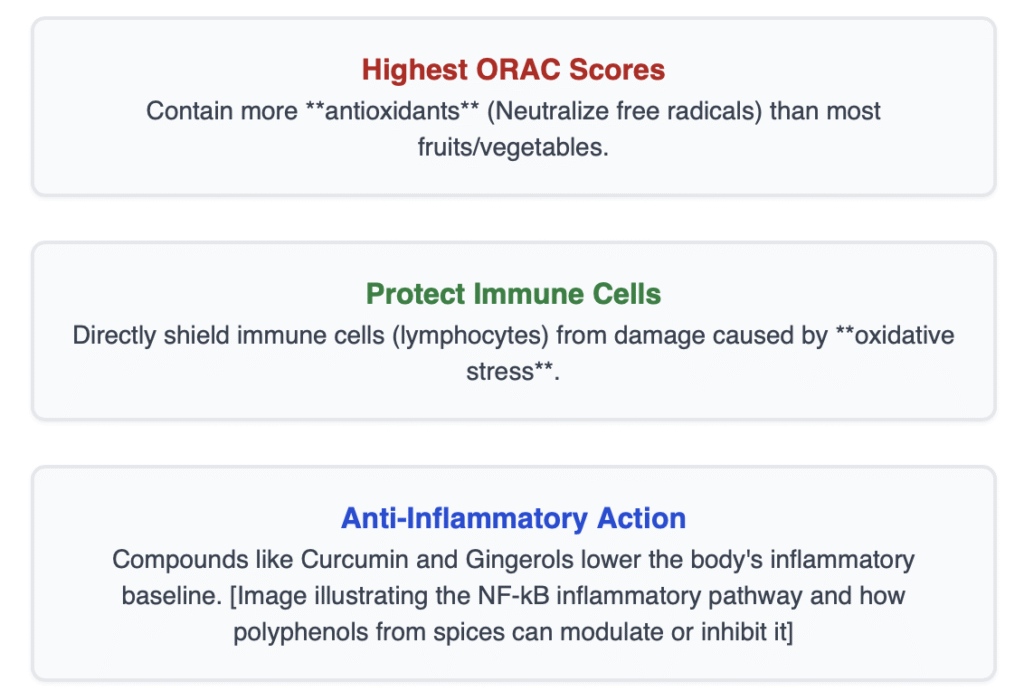
Herbs and spices consistently demonstrate the highest Oxygen Radical Absorbance Capacity (ORAC) scores—a measure of antioxidant power—of any food group. For example, a single teaspoon of ground cloves or cinnamon can contain more antioxidants than an entire cup of blueberries.
These antioxidants perform critical duties in immune health:
- Neutralizing Free Radicals: They quench the highly reactive free radicals generated by metabolism and chronic stress, which otherwise cause widespread cellular damage (oxidative stress). Since oxidative stress weakens immune cells and promotes chronic inflammation, neutralizing it is foundational to immune resilience.
- Protecting Immune Cells: Antioxidants directly protect immune cells (like lymphocytes and phagocytes) from damage, ensuring they remain robust and ready to fight infection.
Anti-Inflammatory Action
Beyond general antioxidant capacity, many spice compounds, such as curcumin (turmeric), gingerols (ginger), and cinnamaldehyde (cinnamon), possess potent anti-inflammatory properties. By modulating pro-inflammatory pathways (like the NF-κB pathway), spices help keep systemic inflammation in check. Chronic low-grade inflammation is a major burden on the immune system, making it less effective when a real threat (like a virus) emerges. Spices effectively lower the “baseline noise” of inflammation.
🧠 The Diversity Principle: Microbial Defense and Synergism
Why is rotation and diversity so important? The answer lies in the concept of synergism and the complex needs of your gut microbiome.
Synergism: The 1 + 1 = 3 Effect
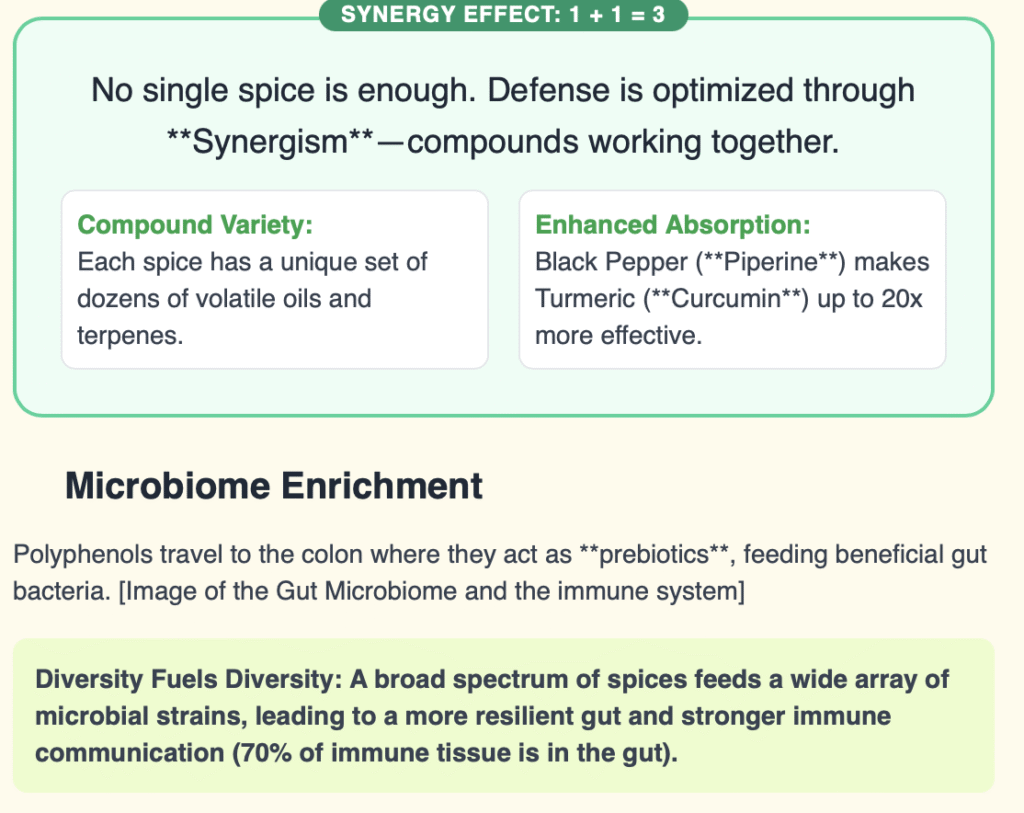
No single spice contains every beneficial compound. The human body is a complex biological system, and its defenses are optimized when they receive a wide spectrum of biochemical signals.
- Compound Variety: Each spice contains a unique set of dozens of polyphenols, terpenes, and volatile oils. For example, oregano contains carvacrol (antimicrobial), rosemary contains carnosol (neuroprotective), and black pepper contains piperine (bioavailability enhancer).
- Enhanced Efficacy: When these compounds are consumed together, they often exhibit synergistic effects. One compound might enhance the absorption of another (like piperine boosting curcumin absorption), or two compounds might target different steps in the same inflammatory cascade, achieving a more powerful outcome than either one alone. Relying on just one or two spices misses out on this biological teamwork.
Microbiome Enrichment
Your immune system is inextricably linked to your gut microbiome—the trillions of bacteria living in your intestines.Over 70% of your immune tissue resides around your gut.
- Food for the Gut Bugs: Polyphenols are not fully absorbed in the small intestine; they travel to the colon, where they serve as prebiotics, feeding beneficial gut bacteria.
- Diversity Fuels Diversity: Every different spice and herb feeds a slightly different strain of beneficial bacteria. A broad, varied intake of spices encourages a diverse and robust gut microbial community. A diverse microbiome is more resilient, produces a wider array of beneficial short-chain fatty acids (SCFAs), and is better at communicating with and modulating the immune system. A monotonous diet, even if healthy, leads to a less resilient, less diverse gut flora.
👀 The Danger of Culinary Monotony: The 4-Spice Trap
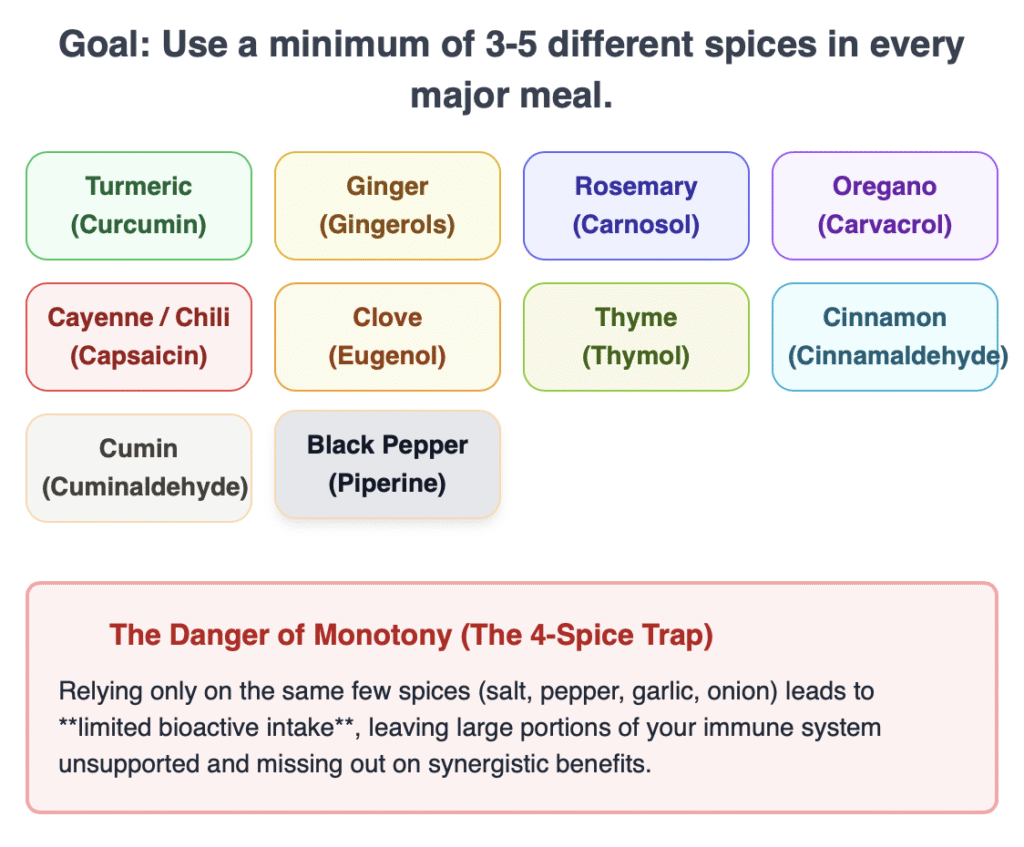
While the world offers hundreds of flavorful, health-boosting spices, the average Western diet is stunningly limited. Most households regularly cycle through the same four to five spices—often relying on salt, black pepper, garlic powder, onion powder, and perhaps paprika.
This culinary monotony creates several problems for the immune system:
- Limited Bioactive Intake: The body only receives the limited set of polyphenols found in those four spices, leaving vast portions of its defensive systems unsupported.
- Ingredient Fatigue: Just as bacteria can become resistant to antibiotics, the gut and metabolic pathways may become less responsive to a perpetually repeated chemical signal.
- Missed Opportunities: The opportunity to constantly expose the body to novel antimicrobial and anti-inflammatory compounds is lost. The immune system, like a muscle, performs best when challenged by variety.
To harness the full spectrum of phytochemical defense, we must consciously break out of the 4-spice trap and adopt a strategy of deliberate rotation.
⏳ The 10-Spice Rotation: Your Immune Powerhouse
The goal of the 10-Spice Rotation is not to meticulously measure every milligram, but to commit to using a minimum of three to five different spices in every meal and to actively cycle through a diverse list over the course of the week.
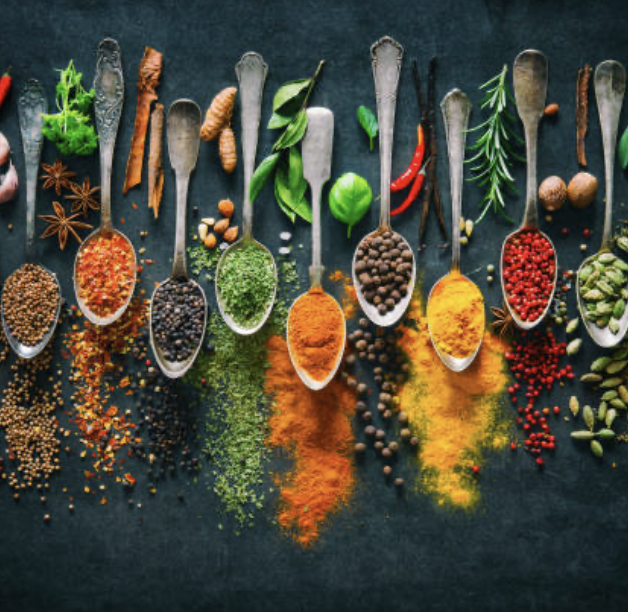
Here is a foundational list of 10 powerhouse spices, categorized by their primary benefits, that you should aim to incorporate regularly:
| Category | Spice | Key Bioactive Compound | Primary Immune Benefit |
| The Anti-Inflammatories | Turmeric | Curcumin | Powerful chronic inflammation reduction, immune modulation. |
| Ginger | Gingerols, Shogaols | Acute inflammation reduction, gut motility, anti-nausea. | |
| The Antimicrobials | Oregano | Carvacrol, Thymol | Broad-spectrum antimicrobial, potent anti-fungal action. |
| Clove | Eugenol | Extremely high antioxidant capacity, oral health, antiseptic. | |
| Cinnamon | Cinnamaldehyde | Blood sugar regulation (reduces metabolic stress), anti-bacterial. | |
| The Antioxidants/Digestives | Rosemary | Carnosol, Rosmarinic Acid | Neuroprotective, enhances liver detoxification, antioxidant. |
| Cumin | Cuminaldehyde | Aids digestion (reduces immune load on the gut), high iron content. | |
| The Enhancers | Black Pepper | Piperine | Enhances bioavailability of other compounds (especially curcumin). |
| Cayenne/Chili | Capsaicin | Promotes thermogenesis, reduces pain, anti-inflammatory. | |
| The Leafy Greens | Thyme | Thymol | Respiratory health, potent antioxidant, anti-bacterial. |

Implementing the Rotation:
- The Daily Minimum: Aim to use at least three spices from this list in your primary cooked meal of the day. For example, in a chili, you might combine cumin, oregano, and cayenne.
- The Weekly Cycle: Avoid making the same exact spiced dish two days in a row. If Monday’s meal was rich in Turmeric and Ginger, Tuesday’s dish should emphasize Rosemary and Thyme.
- Hidden Opportunities:
- Coffee/Tea: Add a dash of cinnamon or clove to your morning drink.
- Smoothies: Blend in fresh ginger or a pinch of turmeric.
- Salad Dressings: Whisk dried oregano, thyme, and rosemary into your olive oil and vinegar dressing.
- Grains/Beans: When cooking rice, quinoa, or lentils, add spices like cumin, coriander, and turmeric for flavor and defense.
The Strategic Power of Spicing to Reduce Metabolic Stress
One of the most vital, yet often overlooked, ways spices support the immune system is by managing metabolic stress. When you consume a meal, especially one rich in carbohydrates or fat, the digestive process itself generates a temporary wave of oxidative stress.
- Post-Meal Defense: Studies have shown that consuming spices with the meal significantly mitigates this post-meal oxidative stress. For instance, adding cinnamon to a carbohydrate-rich meal can help flatten the glucose spike, reducing the subsequent insulin surge and its related inflammatory burden.
- The Daily Dose: By integrating high-antioxidant spices into every meal, you are providing the body with immediate, localized defense against the oxidative hit of digestion, freeing up the immune system to focus on patrolling for pathogens.

Conclusion: Spice as a Foundational Pillar of Health
The days of viewing herbs and spices as merely an optional luxury are over. They are complex, concentrated sources of thousands of bioactive compounds that play a non-negotiable role in immune integrity, gut health, and systemic resilience.
The key to unlocking this power is moving past singular, repetitive consumption and embracing diversity and rotation. By committing to a broad spectrum of the most potent botanicals—from the deep earthiness of turmeric to the aromatic bite of clove—you are feeding your cellular defenses, enriching your gut microbiome, and strengthening your body’s ability to resist the challenges of aging and disease.
The simple, flavorful act of opening up your spice cabinet and consciously rotating through 10 or more varieties is perhaps the easiest and most enjoyable action you can take to build an immune system that is not just reactive, but profoundly resilient.