

SEO Summary:
- The thyroid gland regulates every cell in your body, yet standard lab results for TSH (Thyroid Stimulating Hormone) often mask a functional slowdown—a state where thyroid hormone is produced but not efficiently used by the cells.
- This functional hypothyroidism is frequently driven not by disease, but by a critical imbalance between two essential trace minerals: Iodine and Selenium.
- Most modern diets accidentally deplete Selenium, the mineral necessary for converting the inactive T4 hormone into the active T3 hormone, while leaving the thyroid vulnerable to damage.
- Click to learn the required nutrient pair, the ideal ratio, and how to support your metabolism even when your blood tests are deemed “normal.”
The Metabolic Engine: Why “Normal” Isn’t Always Optimal

I often hear clients express deep frustration: “My thyroid labs are normal, but I’m tired, gaining weight, and losing hair. What is wrong?”
The disconnect between textbook lab results and real-world symptoms is often rooted in the difference between diagnostic and functional health. The thyroid gland acts as your body’s metabolic engine, controlling the pace at which every single cell converts calories to energy.
Standard blood tests primarily rely on TSH (Thyroid Stimulating Hormone). TSH is released by the pituitary gland and signals the thyroid to produce hormones. If TSH is within the broad “normal” range (typically 0.5–4.5 mIU/L), many conventional practitioners stop there, concluding the problem lies elsewhere.
The Limitation of the TSH Test
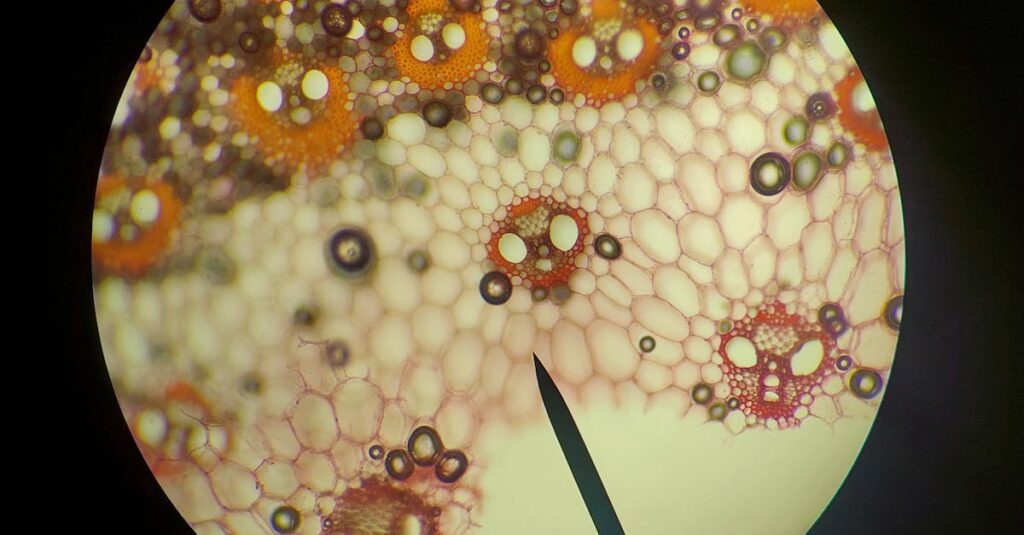
The TSH test only measures the conversation between your pituitary and thyroid; it doesn’t measure the final, crucial step: cellular utilization.
The thyroid produces mostly T4 (inactive hormone). T4 must travel to your liver, kidneys, and other tissues, where it is converted into the highly active form, T3. T3 is the true metabolic gas pedal that enters the cell and sets the pace.
Functional Hypothyroidism occurs when the body struggles with this final step—the T4-to-T3 conversion—or the cell receptors are resistant to T3, even if the TSH levels are technically within range. Your body is running, but the engine is sputtering due to a fuel problem, and that fuel problem is often mineral-based.
The Quiet Symptoms of Functional Sluggishness
When the thyroid system is functionally slow, the symptoms are pervasive because every cell slows down, yet they are often dismissed because the primary lab marker is “normal.”
Common Symptoms of Unaddressed Thyroid Sluggishness
- Persistent Fatigue: More than just being tired, this is a deep, bone-weary fatigue that sleep doesn’t resolve.
- Weight Gain and Resistance: Difficulty losing weight, even with strict diet and intense exercise. The low T3 signal keeps the body in a metabolic “saving” mode.
- Cold Intolerance: Feeling persistently cold, especially in the hands and feet, due to a lower core body temperature.
- Hair Loss and Skin Changes: Hair loss (especially the outer third of the eyebrow), dry skin, and brittle nails are common signs that the cells are not receiving the metabolic energy needed for rapid regeneration.
- Brain Fog and Low Mood: Sluggish thyroid function reduces cerebral blood flow and neurotransmitter synthesis, contributing to difficulty concentrating and persistent low mood.
- Constipation: Reduced intestinal motility is a classic sign of systemic metabolic slowdown.
If your TSH is below 4.5 mIU/L but you struggle with these issues, it is time to look deeper, starting with the two most essential minerals involved in the thyroid cascade.
The Broken Balance: Iodine and Selenium’s Toxic Relationship
The production and activation of thyroid hormones is a delicate two-step process requiring the perfect synergy of Iodine and Selenium. If these two nutrients are out of balance, the entire metabolic cascade breaks down, regardless of how much TSH the pituitary produces.
Step 1: Making the Hormone (Iodine)
Iodine is the raw material used to build the thyroid hormones (T4 has four iodine atoms; T3 has three). Without enough Iodine, the gland simply cannot make enough hormone.
Step 2: Activating and Protecting the Gland (Selenium)
This is the key step most people miss. Selenium is required for two vital functions:
- The Conversion: Selenium is a necessary cofactor for the deiodinase enzymes. These are the tiny molecular scissors that snip an iodine atom off the T4 hormone to create the active T3 hormone. Without adequate Selenium, T4 piles up, and T3 (the true gas pedal) remains low.
- The Protection: The process of creating thyroid hormone (organification of iodine) generates highly reactive oxygen species (free radicals). The thyroid gland must have a powerful defense system to avoid destroying itself. That defense system is a selenium-dependent enzyme called Glutathione Peroxidase.
The Toxic Trap of Modern Diet
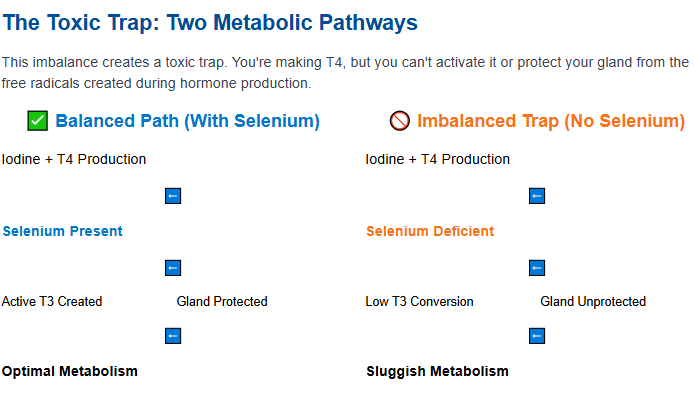
Modern diets are often adequate in Iodine (due to iodized salt) but woefully deficient in Selenium (due to nutrient-depleted soil).
This creates the worst-case scenario: the thyroid has enough Iodine to make T4 and generate damaging free radicals, but lacks the necessary Selenium to activate T3 and protect the gland from the self-inflicted oxidative damage. This is the functional breakdown that leads to cellular sluggishness and can, over time, contribute to thyroid antibodies and chronic disease.
The Nutrient Pair Protocol: Restoring the Balance
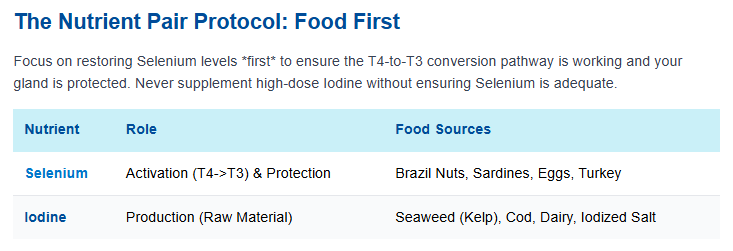
The goal is not simply to supplement, but to restore the appropriate balance between Iodine and Selenium, ensuring your body has the raw materials needed for production and the protective enzymes needed for activation.
Essential Nutrient Protocol Checklist
- Rule One: Never supplement Iodine alone. If you introduce Iodine without first or simultaneously ensuring sufficient Selenium, you increase oxidative stress on the gland.
- Rule Two: Aim to normalize Selenium levels first. Supplementing with 200 mcg of Selenium (in the form of selenomethionine) for 4 to 8 weeks before increasing Iodine can be a safer, more effective starting point.
- Rule Three: Focus on Food. Food sources of these nutrients come packaged with cofactors that aid absorption and utilization, making them the safest starting line.
Balancing Iodine and Selenium Through Diet
| Nutrient | Primary Role | Excellent Food Sources (Focus) | Recommended Daily Intake (RDI) |
| Selenium | Conversion (T4->T3), Protection (Glutathione Peroxidase) | Brazil Nuts (1-2 daily), Sardines, Eggs, Turkey, Sunflower Seeds | 55 mcg (Aim for 100-200 mcg therapeutically) |
| Iodine | Production (T4 and T3) | Seaweed (Kelp), Cod, Shrimp, Dairy, Iodized Salt (minimal) | 150 mcg |
The Brazil Nut Hack: Eating just one to two Brazil nuts daily can supply your entire recommended daily allowance of Selenium, making it the easiest dietary fix for this common deficiency.
Beyond the Gland: Comprehensive Thyroid Panel Checklist
If you are experiencing symptoms despite a “normal” TSH, you have every right to request a deeper look. A functional approach to thyroid health requires looking at the actual hormones in circulation, not just the signal hormone (TSH).
The Full Thyroid Panel You Need
| Test | What It Measures | Functional Significance |
| TSH | Signal from the pituitary to the thyroid. | Should ideally be in the functional range (0.5 – 2.5 mIU/L), not just the diagnostic range. |
| Free T4 | Unbound, circulating inactive hormone. | Shows if the gland is producing enough raw material. |
| Free T3 | Unbound, circulating active hormone (the gas pedal). | The most critical indicator. A low Free T3 despite normal T4 suggests a conversion problem (often Selenium deficiency). |
| Reverse T3 (rT3) | An inactive T3 metabolite. | High levels indicate the body is intentionally slowing metabolism due to stress or inflammation. |
| TPO & TgAb | Thyroid Peroxidase & Thyroglobulin Antibodies. | The presence of antibodies confirms an autoimmune process (Hashimoto’s), which requires a completely different management strategy. |
Advocate for yourself and ask your practitioner to order these comprehensive tests. You cannot effectively fix the functional slowdown until you know the full picture of your hormone status.
My Personal Advice as a Health Advocate
In my work, I find that the thyroid is one of the most responsive systems to gentle, precise nutritional intervention. The key is patience and a food-first approach.
The fear of Iodine is often overblown, but the danger of ignoring Selenium is real. Before reaching for a complex, expensive supplement, focus on that Brazil nut habit and ensuring you are getting adequate protein (a good source of both Iodine and Selenium). These are the body’s building blocks, and they work synergistically.
Also, recognize the heavy toll that stress takes on your conversion process. High stress leads to elevated cortisol, which in turn favors the creation of Reverse T3 (the metabolic brake) over active T3. No amount of Selenium can overcome persistent, unmanaged stress. View your thyroid health as a reflection of your lifestyle—it requires nutrient balance, yes, but also emotional stability and adequate rest.
Be your own advocate. If the lab results don’t match how you feel, politely insist on the full panel. You deserve to feel optimal, not just “normal.”
Myths vs. Facts: Thyroid Misconceptions
The thyroid is subject to constant misinformation, particularly regarding diet and weight.
| Myth | Fact |
| Myth: All unexplained weight gain is due to the thyroid. | Fact: While thyroid issues make weight loss difficult, many factors (diet, insulin resistance, sleep, cortisol) contribute. It’s a piece of the puzzle, not the whole answer. |
| Myth: All forms of salt (sea salt, Himalayan salt) provide enough iodine. | Fact: Only iodized table salt is fortified with iodine. Gourmet salts often have negligible iodine content, which is why a separate source (like fish or seaweed) is often needed. |
| Myth: Supplementing with a high dose of iodine will boost my metabolism. | Fact: High, unmonitored iodine supplementation, especially without sufficient protective selenium, can trigger or exacerbate autoimmune thyroiditis (Hashimoto’s) in susceptible individuals. Caution is essential. |
| Myth: Once I start thyroid medication, I don’t need to worry about nutrition. | Fact: Even if you take medication (synthetic T4), the conversion to active T3 still requires adequate selenium, iron, zinc, and magnesium. Nutrition remains critical for effective treatment. |
FAQs (Frequently Asked Questions)
- What is Reverse T3 (rT3)?rT3 is an inactive, mirror image of T3. The body produces it as a defense mechanism during periods of high stress, crash dieting, or severe illness to intentionally put the brakes on metabolism. High rT3 is a huge clue that the body is highly stressed.
- How long does it take to feel better after correcting the imbalance?It can take time. Selenium levels can be raised relatively quickly (4–8 weeks), but the thyroid hormone cycle itself takes time to normalize. Expect to wait 2 to 3 months before assessing noticeable differences in energy and temperature.
- Does stress directly affect my thyroid function?Yes, profoundly. Chronic high cortisol (the stress hormone) directly inhibits the deiodinase enzymes, shunting T4 away from active T3 production toward Reverse T3, slowing your entire system down.
- Should I avoid all goitrogenic foods (e.g., raw broccoli)?Goitrogenic foods (cruciferous vegetables) only pose a theoretical risk if consumed in extremely large quantities and you have a severe, existing iodine deficiency. Cooking them largely inactivates the goitrogenic compounds. For the average person, the nutritional benefits outweigh the minimal risk.
- Can I test my Selenium and Iodine levels?Yes, both can be tested. Selenium is often tested via whole blood or red blood cell levels, and Iodine is typically measured via a 24-hour urine test. These tests can provide personalized guidance for supplementation.
Conclusion & A Final Word of Encouragement
Your thyroid is the cornerstone of your metabolism, and its perfect function demands more than just a passing grade on a single blood test. It requires the gentle, precise balance of its primary working components: Iodine and Selenium.
By understanding the delicate relationship between these two nutrients—Iodine for production and Selenium for activation and protection—you are empowered to take control. Commit to correcting the subtle, yet powerful, Selenium deficiency first. Introduce nutrient-dense foods like Brazil nuts and quality protein.
Do not accept feeling chronically unwell just because your labs are “normal.” Demand the full picture, restore the critical balance, and give your metabolic engine the high-quality fuel it deserves.
Disclaimer: I am a health advocate and writer, not a medical doctor. The information in this article is for informational purposes only and is not a substitute for professional medical advice, diagnosis, or treatment. Always consult your physician or an endocrinologist before making changes to any prescribed thyroid medication or before starting any high-dose mineral supplementation, especially if you have an existing autoimmune condition.