
SEO Summary:
- Egg yolks are the single most concentrated food source of Choline, an essential nutrient vital for memory, mood regulation, and the structural integrity of every cell membrane.
- Choline is the direct precursor to Acetylcholine, the primary neurotransmitter responsible for learning and muscle contraction; deficiency can impair focus and memory recall.
- The nutrient is sensitive to heat; high-temperature cooking methods like hard frying or prolonged baking significantly degrade Choline’s bioavailability.
- Click to learn the best cooking methods—including poaching and soft-boiling—that maximize the retention of this brain-boosting compound.
The Yolk’s Golden Secret: Fueling the Cognitive Engine
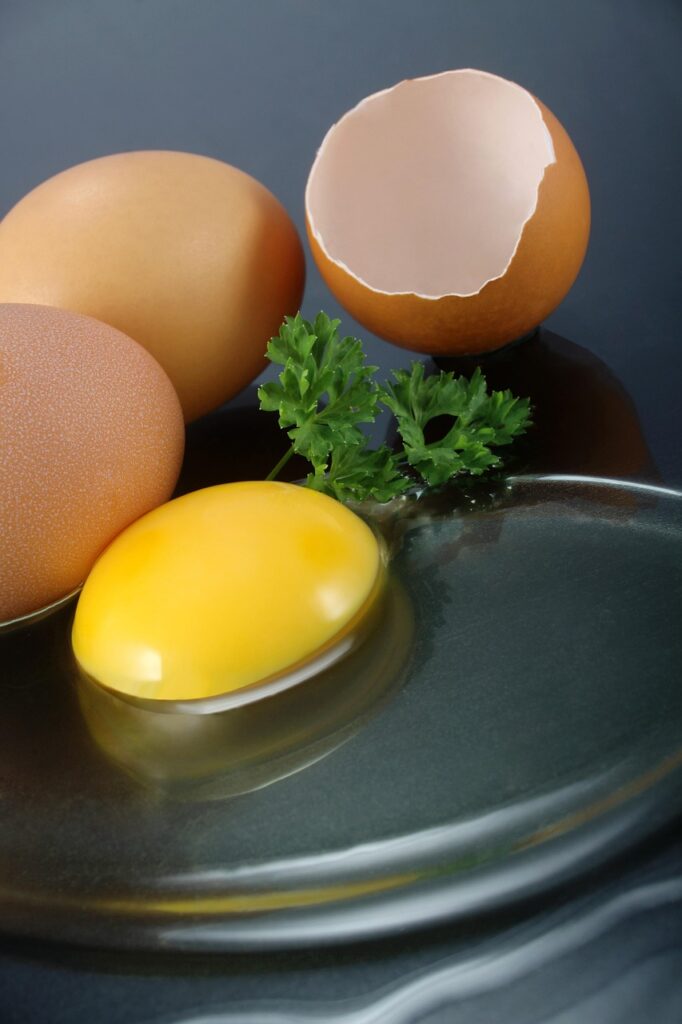
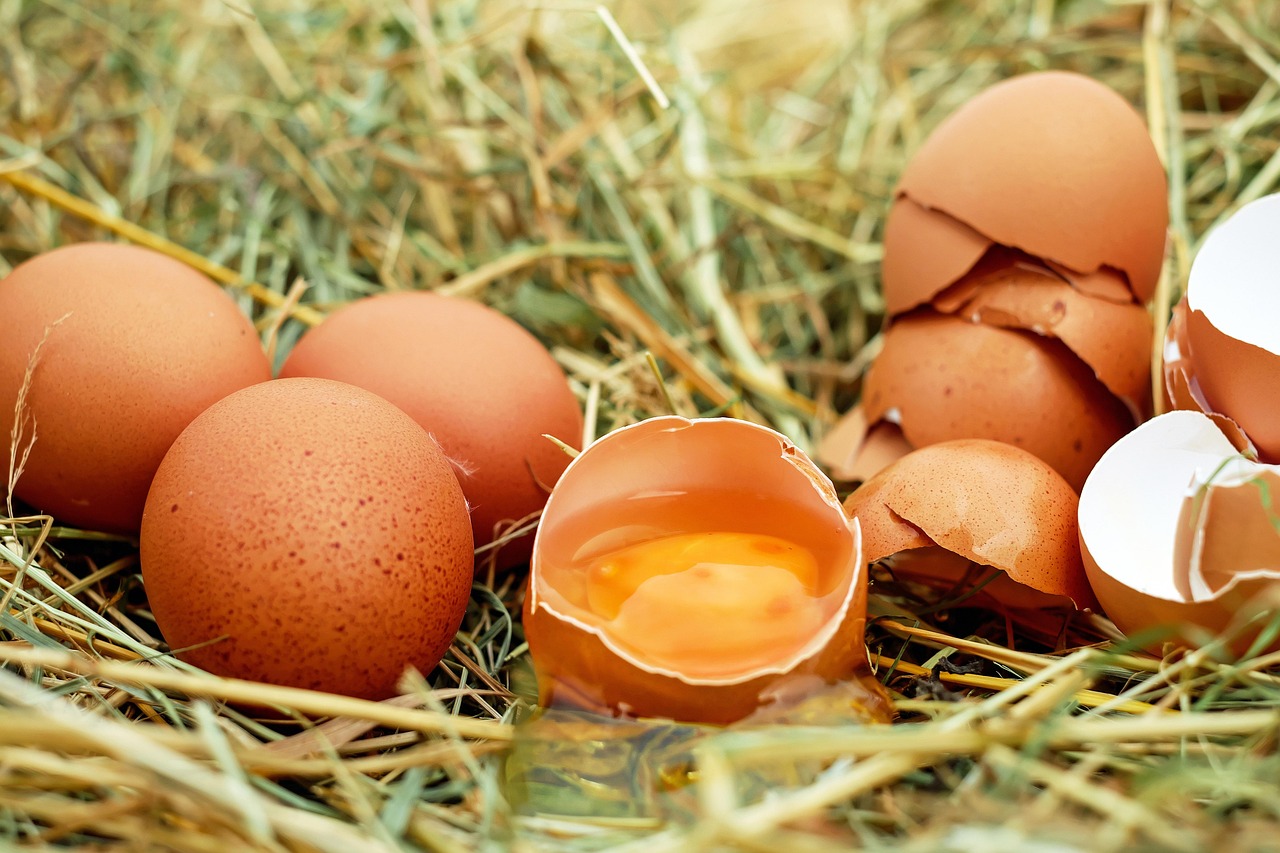
For decades, the humble egg yolk was unfairly vilified. It was demonized as a cholesterol enemy, and countless people banished it from their diet, opting for nutrient-poor egg white omelets. What they missed, however, was that they were discarding one of the most perfectly packaged forms of brain fuel known to nutrition science.
I want to reintroduce you to the yolk as the nutritional powerhouse it truly is. Hidden within that rich, creamy center is a concentrated supply of Choline—a vital, water-soluble nutrient that is foundational to every cell in your body, but especially critical for your brain. Choline is classified as an essential nutrient, meaning our bodies can’t produce enough of it on their own; we must get it from food.
The central role of Choline is in the creation of Acetylcholine (ACh). If you can remember nothing else from this article, remember that name. Acetylcholine is the primary neurotransmitter responsible for memory, mood, and muscle control. It is literally the chemical messenger that allows your brain cells (neurons) to talk to each other quickly and efficiently.
Think of your brain like a high-speed internet network. Choline is the material used to build the fiber-optic cables (cell membranes) and is the fuel for the signal that transmits the data (Acetylcholine). Without enough Choline, your memory signals slow down, your focus wanes, and your ability to retrieve information is impaired. Given that an estimated 90% of the population does not consume enough Choline, understanding how to maximize this nutrient in our diet is a critical step toward proactive brain health.
The Quiet Cost of Choline Deficiency
Unlike a deficiency in Vitamin C (scurvy) or Iron (anemia), Choline deficiency often presents subtly, manifesting as quiet impairments in cognitive function that we often chalk up to stress or aging. The impact is far-reaching, affecting both developing and adult brains.
The Brain’s Warning Signals
If you are consistently low on Choline, your cognitive “internet speed” decreases. Look for these quiet costs:
- Memory Retrieval Difficulties: This is the classic “tip-of-the-tongue” feeling. If your brain can’t quickly generate the necessary Acetylcholine, accessing stored memories becomes a struggle.
- Impaired Focus: The ability to sustain attention on a single task relies on a steady supply of Acetylcholine. Low Choline can translate to mental fatigue and poor concentration.
- Mood Instability: Choline plays a role in neurotransmitter pathways related to mood. Deficiencies have been linked to emotional fluctuations and increased stress sensitivity.
- Muscle Function: Since Acetylcholine is required for every muscle contraction, severe deficiency can manifest as muscle damage or poor muscle control, though this is rare in healthy adults.
The Critical Role in Development
For expectant mothers, Choline is non-negotiable. Research strongly indicates that adequate maternal Choline intake during pregnancy and early infancy is vital for:
- Fetal Brain Development: It plays a role in the formation of the hippocampus, the brain’s center for memory and learning.
- Spinal Cord Protection: Along with folate, Choline is essential for ensuring proper nervous system development.
I always advise women who are pregnant or planning to conceive to prioritize Choline-rich foods, making those egg yolks a daily, non-negotiable part of their diet.
Why We Miss the Choline Mark: The Enemy is Heat
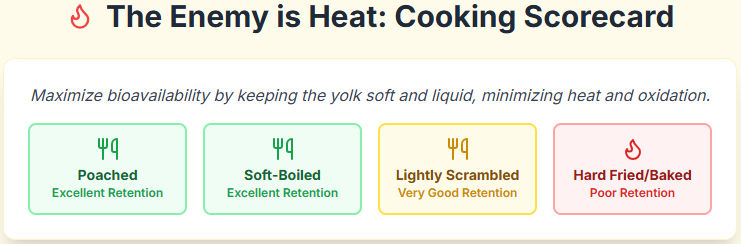
We know most people miss the daily requirement simply because they avoid the yolks. But for those who are smart enough to eat the yolk, they often destroy the key nutrient through improper cooking. The biggest enemy to Choline is high heat and prolonged cooking time.
Two Primary Reasons for Choline Loss
- Fear of Fat and Cholesterol (Historical Misinformation): This is the oldest, most damaging myth. People avoid the yolk entirely because they believe the cholesterol will harm their heart. The vast majority of modern research shows that dietary cholesterol, especially from nutrient-dense foods like eggs, has a minimal impact on blood cholesterol levels for most people. By avoiding the yolk, you are avoiding nearly 98% of the egg’s Choline.
- Nutrient Oxidation and Degradation: Choline, along with other sensitive nutrients in the yolk like Lutein and Zeaxanthin (crucial for eye health), is prone to damage from oxidation, which is accelerated by high temperatures.
When you cook an egg yolk hard and dry (think a hard-fried egg or a fully baked omelet), you are exposing the nutrient structure to prolonged heat and oxygen. This chemical process degrades the Choline, lowering its bioavailability—the amount your body can actually absorb and use. The ideal cooking method, therefore, is one that sets the egg white but leaves the yolk soft, runny, and minimally oxidized.
The Golden Rule of Cooking: Maximizing Choline Bioavailability

The secret to unlocking the brain-boosting power of egg yolks lies in treating them gently. We want to cook the white to make the proteins digestible, but we want to leave the yolk as close to its raw, nutrient-intact state as possible.
The Advocate’s Egg Cooking Method Scorecard
This table compares common cooking methods based on their heat profile and the resulting nutrient retention.
| Cooking Method | Heat Profile | Yolk Texture | Choline Retention Score |
| Poached | Low/Moist | Runny/Liquid | Excellent |
| Soft-Boiled | Low/Moist | Liquid Center | Excellent |
| Lightly Scrambled | Medium/Fast | Moist/Creamy | Very Good |
| Over Easy/Medium | Medium/Dry | Soft/Slightly Set | Good |
| Hard-Boiled | High/Prolonged | Hard/Dry | Fair |
| Hard Fried/Baked | High/Dry | Hard/Crusty | Poor |
Actionable Checklist: The Best Way to Cook Your Eggs
- Prioritize Poaching: This method uses moist, low heat, which is the most protective for the yolk’s sensitive nutrients. The water acts as a buffer against oxidation.
- Embrace the Soft-Boil: Cook for 5 to 7 minutes to ensure the white is set but the yolk remains warm, flowing, and ready for maximum absorption.
- Use Low Heat for Scrambling: If you prefer scrambling, use low-to-medium heat and pull them off the stove while they are still visibly moist and creamy. Never cook them until they are dry or browned.
Beyond the Egg: Other Choline-Rich Foods and Dietary Integration
While eggs are the most convenient source, a comprehensive approach to brain health requires integrating other Choline-rich foods, especially if you have high nutrient needs (like athletes or pregnant individuals).
A Balanced Choline Plate
The following foods are also high in Choline and should be integrated alongside your daily egg intake:
- Beef Liver: The single most concentrated source, far surpassing eggs.
- Beef: Especially grass-fed, which retains higher nutrient content.
- Fish: Cod and Salmon are excellent sources.
- Cruciferous Vegetables: Broccoli, Brussels sprouts, and cauliflower (though the absorption rate is lower than animal sources).
- Legumes: Kidney beans and soybeans.
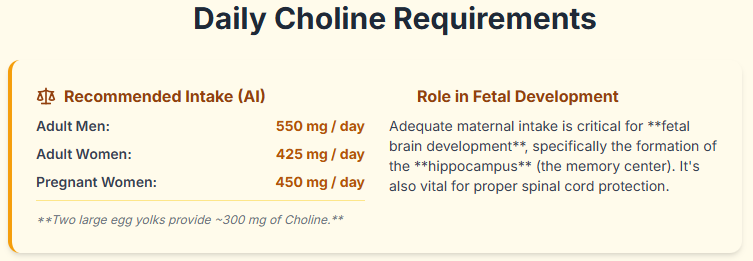
My Integration Tip: I often recommend eating two soft-boiled or poached eggs for breakfast, and then having a serving of a Choline-rich vegetable like sautéed Brussels sprouts or a small portion of liver for dinner. This dual approach ensures you hit the recommended daily intake (RDI), which is 425 mg for women and 550 mg for men. Given that a single large egg yolk has around 150 mg of Choline, 2-3 yolks per day gets you most of the way there easily.
Myths vs. Facts: Busting Egg-Cholesterol Misconceptions
The greatest disservice to public health in the last half-century was the widespread fear of dietary cholesterol. We must dispel this myth entirely so you feel confident consuming this brain-boosting food.
| Myth | Fact |
| Myth: Eating too many eggs raises your bad cholesterol (LDL). | Fact: For about 70% of the population, dietary cholesterol has a minimal effect on blood cholesterol. Eggs often increase the size of LDL particles, making them less harmful. |
| Myth: Egg whites are healthier than yolks. | Fact: Egg whites contain mostly protein and water. The yolk contains nearly all the vitamins, minerals, healthy fats, and 100% of the Choline and eye-protecting Lutein/Zeaxanthin. |
| Myth: Only organic or free-range eggs have Choline. | Fact: All egg yolks contain Choline. However, pastured or free-range eggs often have superior levels of Vitamin D and Omega-3s, which are also vital for brain health. |
| Myth: I should buy cholesterol-free egg substitutes. | Fact: These products strip out the yolk—the Choline, Lutein, and healthy fats—leaving a nutritionally diminished product. They are not a substitute for the whole, real food. |
My Personal Advice as a Health Advocate
I’ve seen the direct benefits of high Choline intake, particularly in high-demand environments. For college students studying for finals or busy professionals managing intense deadlines, a commitment to eating two soft-boiled eggs every morning is a simple, non-pharmaceutical cognitive boost.
I also want to touch on the psychological benefit. Eating an egg with a runny yolk—the simple act of scooping up that golden richness with a piece of whole-grain toast—feels inherently nourishing. It’s a sensory cue that you are fueling your body with dense, foundational nutrition. This positive connection to food is part of the healing process.
Don’t let historical fears hold you back. Reclaim the yolk. Embrace the soft, runny texture as a visual cue that you’re maximizing the brain-boosting power of Choline. This is one of the easiest, most affordable dietary interventions you can make for lifelong memory and cognitive resilience.
FAQs (Frequently Asked Questions)
- How much Choline do I need daily?The current Adequate Intake (AI) is 550 mg per day for adult men and 425 mg per day for adult women. Two large egg yolks (around 300 mg) get you a significant portion of the way there.
- Are there supplements for Choline?Yes, Choline is available in supplements, including lecithin and various Choline salts, but getting it from whole foods like eggs and liver is always the most bioavailable and beneficial route.
- What about the Vitamin D in eggs?The Vitamin D is also found almost exclusively in the yolk. Eggs from chickens that have access to sunlight (pastured) can contain significantly higher levels of Vitamin D, making them an excellent source alongside the Choline.
- Can I still eat my eggs scrambled if I cook them gently?Yes! Lightly scrambled is a fantastic method. Just remember the golden rule: low heat and pull them off the burner when they are still moist and creamy, ensuring no browning or crusting occurs.
- Does microwaving an egg affect the Choline?Microwaving uses high, intense heat, which can lead to localized overheating and rapid oxidation. While convenient, it is not the most protective method for preserving Choline. Stick to poaching or soft-boiling for maximum brain benefit.
Conclusion
The decades-long misinformation campaign against the egg yolk was a profound disservice to brain health. We now understand that the yolk is a perfect nutritional capsule, offering concentrated Choline that is crucial for building and maintaining the brain’s cognitive infrastructure.
Your memory, focus, and overall mood rely heavily on the efficient signaling of Acetylcholine. By making the simple shift from hard-fried, dry eggs to gently cooked, soft-yolk methods like poaching or soft-boiling, you are maximizing the nutritional value of one of the world’s most accessible superfoods.
Embrace the whole egg. Embrace the golden, runny yolk. It is the cheapest and most delicious investment you can make in your long-term cognitive resilience.
Disclaimer: I am a health advocate and writer, not a medical doctor. The information in this article is for informational purposes only and is not a substitute for professional medical advice, diagnosis, or treatment. Always seek the advice of your physician or a registered dietitian before making significant changes to your diet.