

SEO Summary:
- Acute, brief exposure to cold air or water acts as a beneficial stressor (hormesis), triggering a rapid release of the stress hormone norepinephrine.
- This norepinephrine spike immediately mobilizes key immune cells, including Natural Killer (NK) cells and T-cells, into the bloodstream, strengthening surveillance against infections.
- The most effective immune boost requires a precise protocol: typically 30 seconds to 3 minutes of cold exposure below 60°F (15°C), performed regularly.
- Click to learn the exact timing and safety guidelines for integrating this powerful biohack into your weekly routine, ensuring maximum cellular defense without undue risk.
The Shock and Awe: How Cold Triggers Cellular Defense
The idea of voluntarily stepping into frigid conditions might sound like medieval medicine, but my research and personal experience confirm it: acute cold exposure is one of the most immediate and powerful immune system boosters we have at our disposal. It’s not just an old wives’ tale; it’s a deliberate biological response designed to protect us.
For years, we’ve prioritized comfort, creating climates within our homes and cars that never challenge our biology. While comfortable, this chronic ease dulls our body’s finely tuned defense mechanisms. Cold exposure is a way to wake up those ancient systems, specifically the one responsible for rapid immune mobilization.
When your skin is suddenly exposed to cold air or water (a temperature generally below 60°F or 15°C), your body perceives this as an acute, non-life-threatening stressor. Your nervous system immediately flips a switch, activating the sympathetic nervous system (our “fight or flight” response). The result is a flood of key hormones, most notably norepinephrine.
Norepinephrine is the critical link here. It’s a neurotransmitter and hormone that causes vasoconstriction (tightening blood vessels in the extremities), but simultaneously, it acts as a powerful signaling agent for the immune system. The moment norepinephrine spikes, it acts like an urgent alarm bell throughout your body, forcing your immune reserves—the white blood cells—to leave their storage sites (like the spleen and lymph nodes) and rush into your bloodstream. The net result is a measurable, immediate increase in circulating white blood cell counts, specifically the aggressive Natural Killer (NK) cells and T-cells that hunt down pathogens and virus-infected cells.
This isn’t about getting sick; it’s about making your immune system fitter, faster, and smarter.
Why Our Immunity Needs This Jolt: The Power of Hormetic Stress

In the world of preventative health, we talk often about hormesis. This is the phenomenon where a low dose of an otherwise harmful stressor produces a beneficial adaptive response. Too much cold can cause hypothermia; the right amount of cold causes resilience.
Our modern, sterile, and temperature-controlled lives have deprived our immune system of these beneficial challenges. When our immune cells are rarely called upon to mobilize quickly, they become sluggish. The cold provides a short, intense training session.
Factors Dulling Modern Immunity
- Chronic Comfort: Always maintaining a perfect 72°F environment means your body’s thermal regulation system—and the immune system linked to it—never gets a workout.
- Lack of Novel Stress: The immune system thrives on variety. When it is constantly fighting the same low-grade chronic inflammation (from diet or stress), it becomes less effective at mounting an acute defense against a new virus.
- Sedentary Lifestyle: Lymphatic circulation, which is essential for moving immune cells, relies heavily on muscle movement. If you sit all day, your cellular defense system slows down.
The Role of Brown Fat in Immunity
When you expose yourself to cold, you activate your Brown Adipose Tissue (BAT), or brown fat. Unlike white fat, brown fat burns calories to generate heat. Interestingly, BAT activation is not just a metabolic function; it is intricately linked to immune function. When BAT is mobilized, it produces signaling molecules that further enhance the acute immune response, providing a long-term benefit beyond the initial cold shock. Training your BAT with cold exposure is a fascinating new frontier in preventative health.
The Science of Stress: Not All Cold is Equal
To achieve the immune-boosting benefits, we must aim for acute, systemic cold shock. Simply feeling a little chilly on a winter morning won’t cut it. The cold must be intense enough to trigger the powerful norepinephrine response, but brief enough to avoid the damage of chronic hypothermia.
Differentiating Cold Stressors
| Stressor | Temperature/Duration | Immune Outcome | Effectiveness |
| Mild Chill (Office Air) | 68–72°F (20–22°C) for hours | No significant hormonal or immune spike. | Low |
| Acute Cold Shock (Ideal) | 40–60°F (4–15°C) for 1–3 minutes | Immediate norepinephrine release; NK and T-cell mobilization. | High |
| Chronic Hypothermia | Prolonged exposure leading to core temp drop. | Suppresses the immune system; dangerous and harmful. | Dangerous |
| Contrast Shower | Rapid switch from hot to cold (30-60 seconds) | Mobilizes circulation; moderate immune spike. | Medium |
The sweet spot is finding the temperature you can tolerate for about 1 to 3 minutes while maintaining safe and controlled breathing. For most people, a cold shower with the dial fully turned to cold will deliver the required shock.
The Precise Cold Exposure Protocol for Immune Activation
Consistency, rather than extreme duration, is the key to training your immune system. I recommend integrating this protocol 3 to 5 times per week to maintain a state of ready immune response.
The Healthcare Advocate’s Immune Boost Protocol
- Preparation (Mental Check): Before you enter the cold, stand in place and focus on slowing your breathing. Deep, controlled breaths are the anchor for managing the initial shock and preventing hyperventilation.
- The Shock Phase (30 Seconds): Start your shower with warm water, then switch the tap entirely to cold. Step fully under the stream. The first 30 seconds are the hardest. Focus on exhaling slowly, which naturally calms the sympathetic nervous system.
- The Immersion Phase (60–180 Seconds): Aim to stay under for a minimum of 60 seconds, working your way up to 180 seconds (3 minutes) over several weeks. During this time, your norepinephrine and white blood cell levels are peaking. Move your limbs to ensure cold exposure across your body.
- The Recovery Phase: Once done, dry off quickly and gently. Do not rush to warm up with a blanket or heater. Allow your body’s innate thermal regulation (your activated brown fat) to generate heat naturally. This signals to your body that the stressor is over and reinforces the adaptive response.
Actionable Checklist for Maximum Benefit:
- Frequency: 3–5 times per week.
- Temperature: As cold as your tap will go (ideally under 60°F/15°C).
- Breathing: Slow, controlled, diaphragmatic breaths (slow exhale is key).
- Timing: Mid-morning is often ideal, as the cold can provide a clean energy boost that lasts all day.
Safety First: When to Avoid the Cold Shock
While the benefits of cold exposure are vast, this is a powerful physiological tool that requires respect. It is an intense stressor, and certain pre-existing conditions mean this technique must be avoided or done only under medical supervision.
Critical Contraindications (Consult Your Doctor)
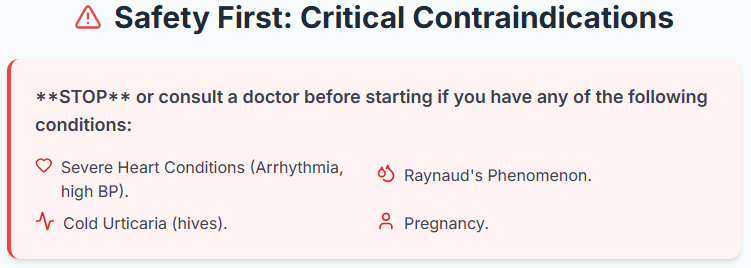
- Pre-existing Heart Conditions: If you have a history of heart arrhythmia, severe high blood pressure, or other serious cardiovascular issues, the sudden vasoconstriction caused by the cold shock can put undue strain on the heart. Avoid acute cold exposure entirely without a doctor’s clearance.
- Raynaud’s Phenomenon: This condition causes extreme vasoconstriction in the extremities (fingers/toes) in response to cold. Cold exposure can trigger painful attacks.
- Cold Urticaria: A condition where exposure to cold causes large hives (welts) to form on the skin.
- Pregnancy: While mild cold exposure is generally safe, the intense systemic shock caused by deep cold immersion is not recommended.
- Open Wounds or Active Infections: The focus should be on recovery, not adding new systemic stress.
My Personal Rule: Always err on the side of caution. If you are new to this, start with 15 seconds of cold water on just your extremities and work your way up gradually. Never push yourself to the point of pain or uncontrolled shivering.
My Personal Experience as a Health Advocate
I started my cold exposure journey skeptically. I hated the cold, and the idea of stepping into a frigid shower felt like torture. I was convinced the initial discomfort wasn’t worth the vague promise of “wellness.”
The breakthrough for me wasn’t the immune boost (which is hard to measure day-to-day), but the incredible mental resilience it built. The cold shower became a daily microcosm of life’s challenges: intense, temporary, and manageable if I simply controlled my breath. The massive spike in focus and clarity I felt after the shower was undeniable.
I found that integrating the cold immediately after a morning workout was the easiest way to stick to the protocol. The body is already warm and primed for physiological recovery. I noticed that during the winter months when I diligently maintained my cold exposure, I consistently avoided the seasonal colds and flu that plagued my colleagues—a personal, practical testament to the mobilized white blood cell defense. It became less of a health chore and more of a daily mental reset button.
Myths vs. Facts: Busting Cold Exposure Misconceptions
The practice of using cold for health is ancient, but the science is modern. Let’s clear up the most common misconceptions.
| Myth | Fact |
| Myth: Shivering means the cold is working. | Fact: Uncontrolled shivering means your core temperature is dropping too fast. The goal is acute shock, not hypothermia. Stop before you reach deep, uncontrollable shivers. |
| Myth: Cold causes the flu/a cold. | Fact: Viruses cause colds and flu. Acute, controlled cold exposure actually boosts the immune cells responsible for fighting those viruses. Chronic, deep cold exposure (like getting soaked and staying outside) is different, as it suppresses the immune system. |
| Myth: You need an expensive ice bath to get results. | Fact: A simple cold shower with the water temperature below 60°F (15°C) is perfectly sufficient to trigger the hormonal and immune norepinephrine response. |
| Myth: Cold exposure is only for athletes. | Fact: The immune-boosting and mental health benefits (focus, resilience) apply to everyone, regardless of fitness level. Start slow with a 30-second cold burst at the end of your shower. |
Conclusion & A Final Word of Encouragement
The modern world is designed for ease, but our biology thrives on challenge. The cold air protocol is a primal, potent form of hormetic stress that costs nothing but a few seconds of discomfort. It is the most direct way to signal to your body: “It’s time to mobilize the defenses.”
By deliberately engaging the cold—even for just one minute a day—you are doing far more than shocking your system; you are sending a rush of immune-boosting white blood cells, specifically the high-value NK and T-cells, into your circulation. This act of intentional discomfort is a profound act of self-care. It builds physical resilience, enhances mental clarity, and, most importantly, keeps your immune system sharp and ready for anything.
Start small. Start today. Control your breath, control the cold, and reap the incredible rewards of a fitter, faster, and more robust immune system.
Disclaimer: I am a health advocate and writer, not a medical doctor. The information in this article is for informational purposes only and is not a substitute for professional medical advice, diagnosis, or treatment. Always seek the advice of your physician, especially before initiating a new intense physical protocol like cold water immersion.