

SEO Summary:
- Oral acidosis (low mouth pH) promotes harmful bacteria like P. gingivalis, which release toxins that travel to the bloodstream.
- These toxins trigger widespread inflammation in the arteries, contributing directly to endothelial damage and atherosclerotic plaque formation.
- Many popular alcohol-based mouthwashes and sugary diets unknowingly disrupt the natural nitrate pathway, hindering the mouth’s ability to produce necessary nitric oxide for healthy blood pressure.
- Balancing your oral pH using diet, neutral hygiene products, and consistent flossing is a powerful, non-pharmaceutical strategy for reducing systemic inflammation and protecting your heart.
The Mouth-Body Connection: This is More Than Just a Cleaning
If you opened my fridge a few years ago, I’d show you my supplements for blood pressure, my cholesterol-lowering diet plan, and my workout regimen—all focused on my heart. But if you’d asked about my mouth, I’d have said, “It’s fine, I brush twice a day.” I missed the biggest picture of all: my mouth was actively working against my heart.
I want you to forget the idea that gum disease is just a dental problem. Periodontitis is an inflammatory disease, and inflammation is rarely content to stay put. When the bacterial environment in your mouth becomes too acidic—a state we call oral acidosis—it throws open the doors for highly aggressive, pathogenic bacteria to flourish. These aren’t just cavity-causers; they are silent cardiovascular saboteurs.
The environment in our mouth is constantly shifting, and the pH (the balance between acid and alkali) dictates which microscopic residents thrive. A healthy pH is around 7.0 (neutral). When it dips below 5.5, the environment becomes a breeding ground for harmful colonies. These colonies, specifically bacteria like Porphyromonas gingivalis (P. gingivalis), release potent toxins called lipopolysaccharides (LPS). Once released, these toxins slip through damaged or bleeding gums and enter the bloodstream, traveling straight to your arteries. This is where the real cardiac trouble begins.
The body sees the LPS toxins as foreign invaders, triggering a massive, systemic immune response. This leads to chronic inflammation across your entire body, and nowhere is this more damaging than in the delicate lining of your blood vessels—the endothelium. The mouth is simply the origin of a full-body inflammatory fire. That’s why I firmly believe balancing your oral pH is one of the most proactive, accessible, and essential steps you can take for heart longevity.
The Alarming Signs of Oral Acidosis and Systemic Risk
The terrifying truth is that you can have dangerously low oral pH and serious gum inflammation without noticeable pain. The symptoms often creep up slowly, masking themselves as “normal” signs of aging or fatigue. That’s why I always encourage my patients and friends to become detectives about their own oral health.
Key Symptoms & Warning Signs
When your mouth is too acidic, you create the perfect breeding ground for pathogens that can contribute to systemic inflammation. Watch for these telltale signs:
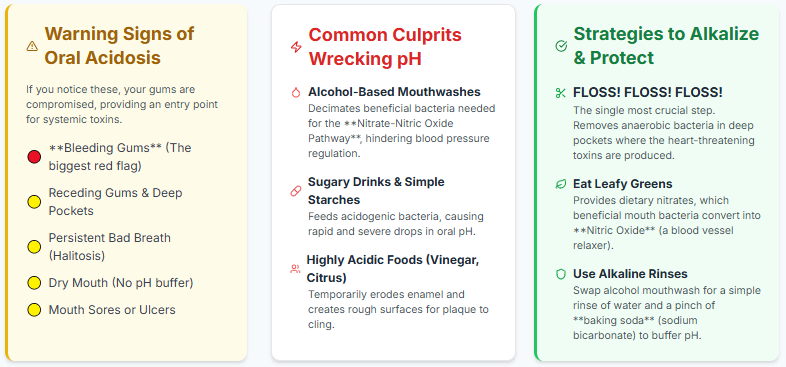
- Bleeding Gums: This is the biggest red flag. If your gums bleed when you brush or floss, it means the integrity of the tissue is compromised. You have an open wound through which bacteria and their toxins can easily enter your bloodstream.
- Receding Gums: The gums pull away from the tooth, exposing the root and creating deep pockets. This is where the aggressive bacteria hide and proliferate, deepening the infection.
- Persistent Bad Breath (Halitosis): Often caused by the volatile sulfur compounds released by anaerobic (oxygen-avoiding) bacteria that thrive in acidic, diseased pockets.
- Dry Mouth (Xerostomia): Saliva is your body’s natural buffer. When your mouth is too dry, its pH drops rapidly, increasing the risk for both cavities and gum disease.
- Mouth Sores or Ulcers: These often indicate a compromised immune environment in the mouth, which can be exacerbated by low pH.
The Silent Systemic Damage
The link between poor oral health and cardiac risk is no longer theoretical; it’s an accepted medical reality. These oral bacteria contribute to:
- Endothelial Dysfunction: The LPS toxins cause damage to the endothelium (the inner lining of blood vessels), making them sticky and dysfunctional. This is the very first step toward heart disease.
- Atherosclerotic Plaque: The chronic inflammation caused by oral bacteria speeds up the formation of plaque in the arteries. Your body essentially tries to “patch up” the inflamed endothelium with cholesterol and immune cells, which leads to hardening of the arteries.
- Nitric Oxide Inhibition: This is one of the most fascinating connections. Your mouth contains beneficial bacteria that help convert dietary nitrates (from leafy greens) into nitric oxide, a powerful molecule that relaxes and widens your blood vessels, lowering blood pressure. When your mouth’s ecosystem is ruined by bad habits or harsh products, this vital nitrate pathway is blocked, directly impacting your cardiovascular regulation.
Common Culprits Wrecking Your Oral pH

When I talk about acidic environments, most people instantly think of sugary drinks. While that’s absolutely true, the silent attackers in your own bathroom cabinet are often more detrimental because you use them every single day, thinking you are doing good.
Dietary Triggers to Minimize
Your diet is the primary way you control the environment in your mouth. Think of it as fertilizer: sugary, processed, and acidic foods promote the growth of the harmful, acid-loving bacteria.
| Acidic Culprit | Oral Impact | Heart Health Risk |
| Sugary Sodas/Juices | Rapid and severe pH drop, feeding acidogenic bacteria. | Promotes systemic inflammation and blood sugar spikes. |
| Simple Starches | Breaks down quickly into sugar, fuels plaque formation. | Contributes to chronic, low-grade inflammation. |
| Alcohol | Dehydrates the mouth, suppressing saliva (the pH buffer). | Directly raises blood pressure and contributes to systemic stress. |
| Highly Acidic Foods | Vinegar, citrus fruits (consumed alone/frequently). | Temporarily erodes enamel, creating rough surfaces where bacteria cling. |
The Oral Care Products Worsening PH
This is the big eye-opener for many of my patients: Alcohol-based mouthwashes can be counterproductive to heart health.
Why? The alcohol doesn’t just kill the bad bacteria; it decimates the beneficial bacteria (specifically the Veillonella and Neisseria species) that are crucial for the nitrate pathway. By killing these helpful, friendly organisms, you hinder your body’s natural ability to produce nitric oxide, which is required to keep your blood vessels relaxed and your blood pressure low. When these products are used daily, they contribute to a cycle of high acidity and cardiovascular risk.
Practical Strategies to Alkalize Your Mouth and Protect Your Heart
The good news is that restoring a healthy, neutral (alkaline) environment in your mouth is relatively simple. It doesn’t require expensive medical procedures; it requires intentional, consistent daily habits.
Lifestyle Adjustments (Diet, Sleep, Stress)
These changes are foundational. You cannot out-brush a bad diet, and you cannot out-floss chronic stress.
- Hydrate Constantly: Water is your mouth’s best friend. It helps flush away food particles and, most importantly, keeps saliva flowing. Saliva is naturally alkaline and acts as a powerful pH buffer.
- Eat Your Greens: Leafy vegetables (spinach, kale, arugula) are high in dietary nitrates. When chewed, the friendly bacteria in your mouth turn these nitrates into nitric oxide, directly benefiting your circulation and blood pressure.
- Chew Sugar-Free Gum: This stimulates saliva flow after meals, which helps neutralize the acids produced by feeding bacteria. Look for gums containing xylitol, which actively starves harmful bacteria.
- Manage Stress: Chronic stress releases cortisol, which is inflammatory throughout the body, including the gums. Practice mindful breathing or light exercise to keep this systemic inflammation in check.
Oral Hygiene Solutions
Switching to pH-neutral or alkalizing oral care products can significantly shift your oral environment within weeks.
The pH Balancing Oral Care Checklist:
- Use Alkaline Toothpaste: Choose a toothpaste that is low-abrasive and pH neutral or slightly alkaline. Avoid brands with harsh foaming agents.
- Switch to Neutral Mouth Rinses: Immediately drop any alcohol-based mouthwash. Opt for a rinse that contains xylitol or, even better, a simple rinse of water mixed with a pinch of baking soda (sodium bicarbonate), which is highly alkaline.
- Brush Gently, Not Hard: Use a soft-bristled brush. Aggressive brushing damages the gum line, creating entry points for bacteria. Focus on the gum line, where plaque tends to hide.
- Floss! Floss! Floss! Flossing is the single most crucial step for cardiovascular health that happens in your mouth. It removes the bacteria thriving in the sub-gingival (below the gum line) pockets where brushing cannot reach. These pockets are where the most virulent, heart-threatening bacteria live.
When Your Dentist is Your First Line of Cardiac Defense
If you have symptoms of gum disease—especially bleeding gums or persistent inflammation—you need professional help. Your dentist is not just cleaning your teeth; they are directly addressing a systemic risk factor for heart attack and stroke.
Clear Red Flags That Require Immediate Attention
- Pus or Abscesses: This is a localized infection that needs immediate medical drainage and often antibiotics. This represents a severe systemic threat.
- Widespread Gum Bleeding: If your gums bleed consistently for more than a week, you need a professional deep cleaning (scaling and root planing) to remove the hardened bacterial deposits (calculus) that brushing can’t touch.
- Loose Teeth: This indicates advanced periodontitis and significant bone loss—a critical stage that must be managed to prevent systemic infection.
Specific Questions to Ask Your Dentist
Empower yourself by asking the right questions at your next appointment. Don’t be afraid to connect your oral health to your cardiac concerns.
- “What is the average depth of my gum pockets? Are they shallow (1-3mm) or deep (4mm+), indicating active periodontitis?”
- “Do you recommend a pH-neutral toothpaste or rinse given my history of inflammation?”
- “Based on my condition, should I consider having my blood pressure checked, and should I inform my cardiologist about my current gum health?”
- “Can you explain the proper technique for flossing or using an interdental brush to ensure I reach the deepest pockets?”
My Personal Advice as a Health Advocate
I know these connections can sound overwhelming, but I want you to feel empowered. The wonderful part of the mouth-heart link is that the solution is non-invasive and completely within your control. You don’t need a prescription; you need a toothbrush and a new perspective.
I had a client once who struggled to lower their blood pressure despite diet changes and medication. When we focused on his severe, chronic gum inflammation, his numbers slowly but surely began to stabilize. Why? Because we eliminated one of the greatest sources of systemic inflammation he had.
My personal routine changed dramatically: I swapped my harsh mouthwash for a simple saltwater rinse, and I committed to flossing every single night—no exceptions. That two-minute habit is now my nightly peace of mind, knowing I’m cleaning out the dangerous bacteria before they can go on a road trip to my heart. Treat your mouth like the garden of health that it is, and you will reap the rewards throughout your entire body.
Myths vs. Facts: Busting Common Oral Health Misconceptions
This topic is rife with misinformation, often perpetuated by marketing for products that aren’t actually beneficial.
| Myth | Fact |
| Myth: Bleeding gums are normal if you brush hard. | Fact: Bleeding gums are a sign of inflammation and infection (gingivitis/periodontitis). Healthy gums do not bleed. |
| Myth: Alcohol mouthwash kills all the bad germs. | Fact: It kills all bacteria—good and bad—disrupting the ecosystem needed to create blood pressure-regulating nitric oxide. |
| Myth: You only need to brush to protect your heart. | Fact: Flossing removes the anaerobic, pathogenic bacteria deep in the gum pockets that cause the systemic inflammation linked to heart disease. Flossing is non-negotiable. |
| Myth: Cavities are the biggest dental problem. | Fact: Gum disease (periodontitis) is a far greater threat because it affects the entire body, potentially increasing the risk of heart disease, diabetes, and stroke. |
FAQs (Frequently Asked Questions)
- What is a healthy oral pH?A healthy, neutral oral pH is around 7.0. When it dips below 5.5, the environment becomes highly corrosive and hospitable to harmful bacteria.
- Does flossing really matter for heart health?Absolutely. Flossing removes the specific, anaerobic bacteria that thrive in the sub-gingival pockets. These bacteria are the primary producers of the toxins (LPS) that enter the bloodstream and trigger arterial inflammation.
- Can fixing my gums lower my blood pressure?Yes, for many people. Studies have shown that when aggressive periodontitis is treated and inflammation is reduced, there can be a measurable and significant improvement in blood pressure readings.
- Should I clean my tongue?Yes. Your tongue is a major reservoir for bacteria. Use a tongue scraper (a brush is not as effective) daily to remove the bacterial film and reduce the overall bacterial load in your mouth.
- What is ‘oil pulling’ and does it help with pH?Oil pulling is an ancient practice of swishing oil (usually coconut or sesame) in the mouth for 10-20 minutes. It may mechanically remove some bacteria and toxins, but its direct impact on pH balance is not as well-documented as consistent brushing, flossing, and using a baking soda rinse.
- How often should I go to the dentist?For a healthy individual, twice a year (every six months) for a professional cleaning and check-up. If you have active gum disease, you may need to go three or four times per year for periodontal maintenance.
Conclusion & A Final Word of Encouragement
The simple truth is that your mouth is not separate from your body—it is the gateway. The moment I grasped that my $3 box of floss had more power to fight heart disease than almost any supplement I owned, my entire approach to wellness shifted.
We’ve spent decades focusing on arteries, cholesterol, and diet, but we often overlooked the most common source of chronic systemic inflammation: a bacterial war happening silently right under our noses. By taking control of your oral pH, choosing neutral products, and committing to the simple, daily habit of flossing, you are not just preventing a cavity; you are pulling dangerous toxins out of your cardiovascular system.
This isn’t just about preserving your teeth; it’s about adding years of healthy, vibrant living to your life. Start small today—swap your acidic mouthwash, grab a tongue scraper, and commit to flossing tonight. You are literally protecting your heart one tooth at a time.
Disclaimer: I am a health advocate and writer, not a medical doctor. The information in this article is for informational purposes only and is not a substitute for professional medical advice, diagnosis, or treatment. Always seek the advice of your physician.