


Introduction: The Hidden Epidemic of Deficiency

Imagine a world where your muscles constantly twitched, your mind was stuck in an accelerated loop of worry, and your heart beat with a subtle, yet persistent, irregularity. This might sound like a severe neurological or cardiac disorder, but for millions of people worldwide, these chronic, low-grade symptoms are simply the everyday reality of insufficient magnesium.
Magnesium, the fourth most abundant mineral in the human body, is unequivocally Nature’s Off-Switch. It is the physiological counterpart to excitation, the necessary counterbalance to calcium, and the ultimate relaxant for your entire system. It initiates the wind-down process in the brain, releases tension in every single muscle fiber, and stabilizes the electrical potential of your cells.
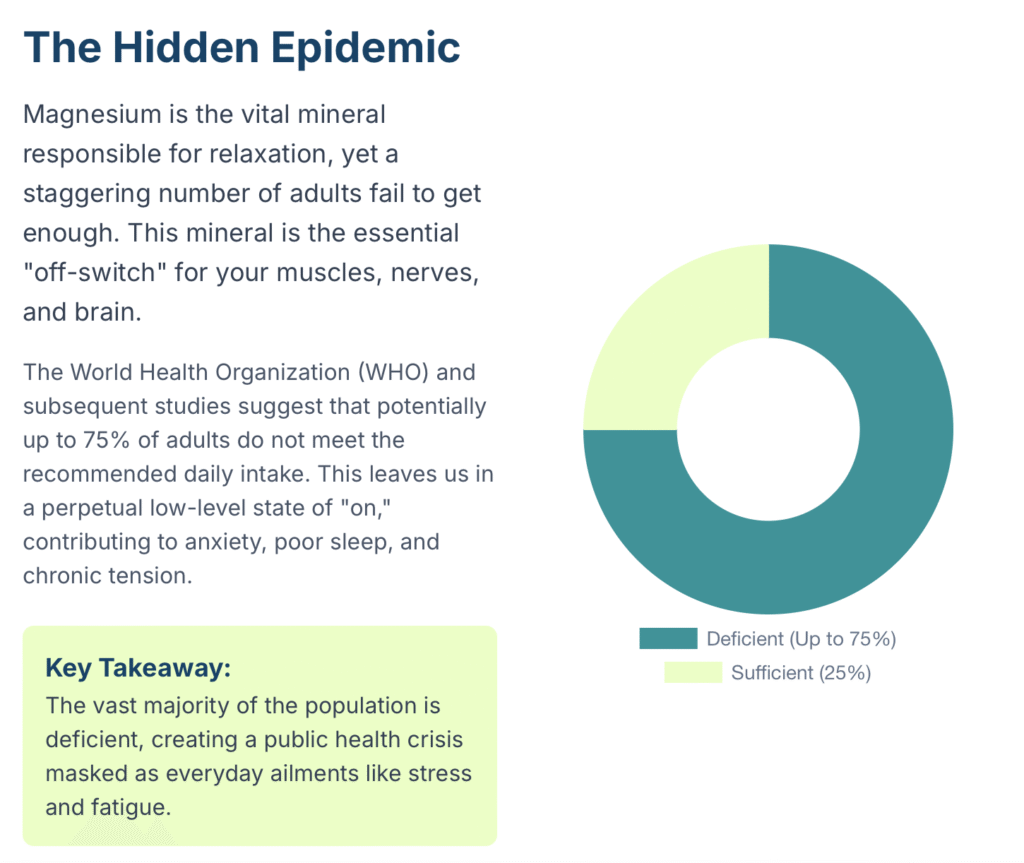
Yet, despite its monumental importance, magnesium deficiency has reached epidemic proportions. The World Health Organization (WHO) and subsequent nutritional studies suggest that a vast majority—potentially up to 75%—of adults do not consume the recommended daily intake. Even among those who do consume the “RDA,” issues like chronic stress, soil depletion, and poor absorption mean that their cells may still be starving for this crucial nutrient.
The consequences of this deficiency are subtle but profound. Low magnesium levels are often masked or misdiagnosed as anxiety, chronic fatigue, stubborn insomnia, and persistent tension headaches. By failing to flip the body’s essential “off-switch,” we leave ourselves perpetually stuck in a low-level state of “on.”
This comprehensive guide will move beyond the superficial claims to explore the complex biochemistry of magnesium, unpack the causes of its widespread deficiency, and, most importantly, detail the specific, bioavailable forms that actually penetrate the bloodstream to deliver measurable health benefits.
Part I: The Biochemistry of Relaxation—Over 300 Functions

Magnesium’s role is not a specialized one; it is a ubiquitous co-factor essential for more than 300 enzymatic reactions. In essence, if a reaction requires energy, magnesium is likely involved. We can distill its relaxation mechanism down to three critical areas.
1. The ATPase Connection: Energy and Muscle Release
Every cell in your body runs on energy generated by adenosine triphosphate (ATP). ATP is the energy currency, but it cannot be used effectively on its own. It must be bound to a magnesium ion (forming the complex Mg-ATP) to become biologically active.
- Muscle Function: When a muscle contracts, calcium floods the muscle cell, initiating the clench. For the muscle to relax, calcium must be actively pumped back out. This pumping action requires massive amounts of energy supplied by Mg-ATP. When magnesium is scarce, the energy transfer is inefficient, and calcium remains too long, leading to a state of sustained, low-level contraction—the definition of chronic muscle tightness, spasms, and the restless leg syndrome many experience at night.
- Cellular Efficiency: By stabilizing ATP, magnesium ensures the entire cellular machinery—from repairing DNA to moving potassium and sodium ions across membranes—runs smoothly, preventing the metabolic sluggishness often associated with fatigue.
2. The Neurological Brake: GABA, NMDA, and Stress
Magnesium’s function in the nervous system is perhaps its most impactful role for stress and anxiety management. It works as a dual-action agent, simultaneously promoting the calming signals and inhibiting the excitatory ones.
- GABA Receptor Regulation: GABA (gamma-aminobutyric acid) is the brain’s chief inhibitory neurotransmitter—the chemical equivalent of the brake pedal. Magnesium acts as a crucial regulator for GABA receptors. When magnesium is present, it increases the sensitivity and efficiency of GABA, amplifying the calming signal and suppressing excessive neuronal firing. This is the mechanism by which magnesium directly reduces feelings of worry, jitteriness, and general mental agitation.
- NMDA Receptor Blockade: Conversely, magnesium acts as a gatekeeper for the NMDA (N-Methyl-D-aspartate) receptor. The NMDA receptor is responsible for excitatory signaling and is key to learning and memory formation. However, when chronically over-activated, it can lead to excitotoxicity (neuron damage from overstimulation) and contribute to anxiety and chronic pain states. Magnesium sits precisely in the NMDA channel, blocking its action when the cell is at rest, thus protecting neurons and reducing hypersensitivity in the nervous system.
3. Hormonal Homeostasis: Cortisol and the HPA Axis
The Hypothalamic-Pituitary-Adrenal (HPA) axis is the body’s master control system for the stress response. When stress hits, the HPA axis floods the body with cortisol and adrenaline—the “fight or flight” hormones.
Magnesium deficiency makes the HPA axis hyper-responsive. In a low-magnesium state, the adrenal glands are more easily triggered and slower to switch off, leaving the body marinating in stress hormones. Furthermore, stress itself actively depletes the body’s existing magnesium stores. The adrenal glands consume vast amounts of magnesium when producing cortisol, creating a vicious cycle: Stress depletes magnesium, and low magnesium increases sensitivity to stress. Supplementing with the right form of magnesium breaks this cycle, offering resilience against daily stressors.
Part II: The Deficiency Crisis—Causes and Symptoms

Identifying magnesium deficiency is challenging because standard serum tests (blood tests) often show levels in the normal range. This is misleading, as only about 1% of the body’s total magnesium is found in the blood; the rest is stored in bones and soft tissues. When blood levels drop, the body rapidly pulls magnesium from these stores, giving a false sense of security while cellular deficiency persists.
The Root Causes of the Deficiency Epidemic
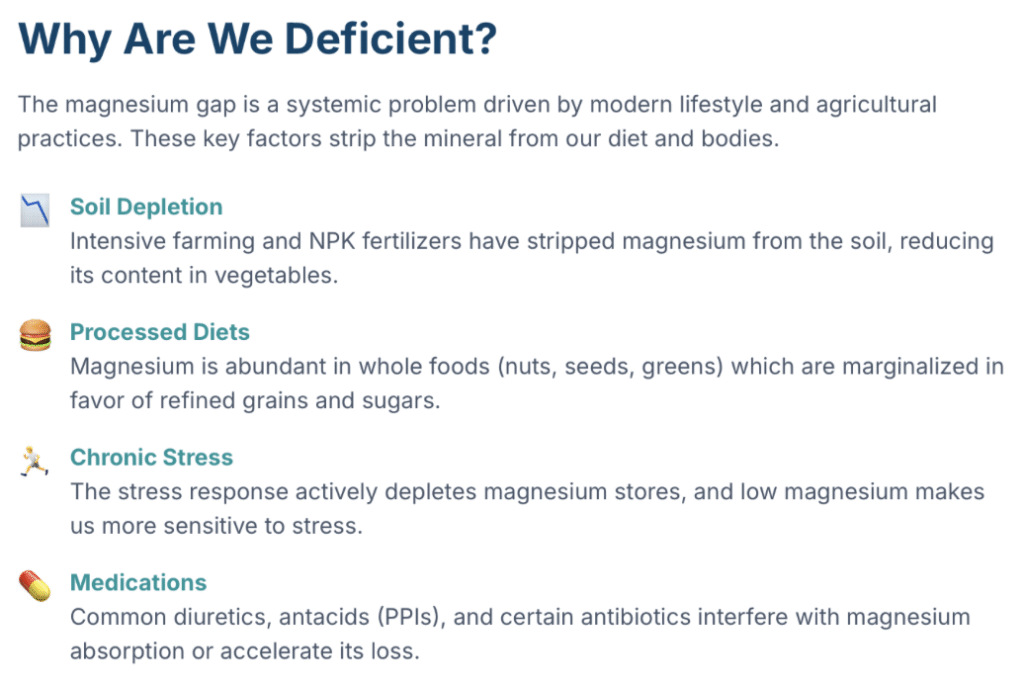
The magnesium gap is a systemic problem driven by modern lifestyle and agricultural practices:
- Soil Depletion: Decades of intensive, industrial farming and the use of nitrogen, phosphate, and potassium-heavy (NPK) fertilizers have stripped vital minerals, including magnesium, from the soil. As a result, the magnesium content of many common vegetables has fallen dramatically over the past century.
- Dietary Shift: The modern diet heavily relies on processed foods, which are inherently poor sources of magnesium. The mineral is abundant in whole foods like dark leafy greens, nuts, seeds, and whole grains, foods often marginalized in favor of refined grains and sugars.
- Chronic Stress and Medication: As discussed, chronic psychological stress causes direct loss of magnesium through urinary excretion. Additionally, many common prescription medications, including diuretics, antacids (PPIs), and certain antibiotics, significantly interfere with magnesium absorption or accelerate its loss.
- Digestive Issues: Conditions that impair nutrient absorption, such as Crohn’s disease, leaky gut syndrome, or prolonged diarrhea, directly prevent magnesium from reaching the bloodstream.
The Catalogue of Deficiency Symptoms
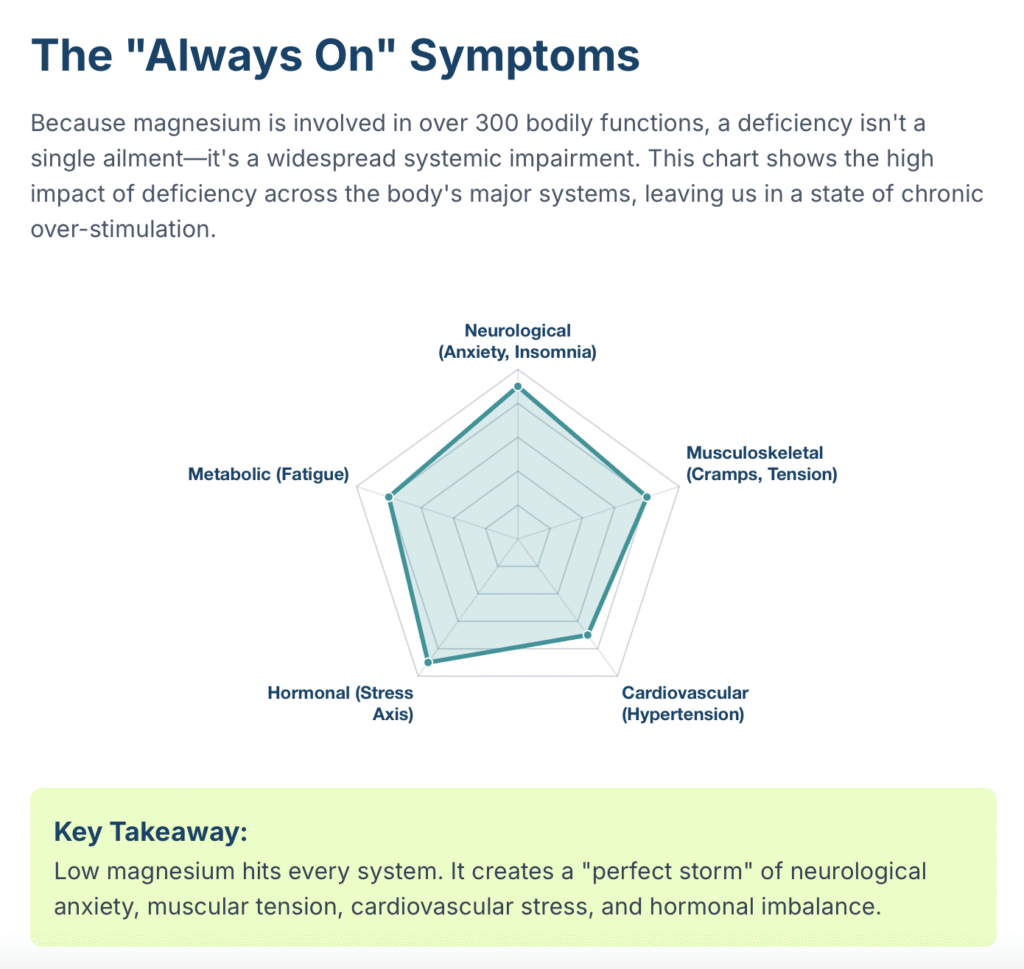
Magnesium deficiency is not a single ailment; it is a widespread systemic impairment.
Neurological and Psychological Manifestations:
- Anxiety and Panic: Due to the impaired GABA function and unblocked NMDA receptors.
- Chronic Insomnia: Inability to achieve or maintain deep, restorative sleep (SWS) as the nervous system cannot power down.
- Migraines and Headaches: Linked to vascular constriction and hyper-excitability of neuronal pathways.
- Depression: Emerging research suggests a strong link between low magnesium status and treatment-resistant depression.
Musculoskeletal Manifestations:
- Muscle Spasms and Tremors: Including benign essential tremor and eyelid twitching (fasciculations).
- Nighttime Leg Cramps: The classic sign of magnesium’s failure to complete muscle relaxation.
- Fibromyalgia and Chronic Pain: Often characterized by trigger points and persistent muscular tightness that fail to relax.
Cardiovascular Manifestations:
- Hypertension (High Blood Pressure): Due to the constricted, tense state of the blood vessel walls.
- Arrhythmias: Magnesium stabilizes the electrical conduction of the heart; deficiency can lead to palpitations and skipped beats.
Part III: Magnesium’s Roles in Longevity and Disease Prevention
Magnesium is an anti-aging mineral because it tackles the two most significant drivers of degenerative disease: inflammation and metabolic dysfunction.
1. Cardiovascular Guardian: Blood Pressure and Arterial Health
The heart is the body’s most magnesium-dense organ, and the role of the mineral in heart health is profound.
- Natural Vasodilator: Magnesium is a powerful natural vasodilator, meaning it causes blood vessels to relax and widen. This reduces resistance in the circulatory system, naturally lowering systolic and diastolic blood pressure.
- Anti-Arrythmic Agent: Cardiologists often use intravenous magnesium to stabilize heart rhythms in hospital settings. It helps regulate the flow of calcium, potassium, and sodium into the heart cells, maintaining the crucial electrical gradient necessary for a steady, reliable beat.
- Endothelial Function: Magnesium helps preserve the integrity of the endothelium—the delicate inner lining of blood vessels. Healthy endothelium is key to preventing the buildup of plaque, which can lead to atherosclerosis, stroke, and heart attack.
2. Metabolic Maestro: Insulin and Glucose Control
Magnesium is fundamental to glucose metabolism. It is required for the enzymes that turn glucose into energy and, critically, for the receptors that bind to insulin.
- Insulin Sensitivity: Magnesium helps cells recognize and respond to insulin effectively. When magnesium is deficient, cells become resistant to insulin’s signal, forcing the pancreas to produce more insulin, a key step toward metabolic syndrome and Type 2 diabetes. Supplementation can significantly improve insulin sensitivity, making it a critical nutrient for blood sugar management.
- Energy Production: As part of the Mg-ATP complex, magnesium ensures that the mitochondria—the cell’s power plants—can efficiently convert food into usable energy, combating chronic fatigue from the ground up.
3. Bone Health Beyond Calcium
The common prescription for bone health is calcium and Vitamin D, but this is an incomplete picture. Approximately 60% of the body’s magnesium is stored in the bones, and it is essential for:
- Vitamin D Activation: The body cannot effectively utilize Vitamin D without sufficient magnesium. Magnesium is required by the liver and kidneys to convert inactive Vitamin D into its active hormonal form (Calcitriol).
- Bone Structure: Magnesium influences the activity of osteoblasts (cells that build bone) and osteoclasts (cells that break down bone). It is essential for incorporating calcium into the bone matrix and maintaining the bone’s flexible, yet resilient, crystal structure. Taking high doses of calcium without enough magnesium can be counterproductive, potentially contributing to calcium deposits in soft tissues like arteries.
Part IV: The Supplementation Conundrum—Finding the Bioavailable Form

The biggest challenge in magnesium supplementation is poor bioavailability. Many common, inexpensive supplements—particularly Magnesium Oxide—pass through the digestive system largely unabsorbed, acting mainly as a laxative.
The solution lies in chelation, the process of binding the mineral to an organic compound, typically an amino acid, which makes it easier for the body to absorb through pathways designed for proteins.
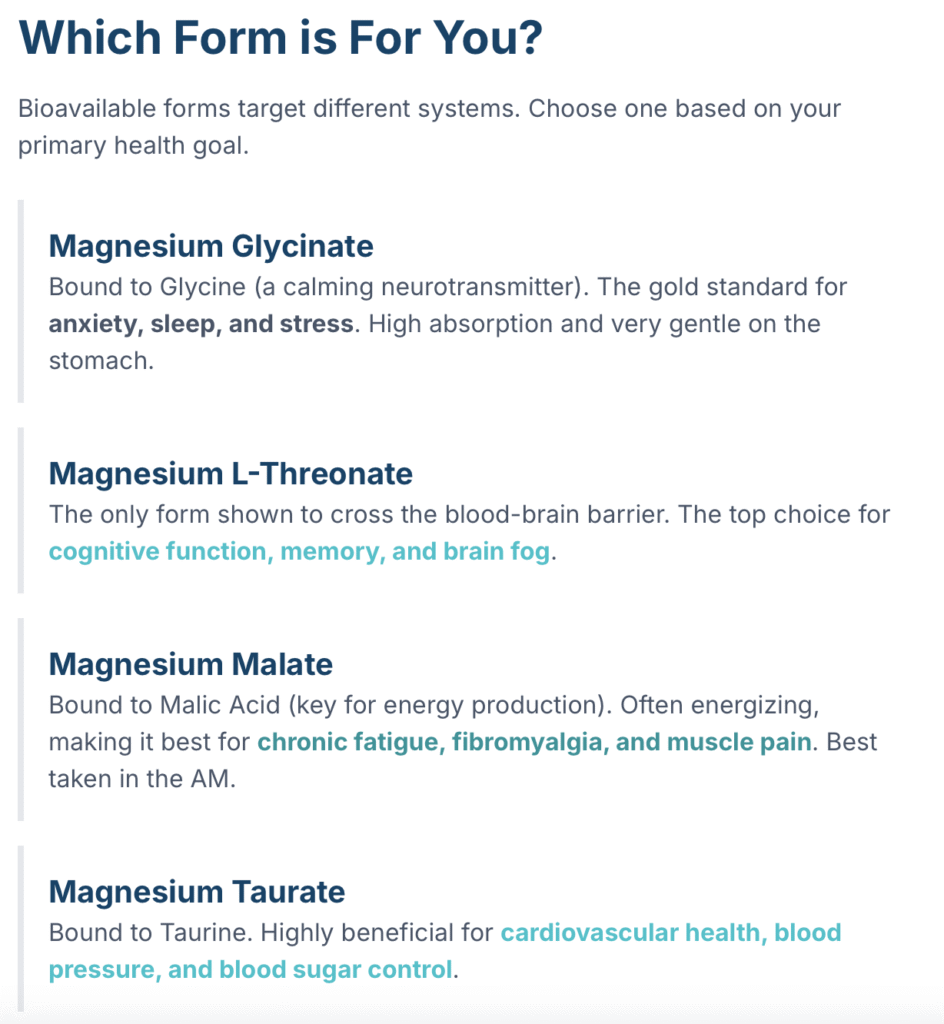
Here is an in-depth analysis of the most effective, bioavailable forms:
| Magnesium Form | Chelated To | Primary Bio-Action & Focus | Target Health Goal |
|---|---|---|---|
| Magnesium Glycinate | Glycine | High Absorption, CNS Calming | Anxiety, chronic stress, sleep, muscle relaxation. |
| Magnesium L-Threonate | L-Threonate | Crosses Blood-Brain Barrier (BBB) | Cognitive function, memory, focus, and reducing brain fog. |
| Magnesium Malate | Malic Acid | ATP Production & Muscle Pain | Chronic fatigue, fibromyalgia, muscle tenderness. |
| Magnesium Taurate | Taurine | Cardiovascular & Blood Sugar | Heart health, blood pressure, insulin sensitivity. |
| Magnesium Citrate | Citric Acid | General Deficiency & Digestion | Mild deficiency, supporting gentle bowel movements. |
| Magnesium Orotate | Orotic Acid | Cellular Energy & Heart Function | Advanced cardiovascular support, tissue repair. |
https://youtu.be/EIMx6PC5M5U?si=_5Q6hOxxgWl0TpWG
The Top Three Specialist Forms
1. Magnesium Glycinate: The Gold Standard for Relaxation
- The Chelator: Glycine is an inhibitory neurotransmitter itself, which means it enhances the calming effect of magnesium.
- Action: It is incredibly gentle on the stomach and possesses one of the highest true absorption rates. It maximizes the nervous system benefits, making it the most effective form for turning on the “off-switch.”
- Best For: Individuals with chronic anxiety, difficulty falling or staying asleep, and those sensitive to the gastrointestinal side effects of other forms.
2. Magnesium L-Threonate: The Brain Booster
- The Chelator: L-Threonate is a unique compound specifically engineered to enhance magnesium’s ability to cross the highly selective blood-brain barrier (BBB).
- Action: This form concentrates magnesium within the cerebrospinal fluid, directly increasing synaptic density and plasticity. It targets the memory-forming centers, particularly the hippocampus.
- Best For: Improving cognitive performance, working memory, attention, and recovery from concussions or neurological stress.
3. Magnesium Malate: The Energy Lifter
- The Chelator: Malic acid is a naturally occurring compound that plays a vital role in the Krebs cycle, the process by which the body generates cellular energy (ATP).
- Action: This dual action of magnesium and malic acid often provides an energizing effect by directly supporting mitochondrial function. It is therefore generally best taken earlier in the day.
- Best For: Individuals suffering from chronic fatigue syndrome (CFS), or generalized muscle aches and pain.
Low Bioavailability Forms (Use with Caution)
- Magnesium Oxide: The least absorbed form (bioavailability estimated at only ~4%). Primarily acts as a powerful osmotic laxative. Avoid if seeking systemic health benefits.
- Magnesium Sulfate (Epsom Salts): Used topically (in baths) where it is absorbed through the skin, primarily providing localized muscle relaxation. Less effective for treating deep systemic deficiencies.
Part V: Dosage, Testing, and Safe Integration
Finding your optimal magnesium dose requires patience, as the true goal is not just to hit the RDA (Recommended Dietary Allowance) but to achieve cellular saturation that resolves symptoms.
Establishing an Effective Dosage
The RDA for magnesium is approximately 320 mg/day for women and 420 mg/day for men (elemental magnesium), but therapeutic dosing for deficiency symptoms often requires more.
- Starting Point: Begin with 150–200 mg of elemental magnesium (check the label for the elemental amount) from a bioavailable form like Glycinate or Malate.
- Titration: Gradually increase the dosage by 100 mg every few days. The most common sign of excessive magnesium is loose stools or diarrhea. This is your body’s signal that it has absorbed all it needs, and the rest is being excreted. Back off the dose slightly to the highest amount you can tolerate without gastrointestinal distress—this is your personal ceiling.
- Timing: For relaxation and sleep benefits, take your main dose (or a dedicated Glycinate/Threonate dose) 30 to 60 minutes before bed. If taking Magnesium Malate for energy, take it in the morning.
The Problem with Testing
As previously mentioned, serum magnesium testing is a poor indicator of true deficiency.
- RBC Magnesium Test: The most accurate way to assess cellular magnesium status is through a Red Blood Cell (RBC) Magnesium test. Since red blood cells are soft tissue, their magnesium content better reflects the body’s overall stores compared to the fluid level in the blood. Consult your healthcare provider about this specialized test if deficiency is suspected.
Dietary Sources and Absorption Inhibitors
While supplementation is often necessary to bridge the deficiency gap, prioritize dietary intake:
| Food Source (High Mg Content) | Magnesium (mg) per serving |
|---|---|
| Pumpkin Seeds | 168 (1 oz) |
| Spinach | 157 (1 cup cooked) |
| Dark Chocolate (70%+ cacao) | 64 (1 oz) |
| Almonds | 80 (1 oz) |
| Black Beans | 120 (1 cup cooked) |
Absorption Blockers to Avoid:
- High Calcium Intake: Excessive calcium supplementation can compete with magnesium for absorption and transport, potentially creating an imbalance. Aim for a ratio closer to 2:1 (Calcium:Magnesium).
- Phytates: Compounds found in whole grains and legumes can bind to minerals like magnesium, reducing absorption. Soaking or sprouting these foods can reduce phytate content.
- High Alcohol Intake: Alcohol is a diuretic that significantly increases urinary excretion of magnesium.
- Refined Sugar: Consumption of refined sugar depletes magnesium stores as the body uses the mineral to process the sugar.

Conclusion: Reclaiming Your Natural State of Calm
Magnesium is more than just a mineral; it is the fundamental regulator of our modern, over-stimulated existence. It is the molecular mechanic responsible for turning the body and mind from a state of stress and contraction to one of calm and relaxation.
The widespread nature of its deficiency—fueled by depleted soil and high-stress lifestyles—means that many people are walking around with an impaired “off-switch,” unknowingly contributing to their own anxiety, sleepless nights, and chronic tension.
By understanding the nuanced biochemistry of magnesium, recognizing the limitations of basic supplements, and strategically choosing a highly bioavailable form like Magnesium Glycinate or Magnesium L-Threonate, you can directly support your nervous system, protect your heart, stabilize your metabolism, and, most importantly, restore your body’s natural, powerful ability to achieve profound rest.
The investment is small, the cellular reward is systemic, and the daily benefit—a life with less tension and more calm—is immeasurable. Flip the switch today.
Disclaimer: This information is for educational purposes only. Always consult with a healthcare professional before starting any new supplement regimen, especially if you have pre-existing health conditions or are taking prescription medications.