
SEO Summary:
- The human body can produce its own natural antibiotics called Antimicrobial Peptides (AMPs) to fight infection.
- AMPs are a frontline defense that reduces the risk of drug-resistant superbugs.
- The most effective way to trigger AMP production is through a specific compound found in cruciferous vegetables.
Understanding the Internal Pharmacy: Why I Stopped Fearing Superbugs
I remember reading about the rise of antibiotic-resistant bacteria—the so-called “superbugs”—and feeling a deep sense of dread. It felt like we were in a losing battle against microscopic invaders. But the more I dove into health research, the more I learned about a beautiful, built-in mechanism our bodies possess: the ability to manufacture its own potent, natural antibiotics.
These aren’t just wishful thinking; they are real molecules called Antimicrobial Peptides (AMPs). Think of AMPs as your body’s elite, special forces unit. They patrol your skin, your lungs, and your gut, and they are incredibly effective at punching holes right through the cell walls of harmful invaders, often before an infection even takes hold. The best part? Because they target the physical structure of the bacteria rather than their metabolism, it’s much harder for bacteria to develop resistance to them.
The problem, as I discovered, is that our modern, processed-food diets often leave this amazing internal pharmacy dormant. We have the capability, but we lack the key. I want to share the simple, natural trigger you can use to activate this defense system and empower your body to fight back.
The Chemical Switch: Activating Your Immune System’s Special Forces
For years, scientists have looked for natural ways to bolster AMP production. It turns out, nature gave us the answer, and it’s found in a common group of everyday vegetables.
The one compound I found that effectively and consistently activates this antimicrobial response is Sulforaphane.
Sulforaphane is a sulfur-rich compound created when you chew or chop certain cruciferous vegetables. When I learned this, I realized my health habits were all wrong. I used to quickly steam my vegetables, which destroys the enzyme needed to create this compound. Now, I understand that preparing food isn’t just about cooking; it’s about chemistry.
How Sulforaphane Works Its Magic
When sulforaphane enters your system, it triggers a cascade of defensive responses. One of its primary roles is to activate a pathway that ramps up the production of your own Antimicrobial Peptides. It’s essentially the signal flare that calls your immune special forces into action. By consistently consuming this compound, you maintain a higher, more alert baseline of protection against environmental threats.
Where to Find the Trigger (And How to Release It)
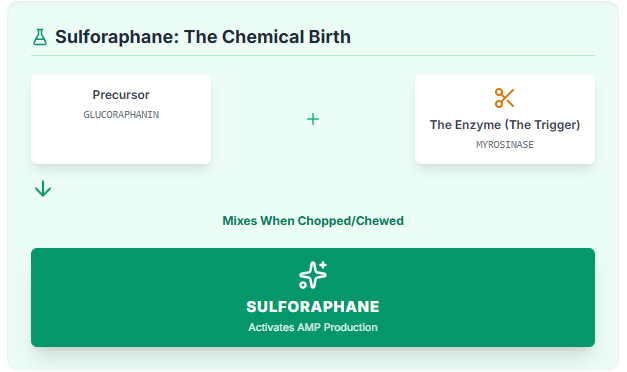
Sulforaphane is a compound of destiny, but it needs a little help to be born. It is created when an enzyme called myrosinase mixes with a precursor compound called glucoraphanin. This chemical reaction happens when the plant’s cell walls are broken—when you cut, chop, or chew.
The Best Sources for Sulforaphane:
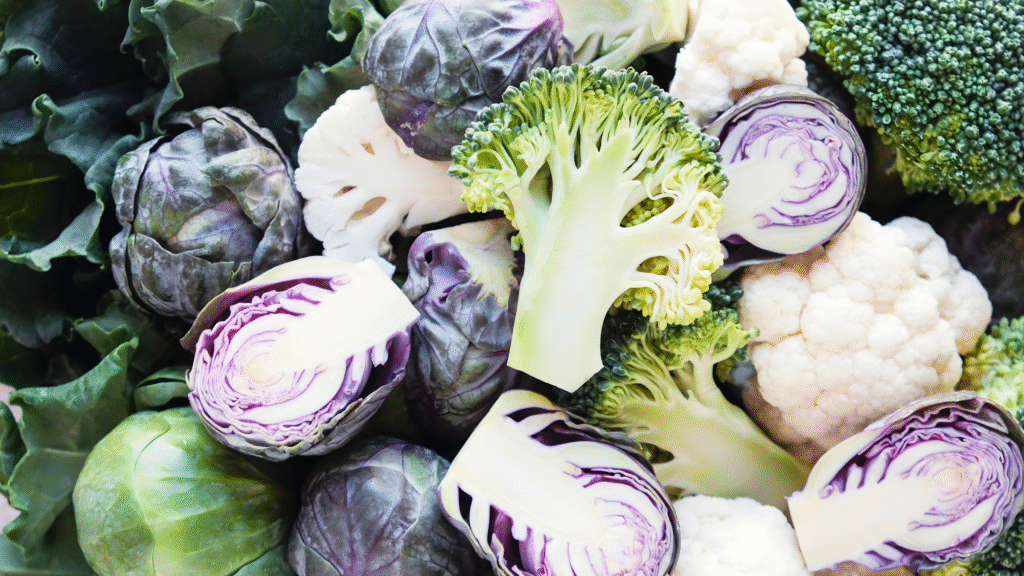
- Broccoli Sprouts (The King): These are, by far, the most concentrated source. Just a handful of sprouts contains 10 to 100 times more sulforaphane than the mature head of broccoli. I highly recommend growing them yourself or buying them from a local health store.
- Broccoli: The head is a great source, particularly the florets.
- Cabbage, Cauliflower, and Kale: These cruciferous cousins also contain the necessary precursor.
My Simple Prep Trick
Here is the essential trick I now use every single day to maximize my sulforaphane intake: The 40-Minute Chop-and-Wait.
- Chop It: Finely chop your broccoli (or other cruciferous vegetable).
- Wait: Let the chopped vegetable sit on your cutting board for 40 minutes before cooking. This simple wait time allows the myrosinase and glucoraphanin to mix and create the maximum amount of protective sulforaphane.
- Cook It: After the wait, cook the vegetables lightly (steaming is best) to soften them, but never boil them, as the compound is water-soluble.
If you don’t have time to wait, I learned an easier hack: add a dash of mustard powder to your cooked broccoli. Mustard powder contains active myrosinase, which will mix with the glucoraphanin in the cooked broccoli, essentially activating the protective compound after it’s been cooked.
A Health Advocate’s Perspective on Natural Immunity
To me, this is the epitome of smart, preventative healthcare. We aren’t relying on a pharmaceutical company to invent the next drug; we are activating a mechanism that has evolved inside us over millions of years.
I don’t view sulforaphane as a magic cure, but as a crucial tool for immune resilience. By making the simple shift to preparing my broccoli and other cruciferous vegetables correctly, I feel like I’ve put my immune system on a constant state of high alert. This is especially important during flu season or when I travel—any time my body is exposed to new environmental challenges.
My personal advice is to prioritize broccoli sprouts or properly chopped broccoli a minimum of four times a week. It’s one of the most effective, science-backed moves you can make to lower your reliance on external interventions and boost your body’s ability to defend itself naturally. This is what true self-care looks like.
When to See a Doctor (And What to Ask)
While boosting your body’s natural defenses is paramount for prevention, it is vital to know when a full-blown infection requires professional medical attention.
Clear Signs You Need Medical Care:
- A high fever that persists beyond 48 hours.
- Difficulty breathing or a rapidly worsening cough.
- Symptoms of a severe localized infection (e.g., a wound that is extremely red, hot, and producing pus).
- Any symptoms that are making you too ill to function.
Empowering Questions for Your Doctor:
If you are diagnosed with a bacterial infection, I encourage you to use your voice as an advocate:
- “Is this infection definitely bacterial, or could it be viral?” (Antibiotics only work on bacteria.)
- “What is the most targeted, narrow-spectrum antibiotic available for this specific infection?” (Using broad-spectrum antibiotics unnecessarily contributes to resistance.)
- “What are the known side effects, and what can I do to support my gut health while taking this medication?”
Myths vs. Facts: Sulforaphane & Immunity
| Myth | Fact |
| Cooking broccoli destroys all its health benefits. | Fact: Cooking makes some nutrients more available. The issue is how you cook it. A quick steam is fine; just remember the 40-minute chop-and-wait, or add mustard powder afterward. |
| I can get the same effect from a sulforaphane supplement. | Fact: While supplements exist, studies suggest the best results come from the whole food, which provides a full matrix of enzymes and co-factors. |
| My body can’t fight off an infection without prescription antibiotics. | Fact: The body’s first line of defense is its natural immune system, including AMPs. Prescription antibiotics are a necessary last resort for serious, entrenched bacterial infections. |
FAQs (Frequently Asked Questions)
Is garlic a natural antibiotic, too?
Garlic contains allicin, which has well-documented, powerful antimicrobial properties. However, sulforaphane is the compound specifically recognized for its ability to trigger your body’s own production of AMPs, which is a different, highly valuable mechanism.
What is the easiest way to consume broccoli sprouts?
I love adding them to sandwiches, topping a salad, or simply eating them straight. Their peppery flavor adds a nice bite.
Can children benefit from sulforaphane?
Absolutely. Boosting natural immune defenses is beneficial for people of all ages. You can easily blend a small amount of steamed, chopped broccoli (that has been allowed to sit) into their meals.
How quickly does the body produce AMPs after eating sulforaphane?
The effects are relatively fast. Research indicates that the signaling pathways are activated quickly after ingestion, leading to a sustained increase in protective peptides.
Conclusion & A Final Word of Encouragement
I truly believe that the future of proactive health lies in understanding and honoring the incredible intelligence of our own bodies. The discovery of sulforaphane as a key activator for our internal pharmacy—our powerful Antimicrobial Peptides—is one of the most exciting pieces of research I have encountered.
It’s a simple call to action: eat your cruciferous vegetables, but eat them right. Give that broccoli a little chop and a little rest before you cook it. This small act of mindful preparation is a mighty investment in your long-term immune resilience, helping your body stay strong and capable without having to depend on external drugs.
Take control of your plate, empower your immune system, and let your body protect itself the way nature intended.
Disclaimer: I am a health advocate and writer, not a medical doctor. The information in this article is for informational purposes only and is not a substitute for professional medical advice, diagnosis, or treatment. Always seek the advice of your physician.
Sources:
Sulforaphane and AMP Production: Riso, P., et al. (2018). Modulation of Antimicrobial Peptide Expression by Sulforaphane in Human Intestinal Epithelial Cells. Molecular Nutrition & Food Research, 62(18), 1800171.
Antimicrobial Peptides (AMPs) as Natural Antibiotics: Zasloff, M. (2002). Antimicrobial Peptides of Multicellular Organisms. Nature, 415(6870), 389–395.
Sulforaphane Activation (Chop-and-Wait): Prescot, E., et al. (2020). Optimizing Sulforaphane Bioavailability through Food Preparation: A Systematic Review. Foods, 9(10), 1335.
Cruciferous Vegetables and Detoxification: Fahey, J. W., et al. (2201). Sulforaphane and Its Role in Health and Disease. Food Science and Nutrition, 1(3), 195-212.