


We often think of the heart as the sole engine driving circulation, ceaselessly pushing blood through 60,000 miles of arteries and veins. While the heart provides the necessary pressure to deliver oxygenated blood to our extremities, it relies heavily on a sophisticated, often overlooked secondary circulatory system to complete the cycle and return deoxygenated blood back for refuelling.
This secondary system is centered in your legs, relying on the rhythmic action of your calf muscles to assist the heart.When these muscles contract, they act as powerful pumps, driving blood upwards against gravity. The modern epidemic of sedentary behavior—sitting for prolonged periods—essentially turns this pump off, leading to pooling of blood, increased fluid retention, and chronic high blood pressure.
The good news is that reactivating this powerful mechanism is simple and requires only a few minutes of targeted movement. This practice immediately reduces the workload on your heart, causes your blood vessels to expand, and significantly improves circulation. A specific, 5-minute leg-pump sequence can be far more effective for immediate circulatory relief than generalized activity like pacing or light jogging.
https://www.youtube.com/watch?v=LZhManhKBNU
💡 The Second Heart: Calf Muscle Contractions and Venous Return
The circulatory system is a closed loop, but the return journey from the lower body to the heart is the most challenging.
The Problem: Gravity and Veins
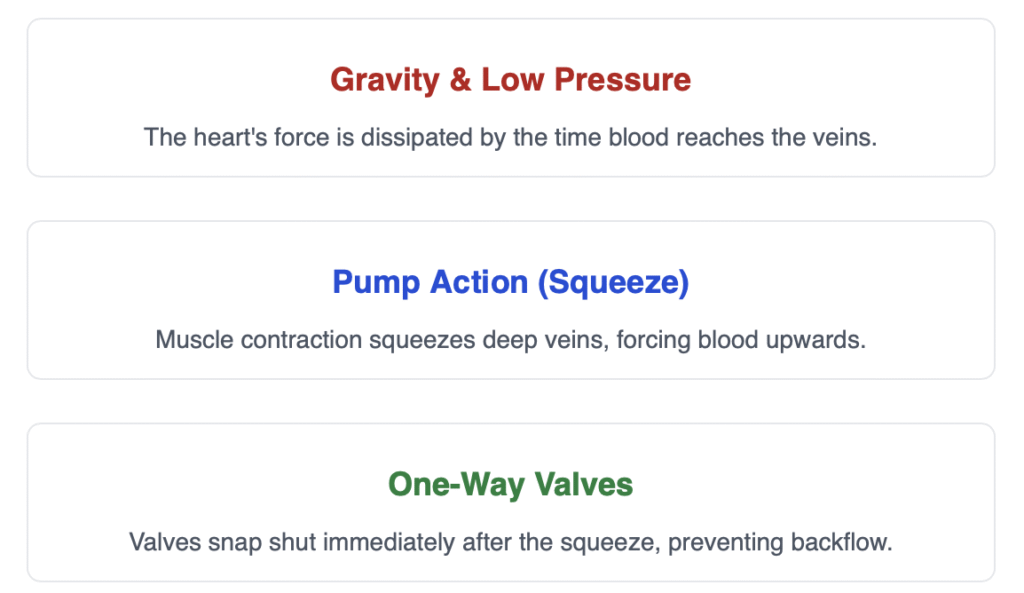
Arteries, which carry blood away from the heart, benefit from the heart’s direct high-pressure pulse. Veins, which carry blood back to the heart, face two major disadvantages:
- Low Pressure: By the time blood reaches the veins, the heart’s pressure is almost entirely dissipated.
- Gravity: Blood must travel uphill from the feet and legs, working directly against gravity.
To overcome these challenges, the body uses two specialized anatomical features: valves and the skeletal muscle pump.
The Mechanism: The Musculoskeletal Pump
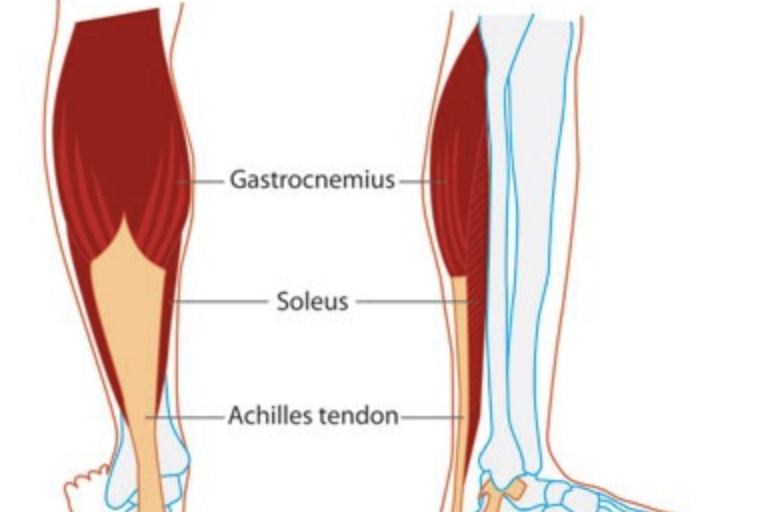
The muscles of the lower leg, particularly the calf muscles (gastrocnemius and soleus), are often called the “peripheral heart” or “second heart.”
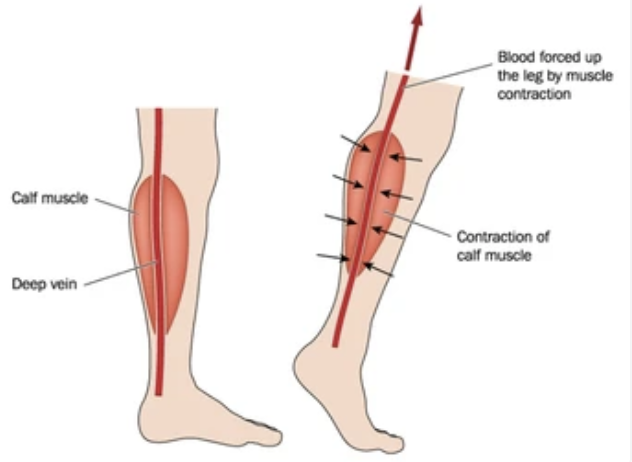
- The Venous Network: Deep veins in the leg, which carry the majority of the blood volume, are encased within layers of muscle.
- The Pump Action: When the calf muscles contract (such as when you stand on your toes or walk), they physically squeeze and compress the deep veins running through them. [Image illustrating the calf muscle contracting and squeezing the veins, showing the blood being forced upwards past a valve.] This squeezing action generates the pressure needed to propel the deoxygenated blood upwards toward the heart.
- The Valve System: Veins contain a series of one-way valves. When the muscle contracts, the blood is pushed up, and the valves immediately snap shut behind the propelled blood. This prevents blood from flowing backward down the leg due to gravity.
The consequence of this pump action is immediate: enhanced venous return, which is the rate at which blood is delivered back to the heart. When venous return is high, the heart receives more blood per beat, making circulation more efficient and reducing the load on the cardiovascular system.
🧠 The Endothelial Response: Blood Vessel Expansion and Blood Pressure Reduction
The positive effects of calf muscle pumping extend far beyond just moving blood mechanically; they trigger a powerful chemical response within the walls of your blood vessels that is essential for health.
Shear Stress and Nitric Oxide (NO)
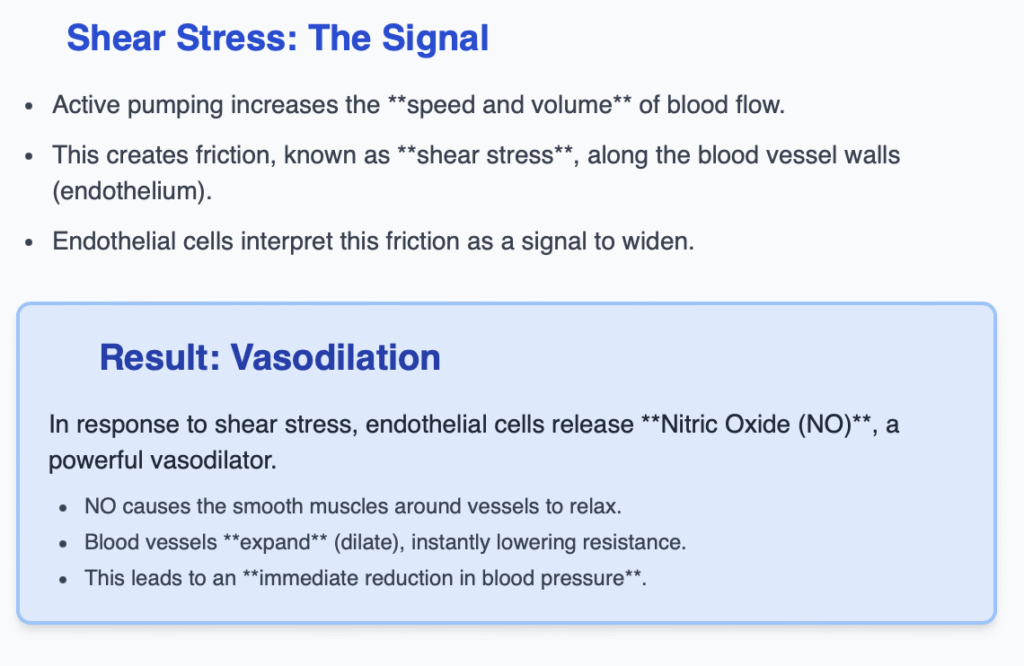
When the calf pump is active, the increased speed and volume of blood flowing through the arteries and veins create more friction along the vessel walls. This friction is known as shear stress.
- The Signal: The cells lining the blood vessels, called endothelial cells, are highly sensitive to this shear stress.They interpret the increased friction as a signal that the vessels need to be wider and more flexible to accommodate the elevated flow.
- NO Release: In response, the endothelial cells synthesize and release Nitric Oxide (NO). Nitric Oxide is a potent, short-lived vasodilator—a chemical that signals the surrounding smooth muscle cells to relax. [Image illustrating shear stress on the endothelial layer, leading to the release of nitric oxide (NO) and subsequent vasodilation of the blood vessel.]
- Vessel Expansion: The relaxation of the smooth muscles causes the blood vessels to expand (dilate). This temporary expansion provides several immediate benefits:
- Lowered Resistance: Wider vessels offer less resistance to blood flow, leading to an immediate reduction in blood pressure.
- Improved Oxygenation: Better flow ensures that oxygen and nutrients are delivered more effectively to tissues and waste products are removed more efficiently.
This entire mechanism—from calf contraction to NO release—is a primary reason why physical activity is so vital for cardiovascular health. Conversely, prolonged sitting reduces shear stress, diminishes NO production, and allows vessels to constrict, contributing to hypertension.
The Sedentary Crisis: When the Pump Stalls
The average adult spends the vast majority of their waking hours sitting or otherwise inactive. This inactivity doesn’t just reduce calorie expenditure; it fundamentally disrupts the primary mechanics of circulation.
- Blood Pooling: When the calf pump is inactive, blood starts to pool in the lower leg veins.
- Valve Damage: Over time, this pooling stretches the veins, weakening the one-way valves. If the valves become permanently incompetent, they can no longer prevent backflow, leading to conditions like chronic venous insufficiency and varicose veins.
- Increased Heart Load: With poor venous return, the heart must work harder and generate more pressure to push the remaining stagnant blood out of the lower body, raising systemic blood pressure.
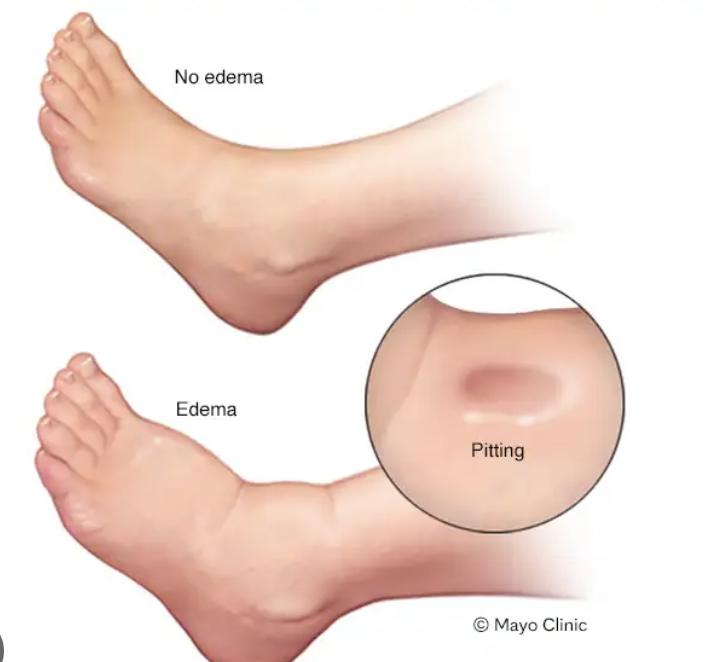
- Edema: Stagnant blood leads to increased fluid leakage from capillaries into the surrounding tissue, causing swelling (edema) in the ankles and feet.
Even getting up to pace or take a short, gentle walk may not be sufficient to generate the forceful, repetitive contraction needed to fully engage the skeletal muscle pump and elicit the robust NO-mediated vasodilation. A specific, targeted routine is required.
👀 The 5-Minute Movement Routine: The Leg-Pump Sequence
The most effective approach to immediately boost venous return and improve endothelial function is a concentrated routine of movements that maximize calf muscle contraction. This is a sequence designed to be performed every hour during periods of prolonged sitting, or as a dedicated 5-minute break.
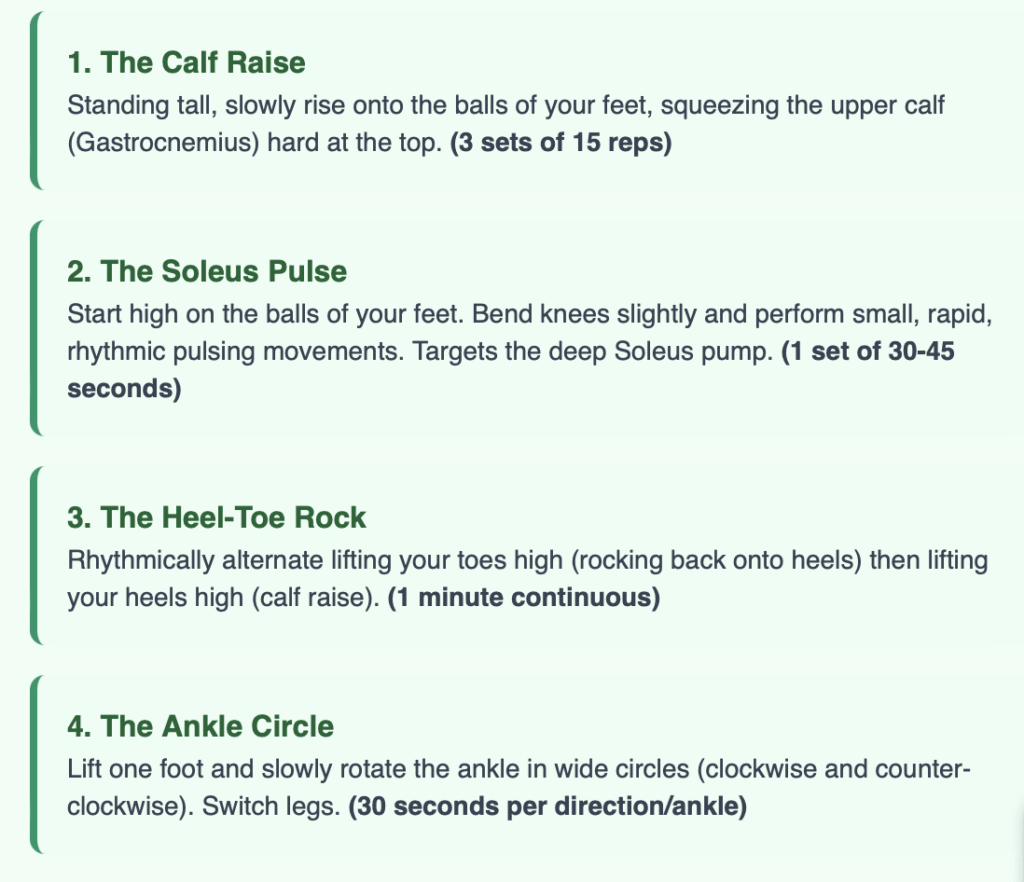
The Protocol: The Leg-Pump Sequence (To be performed standing or while waiting in line)
| Step | Movement Description | Repetitions/Duration | Circulatory Benefit |
| 1. The Calf Raise | Standing tall, slowly rise up onto the balls of your feet, squeezing your calf muscles hard at the top. Slowly lower back down, trying not to fully relax the muscle until the end of the set. | 3 sets of 15 repetitions | Directly engages the gastrocnemius (the upper calf muscle) for forceful blood propulsion. |
| 2. The Soleus Pulse | Start on the balls of your feet (high). Bend your knees slightly, keeping your torso upright, and perform small, rapid, rhythmic pulsing movements up and down. Keep the movement small and focused on the lower leg. | 1 set of 30-45 seconds | Targets the deeper soleus muscle (the primary endurance pump), which is essential for sustained venous return. |
| 3. The Heel-Toe Rock | Stand with feet flat. Lift your toes high off the floor (rocking back onto your heels), hold for 1 second. Then rock forward, lifting your heels high (calf raise). Repeat rhythmically. | 1 minute continuous repetition | Engages the entire foot and lower leg in alternating flexion and extension, mobilizing the ankle joint and gently squeezing the foot’s venous plexus. |
| 4. The Ankle Circle (Seated or Standing) | Lift one foot slightly off the floor. Slowly rotate the ankle in wide circles, first clockwise, then counter-clockwise. Switch legs and repeat. | 30 seconds per direction, per ankle | Increases localized blood flow and flexibility, helping move stagnant fluid and reducing edema. |
Timing is Everything
This 5-minute routine, unlike a casual walk, uses the force and consistency of contraction required to generate the high shear stress that cues your endothelial cells to release Nitric Oxide and expand your blood vessels. The benefit is not just felt in the legs, but systemically, as the return of blood to the heart immediately reduces the peripheral burden and lowers blood pressure.
The most crucial timing: Perform this sequence every 60 to 90 minutes of prolonged sitting to keep your peripheral heart active and your circulation fluid.
The Longevity Dividend: Endothelial Health and Resilience
The benefits of maintaining an active calf pump are not just acute; they are foundational to long-term vascular health.
Fighting Atherosclerosis
Chronic low shear stress (caused by inactivity) contributes to endothelial dysfunction—a condition where the vessels become less responsive to NO, less flexible, and more prone to inflammation and the accumulation of atherosclerotic plaques. By regularly engaging the calf pump, you are consistently providing the high shear stress needed to maintain endothelial responsiveness and flexibility. This makes your vessels more resilient against hardening and disease.
Better Fluid Balance
By preventing the pooling of blood in the lower extremities, the leg-pump sequence helps the body manage fluid balance more effectively. Less pooling means less pressure in the capillaries, reducing the likelihood of fluid leakage and associated chronic swelling and inflammation.
In a world engineered for stillness, the simple, mechanical activation of your “second heart” is a powerful, non-pharmacological intervention for controlling blood pressure, maintaining vascular health, and extending cardiovascular longevity. The fate of your circulation, and much of your aging process, is quite literally in your calves.