
For decades, the standard advice for strong bones has been simple: consume plenty of calcium. We’ve been conditioned to equate dairy products, calcium supplements, and fortified foods directly with preventing osteoporosis and fractures. Calcium is, undeniably, the primary mineral component of bone, providing its structure and hardness.
However, focusing solely on calcium is akin to providing raw materials to a construction site without an architect or a foreman. The building blocks are there, but without the correct direction, they can end up causing chaos instead of structure.
The true architect of bone and arterial health is a fat-soluble vitamin that most people have never heard of: Vitamin K2 (menaquinone). This vitamin doesn’t add calcium; it manages it. It’s the essential conductor that tells calcium exactly where to go (into the bones and teeth) and, more importantly, where not to go (into the arteries, soft tissues, and organs). Without adequate K2, the massive intake of calcium many people consume becomes a double-edged sword, potentially contributing to both weak bones and cardiovascular disease.
https://www.youtube.com/watch?v=z3njgh2nFRk
💡 The Traffic Cop: K2 Directs Calcium’s Flow
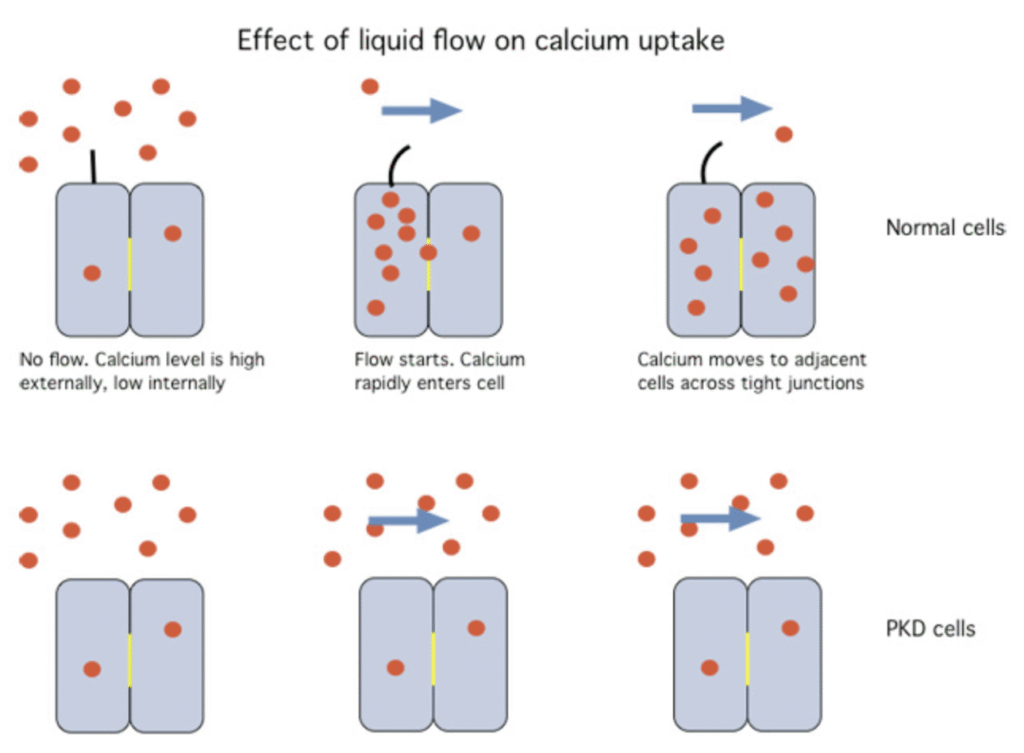
To understand the power of K2, we must look beyond calcium intake and focus on the proteins that manage calcium in the body. Vitamin K2 doesn’t work alone; it works by activating two key proteins:
1. Osteocalcin (The Bone Builder)
- Location: Found in bone and dentin (the tissue beneath tooth enamel).
- Action: Osteocalcin is produced by osteoblasts (bone-building cells). However, it is initially synthesized in an inactive, or “uncarboxylated,” form.
- K2’s Role: Vitamin K2 acts as a necessary cofactor to carboxylate (activate) Osteocalcin. Once activated, Osteocalcin acts like a molecular magnet, binding calcium from the bloodstream and pulling it directly into the bone matrix to be incorporated into the skeletal structure. Without K2, Osteocalcin remains mostly dormant, and the bone-building process stalls, even if calcium levels are high.
2. Matrix Gla Protein (MGP) (The Artery Protector)
- Location: Abundant in the walls of arteries, cartilage, and soft tissues.
- Action: MGP is arguably the body’s most potent inhibitor of soft tissue calcification. It actively binds to calcium crystals and prevents them from hardening the soft, elastic walls of arteries. MGP is crucial for maintaining the flexibility and health of the circulatory system.
- K2’s Role: Just like Osteocalcin, MGP is useless in its inactive, uncarboxylated state. Vitamin K2 is the required activator for MGP. Adequate K2 ensures that MGP is fully functional, patrolling the arteries and preventing calcium from being deposited in the wrong places.
The entire system hinges on K2. [Image illustrating Vitamin K2 activating Osteocalcin to deposit calcium into bone and activating MGP to prevent calcium deposition in the arterial wall] If K2 is deficient, the body ends up with an abundance of inactive MGP, leading to a failure to protect the arteries, and inactive Osteocalcin, leading to poor calcium utilization in the bone.
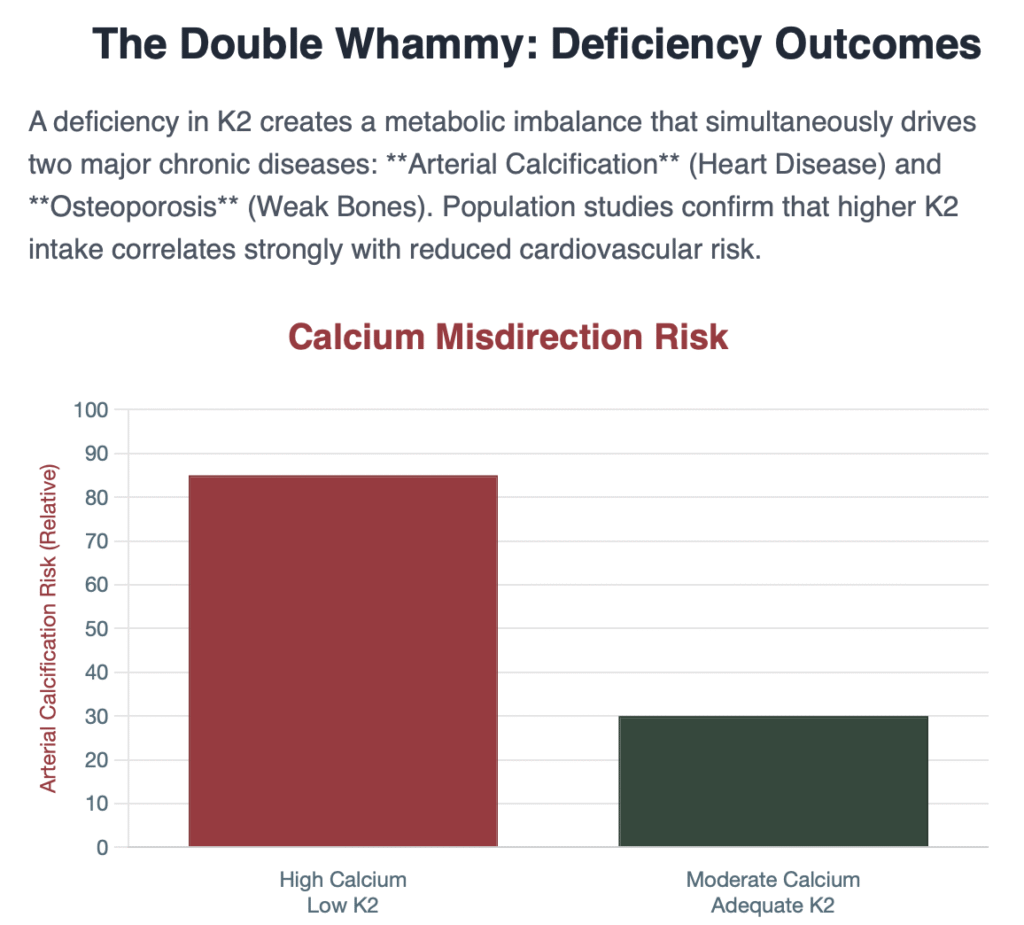
🧠 The Double Whammy: Heart Disease and Weak Bones
The absence of sufficient K2 creates a metabolic imbalance that simultaneously harms two of the body’s most critical systems: the skeletal system and the cardiovascular system.
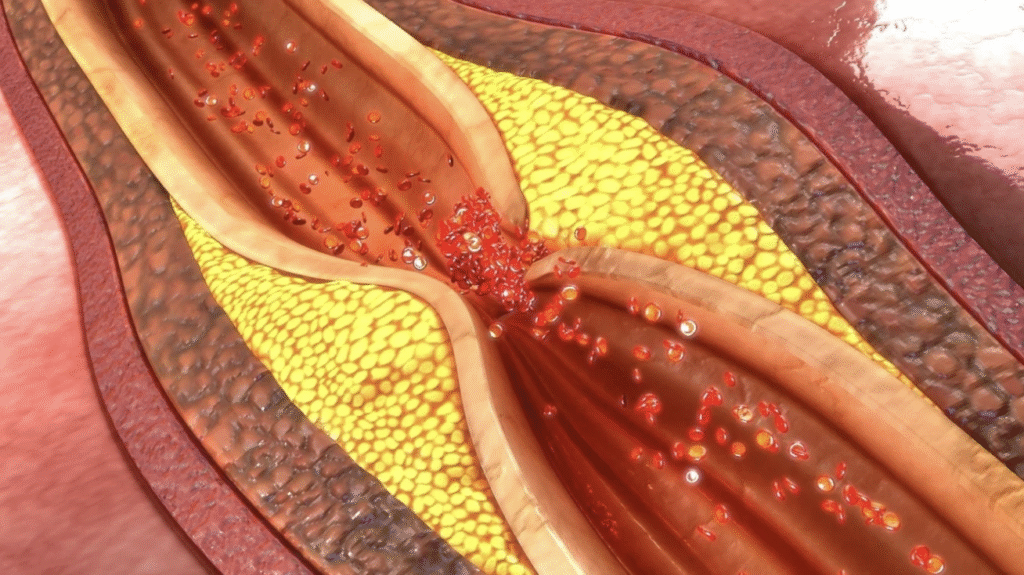
The Cardiovascular Catastrophe: Arterial Calcification
Calcification of the arteries, often called “arterial stiffness” or “hardening of the arteries,” is a major, independent risk factor for heart attack and stroke. It’s a process where calcium phosphate crystals are deposited in the middle layer (media) of the arterial wall.
- The Link to Calcium Supplements: Studies, particularly those concerning the long-term effects of high-dose calcium supplementation (often without K2 or Vitamin D), have shown concerning trends. Some research suggests that unmanaged calcium intake, when combined with low K2 status, may contribute to the progression of arterial calcification. The calcium, lacking K2’s direction, ends up migrating to the arterial walls, forming plaques and stiffening the vessels.
- The K2 Solution: Population studies have consistently demonstrated a correlation between higher Vitamin K2 intake and a reduced risk of coronary heart disease and all-cause mortality. The landmark Rotterdam Studyfound that participants with the highest dietary intake of K2 had the lowest risk of severe aortic calcification and coronary heart disease mortality. This strongly supports the idea that K2 protects the heart by ensuring MGP is active and performing its job of keeping calcium out of the arteries.
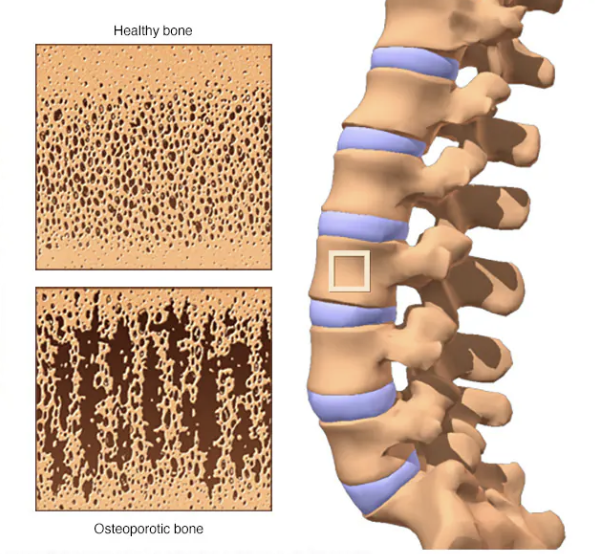
The Skeletal Vulnerability: Osteoporosis
While the bone needs calcium, it also requires K2 to properly integrate that calcium.
- The Deficiency: When K2 is low, bone density suffers not from a lack of calcium, but from a failure to utilize the calcium that is available. The bone-building cells cannot properly activate the magnet (Osteocalcin) to pull the mineral in.
- Clinical Evidence: Numerous clinical trials, particularly in Japan where K2 research is more widespread, have shown that Vitamin K2 supplementation (often a specific form called MK-4) significantly improves bone mineral density and reduces the incidence of vertebral and hip fractures in postmenopausal women and individuals with osteoporosis. This suggests K2 is a more direct and limiting factor in bone health than calcium intake itself.
👀 The K2 Gap: Why Most Diets Are Deficient
Vitamin K exists in two main forms: K1 (phylloquinone) and K2 (menaquinone).
Vitamin K1 (The “Clotting” Vitamin)
- Source: Found primarily in green leafy vegetables (kale, spinach, broccoli).
- Function: K1 is vital for blood clotting (coagulation). It is rapidly absorbed and utilized by the liver for this immediate, life-sustaining function.
- The Problem: K1 is poorly converted into K2, and very little of it makes it out of the liver to activate MGP and Osteocalcin in the bones and arteries.
Vitamin K2 (The “Structural” Vitamin)
- Source: Synthesized by certain bacteria and found mainly in fermented foods and animal fats from animals that ate K1-rich grass.
- Function: K2’s job is structural—directing calcium to the skeleton and away from the arteries. It is the form the body needs for bone and cardiovascular health.
- The Deficiency: Modern diets have virtually eliminated the best sources of K2. We favor factory-farmed animal products (low in K2) over pasture-raised, and we rely on quick cooking rather than traditional fermentation.
🥗 K2-Rich Foods: Embracing Traditional Nutrition
K2 comes in several subtypes (called menaquinones, abbreviated MK-n), but the most important dietary forms are MK-4and MK-7.
1. MK-7 (The Long-Acting Powerhouse)
MK-7 is typically found in fermented foods. It is more efficiently absorbed and has a longer half-life (it stays in the body longer), making it excellent for continuous bone and artery protection.
- Natto (Fermented Soybeans): This is, by far, the most potent dietary source of K2, offering massive amounts of MK-7. While the taste is polarizing, even small amounts can meet daily needs.
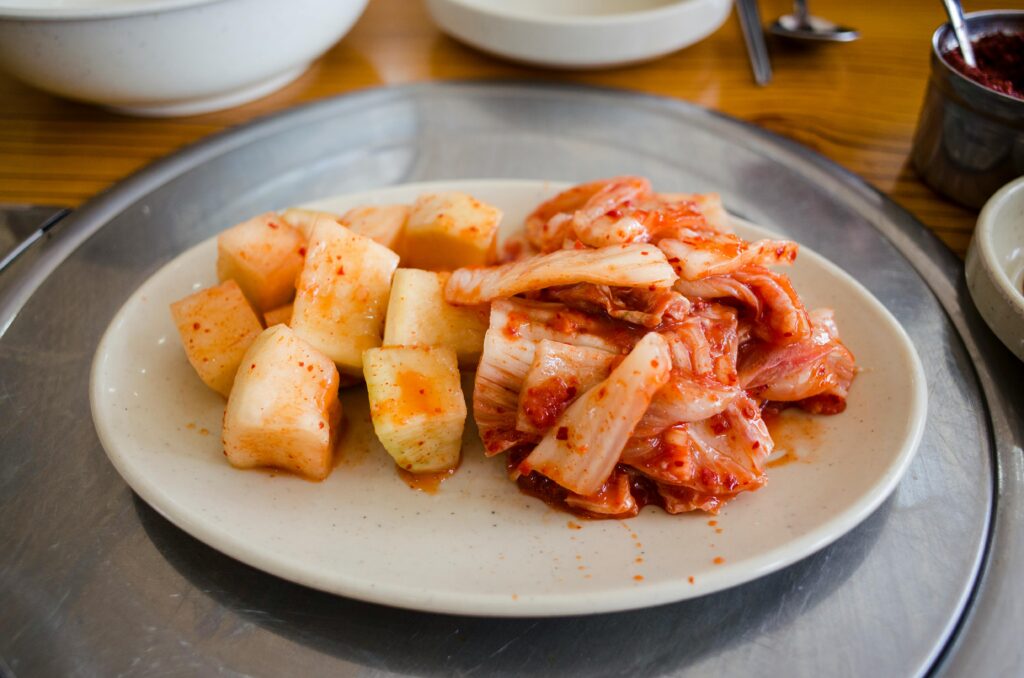
- Sauerkraut and Other Fermented Vegetables: While lower than Natto, some naturally fermented vegetables contain notable amounts of MK-7.
2. MK-4 (The Animal Source)
MK-4 has a shorter half-life but is the form that is biologically active in most tissues (it’s the form used in most fracture trials).
- Grass-Fed Butter and Ghee: Milk fat from cows grazing on green grass is a rich source of K2 (since the grass is high in K1, which the cow converts to K2).
- Goose/Duck Liver: The liver is the storage organ.
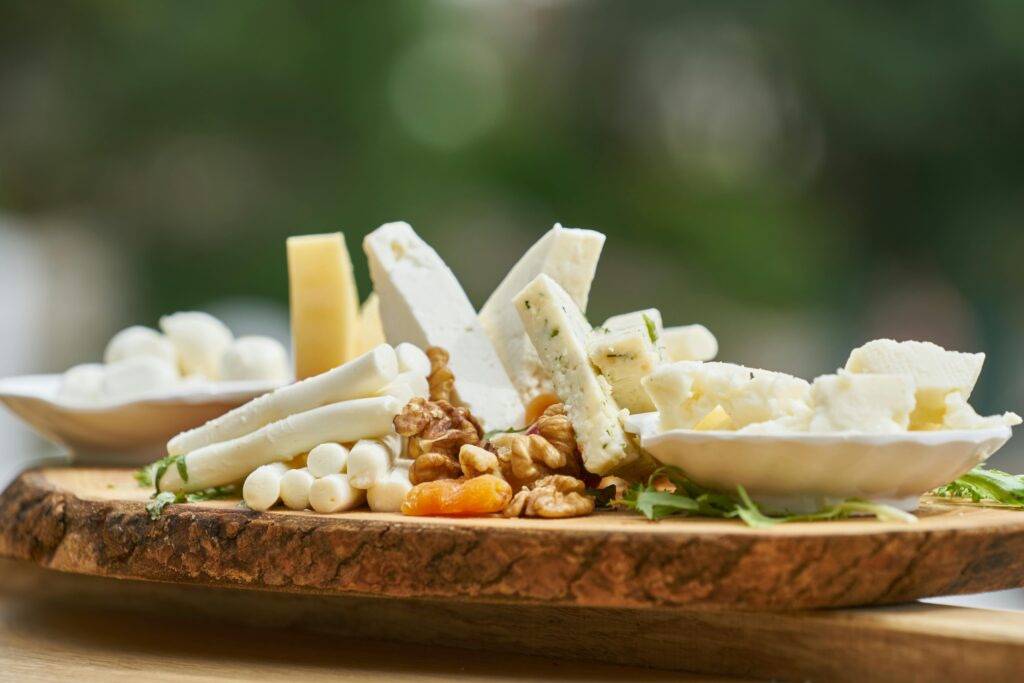
- Certain Cheeses: Aged and hard cheeses like Gouda and Brie, which rely on bacterial fermentation, contain significant MK-7.
- Egg Yolks: Pasture-raised egg yolks are much higher in K2 than conventional yolks.
| K2 Source | Primary K2 Type | Notes on Sourcing |
| Natto | MK-7 | Highest concentration globally. |
| Gouda/Brie Cheese | MK-7 | Good source; concentration varies with aging. |
| Grass-Fed Butter/Ghee | MK-4 | Must be grass-fed to ensure high K2 content. |
| Pasture-Raised Egg Yolk | MK-4 | Conventional eggs are much lower. |
| Goose/Duck Liver | MK-4 | Excellent, concentrated source. |
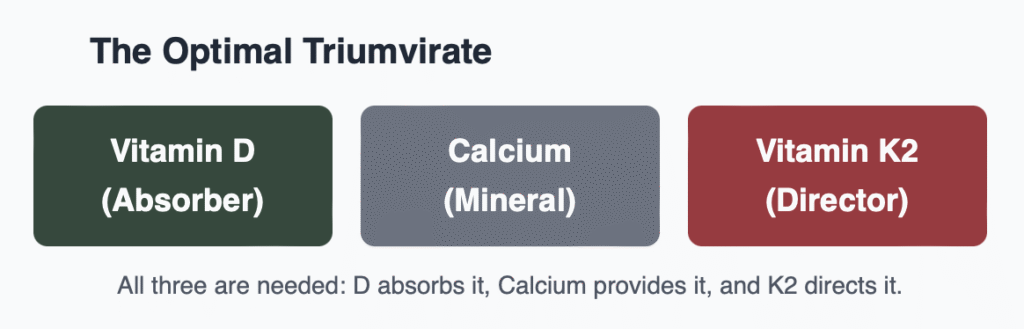
The K2-Calcium Synergy: The Optimal Triumvirate
For optimal skeletal and cardiovascular health, you need the right combination:
- Vitamin D (The Absorber): Essential for absorbing calcium from the gut into the bloodstream.
- Calcium (The Mineral): The raw material for the bone.
- Vitamin K2 (The Director): The essential activator that steers calcium from the blood into the bone and out of the arteries.
When taking calcium supplements, it is crucial to ensure adequate intake of K2 and D to prevent the calcium from becoming “misdirected” into soft tissues.
Takeaway
The path to strong bones and a healthy heart is not paved with calcium alone; it is directed by Vitamin K2.
Think of calcium as the building materials and Vitamin K2 as the essential blueprint and machinery. Without K2, the building materials are left scattered—causing arterial damage and leaving the skeletal structure vulnerable.
To close the critical K2 gap in your diet, the simple action is to shift from the low-K2 convenience foods of the modern diet to the high-K2 foods prized in traditional cultures: Natto, aged cheeses like Gouda, and high-quality, grass-fed animal fats.
By prioritizing the strategic intake of K2, you activate the body’s natural defense mechanisms, ensuring that the calcium you consume is a friend to your bones and not a foe to your arteries.