
SEO Summary:
- Regular consumption of walnuts is associated with a significantly reduced risk of stroke and improved cardiovascular health.
- Walnuts are the best plant-based source of Alpha-Linolenic Acid (ALA), an omega-3 fatty acid crucial for arterial flexibility.
- For maximum vascular benefit, the nuts should be consumed raw and unroasted to preserve delicate oils and antioxidants.
The Unexpected Power of a Wrinkled Little Kernel
Like many people, I used to think of nuts as just a convenient snack—a source of quick energy. But my entire perspective changed when I dove into the compelling research linking one specific, brain-shaped nut to incredible cardiovascular protection. Finding out that something so simple and delicious could drastically lower my stroke risk was a profound moment of realization.
I’m talking about the Walnut.
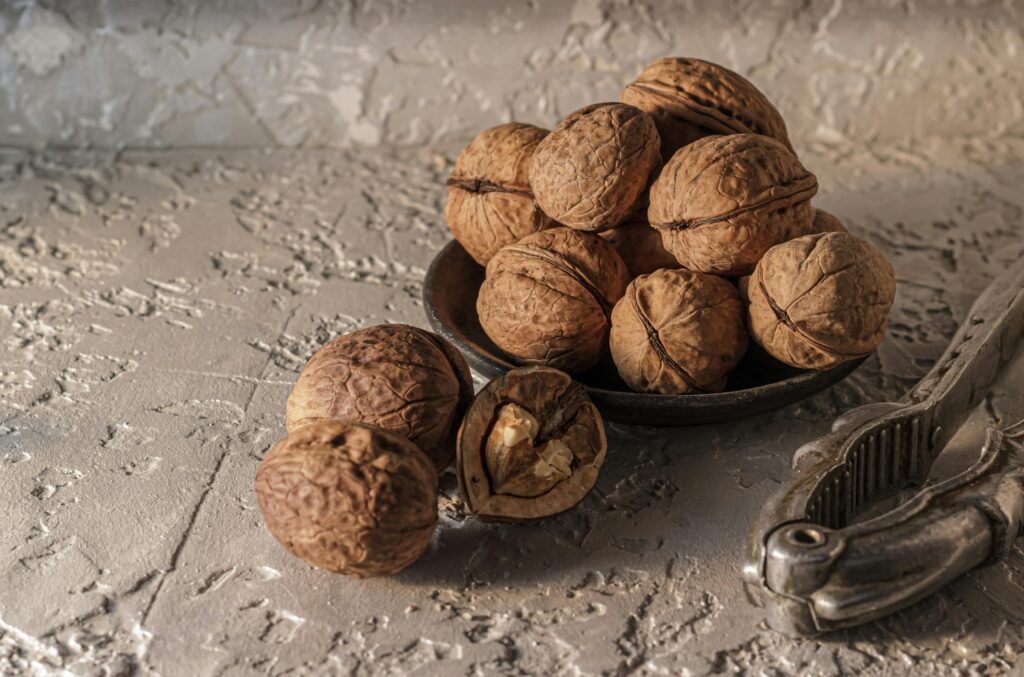
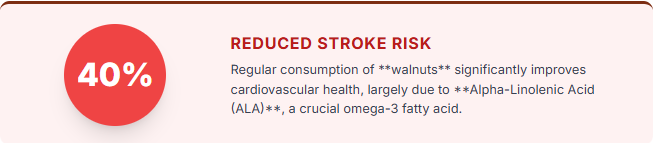
Stroke is a devastating event, often caused by a clot or rupture in the blood vessels supplying the brain. The idea that a small, daily portion of walnuts can act as a powerful form of vascular insurance—improving arterial health, lowering blood pressure, and reducing inflammation—is one of the most exciting, evidence-based health discoveries I’ve encountered. This isn’t just a folk remedy; the data supporting the stroke-lowering power of walnuts is robust, often pointing to a risk reduction of up to 40% when consumed regularly.
The Secret Weapon: Omega-3 ALA
While all nuts are beneficial, the walnut is a true standout because of its unique fat composition. It is the only nut that contains significant amounts of Alpha-Linolenic Acid (ALA)—a plant-based omega-3 fatty acid.
Why ALA is Your Brain’s Best Friend
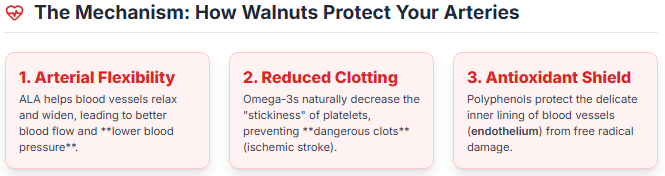
ALA is crucial for vascular health because it is a powerful precursor to anti-inflammatory compounds. Here’s what the research shows ALA does for your arteries and brain:
- Improves Arterial Flexibility: Regular ALA consumption helps your blood vessels relax and widen, which leads to better blood flow and lower blood pressure—a major factor in reducing stroke risk.
- Reduces Clotting Risk: Omega-3s naturally help to reduce the stickiness of platelets, meaning your blood flows more smoothly and is less likely to form dangerous clots that can lead to ischemic stroke.
- Fights Oxidative Stress: Walnuts are packed with antioxidants like Vitamin E and polyphenols, which protect the delicate inner lining of your blood vessels (the endothelium) from damage caused by free radicals.
For me, understanding that these mechanisms work synergistically to protect the brain means that my daily walnut habit is a core strategy for maintaining cognitive health and avoiding a major health crisis.
The Critical Difference: Raw vs. Roasted
Here is the essential, often-missed piece of information that makes all the difference in maximizing your stroke-prevention benefit: you must eat them raw.
I used to love the crunchy, deep flavor of roasted walnuts, but I learned a painful truth: those incredibly beneficial omega-3 fats, especially ALA, are highly delicate.
When walnuts are roasted at high temperatures, the healthy polyunsaturated fats, including ALA, can become oxidized, turning them into damaged fats that can actually promote inflammation rather than fight it. Furthermore, the heat diminishes the power of the potent antioxidants found just under the papery skin of the nut.
My rule is now simple: Always buy them raw, unroasted, and unsalted. This ensures that those volatile omega-3s are intact and ready to go to work protecting your heart and brain vessels. I now store mine in an airtight container in the fridge or freezer to keep them fresh and prevent natural oxidation.
My Personal Daily Walnut Ritual
The good news is that you don’t need to eat a massive bowl of walnuts every day to reap the rewards. The science points to the benefits coming from a small, consistent daily portion.
The Prescription: A Quarter-Cup Daily
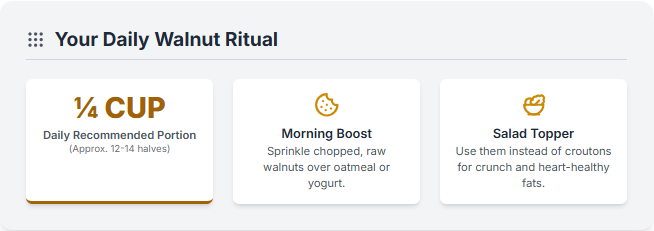
A standard recommendation is about one ounce or approximately one quarter-cup of shelled walnuts (about 12-14 halves). This amount delivers a significant dose of ALA, fiber, and protein without adding excessive calories.
How I Fit Them Into My Day:
- Morning Boost: I often sprinkle a small handful of chopped, raw walnuts over my morning oatmeal or blend them quickly into a smoothie.
- The Midday Snack: I keep a small, portioned baggie of raw walnuts in my desk or backpack for a quick, filling, and brain-boosting snack.
- Salad Topper: Instead of using croutons, I chop raw walnuts and toss them over my lunch salad for crunch and healthy fat.
This consistency is key. Just like taking your daily vitamins, this small ritual ensures a continuous supply of the protective compounds your arteries need to stay flexible and healthy.
When to See a Doctor (And What to Ask)
While diet is powerful, it is only one piece of the puzzle. If you have existing risk factors for stroke, such as high blood pressure, high cholesterol, or diabetes, it is crucial to work with your medical team.
Empowering Questions for Your Doctor:
- “Given my health markers (blood pressure, cholesterol), what is my current estimated stroke risk?”
- “What impact do you think adding a daily serving of walnuts could have on my current medication regimen?”
- “What other specific dietary changes—beyond nuts—do you recommend to improve my vascular health?”
Stroke is largely preventable, and integrating these dietary changes alongside professional medical advice for managing risk factors is the most powerful strategy you can adopt.
Myths vs. Facts: Walnuts & Vascular Health
| Myth | Fact |
| I should eat my walnuts with lots of salt for flavor. | Fact: Salt (sodium) raises blood pressure, which is a leading cause of stroke. Always choose raw, unsalted walnuts for vascular benefit. |
| Walnut oil is just as good as the whole nut. | Fact: While the oil contains ALA, you miss out on the valuable fiber, protein, and many antioxidants concentrated in the solid part of the whole nut. The whole food is always superior. |
| I can get enough Omega-3s from other sources. | Fact: Walnuts are unique as they are the best tree nut source of ALA. While flax and chia seeds are good, walnuts offer a highly convenient and delicious way to ensure a substantial, regular dose. |
Conclusion
It’s amazing to me that something as simple and available as a walnut can hold such immense power over one of our most feared health crises. The science is a clear, resounding affirmation: the ALA, antioxidants, and fiber packed into that wrinkled kernel are a powerful form of defense against stroke, heart disease, and cognitive decline.
I truly hope you’ll join me in making this one small, simple change. Stop thinking of walnuts as just a holiday treat. Start thinking of them as your daily, delicious, and science-backed investment in a longer, healthier life. Grab a handful of raw walnuts today, and enjoy the peace of mind that comes with knowing you are actively protecting your most vital organ.
Sources:
Walnuts and Cardiovascular Risk: Sala-Vila, A., et al. (2021). Effect of a 2-Year Diet Intervention with Walnuts on Cognitive Decline in the Elderly: The Walnuts and Healthy Aging (WAHA) Study. The American Journal of Clinical Nutrition, 114(4), 1435–1446.
ALA and Stroke Risk: Pan, A., Chen, M., Chowdhury, R., Wu, T., & Sun, Q. (2012). α-Linolenic Acid and Risk of Cardiovascular Disease Events: A Systematic Review and Meta-Analysis of Cohort Studies. The American Journal of Clinical Nutrition, 96(6), 1262–1271.