
When you sit down for a meal, you probably don’t give much thought to the sequence in which you consume your food. Most of us just start eating what’s most appealing, or what’s closest, or perhaps follow an ingrained, unconscious habit—often diving straight into the comforting pile of carbohydrates.
But what if I told you that the simple act of rearranging the order in which you eat the components of a meal could have a dramatic and immediate impact on your body’s handling of sugar? It’s not about changing what you eat, or even how much, but simply changing the order.
This concept, often referred to as “food sequencing“ or “meal sequencing,” is one of the most powerful and easy-to-implement hacks for improving your blood sugar control, boosting satiety, and moving the needle toward better metabolic health. For the same meal, with the same calorie count, the sequence delivers a completely different metabolic outcome.
💡 The Science of Food Sequencing: How It Works
The core principle is remarkably simple: eat vegetables and protein/fat before carbohydrates.
Research, notably from studies led by metabolic specialists, has repeatedly demonstrated this effect. When individuals consumed the same meal on different days, the day they ate their carbohydrates last resulted in significantly lower post-meal glucose spikes and improved insulin response compared to the day they ate the carbohydrates first.
https://www.youtube.com/watch?v=HEEUrIQ_3O4
The Role of Fiber and Fat/Protein
This effect isn’t magic; it’s a physiological marvel driven by two key factors:
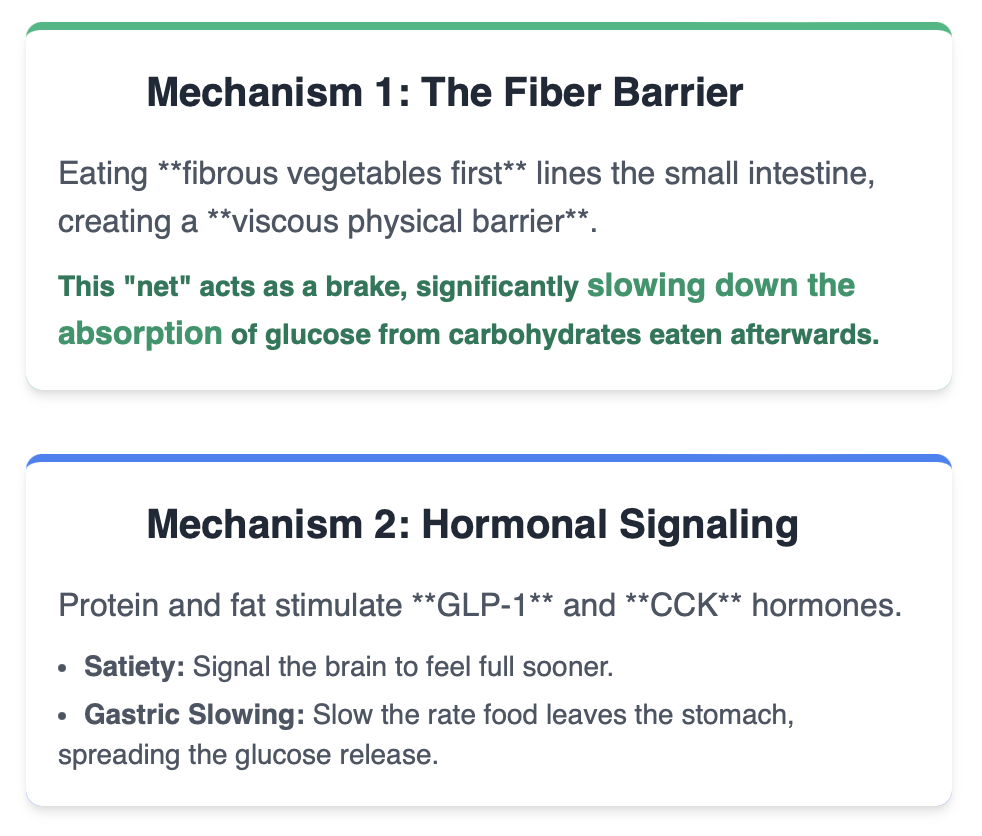
- 1. The Fiber Barrier (from Vegetables): When you consume fibrous vegetables (like a salad or non-starchy sides) first, the fiber forms a viscous barrier in the upper part of your small intestine.
This physical barrier acts like a net or a brake, slowing down the rate at which the subsequently consumed carbohydrates (which are broken down into glucose) can be absorbed into your bloodstream. This significantly delays and flattens the resulting glucose curve.
- 2. Satiety and Gut Hormone Signaling (from Protein and Fat): Eating protein and fat early stimulates the release of key gut hormones, such as GLP-1 (Glucagon-like peptide-1) and CCK (Cholecystokinin). These hormones serve two critical functions:
- They signal to the brain that you are satiated, which naturally leads you to eat less of the remaining food, including the often-overconsumed refined carbohydrates.
- GLP-1 specifically helps to potentiate insulin secretion and slow gastric emptying (the rate at which food leaves the stomach). Slower gastric emptying means the entire meal enters the small intestine—the site of glucose absorption—more gradually, further mitigating the sugar spike.
The result is a process of “pre-loading” your digestive system with a metabolic buffer before the glucose bomb hits.

📈 The Metabolic Impact: Smoother Curves, Better Health
When glucose from a meal rushes into the bloodstream too quickly (a sharp glucose spike), the pancreas is forced to produce a rapid and often excessive surge of insulin to clear the sugar.
The Problem with Sharp Spikes
- Insulin Resistance: Constant, sharp glucose spikes and resulting insulin surges are a primary driver of insulin resistance over time, where cells become numb to insulin’s signal. This is a precursor to pre-diabetes and Type 2 Diabetes.
- Energy Crash: The quick spike is often followed by a sharp drop (a glucose crash), leaving you feeling tired, foggy, and hungry again shortly after eating, perpetuating a cycle of seeking more energy (usually in the form of more carbohydrates).
- Fat Storage: Insulin is the body’s primary storage hormone. High and sustained insulin levels signal to the body to stop burning fat and instead store excess energy (including glucose) as fat.
The Benefit of Sequencing
By eating your food in the correct order, you achieve a flatter and lower glucose curve. The peak is less pronounced, and the drop is gentler.
- Reduced Insulin Demand: A flatter curve requires less of an insulin response, improving the body’s sensitivity to the hormone.
- Sustained Energy: Avoiding the sharp crash leads to more stable energy and mood throughout the afternoon.
- Reduced Cravings: Better blood sugar stability translates directly to fewer cravings for sugary or high-carb snacks between meals.
👀 The Opposite Problem: Why Most People Get It Wrong
Most people eat in the exact opposite order of what is metabolically beneficial:
- They start with the bread basket or chips.
- They eat the starches (pasta, rice, potatoes) alongside the main course.
- They save the vegetables (if they are present at all) to be eaten as an afterthought, or they are left on the plate entirely.
Starting with refined carbohydrates is like pouring gasoline on a fire—it ensures the most rapid possible absorption of sugar. This is particularly problematic with things like sweetened drinks or fruit juices, which are essentially pure sugar water with minimal or no fiber, leading to an immediate, massive glucose rush.
🍴Practical Application: Your New Eating Sequence
Adopting food sequencing is simple and doesn’t require complex meal planning or counting. It’s about a mindful shift at the table.
The Correct Eating Sequence:
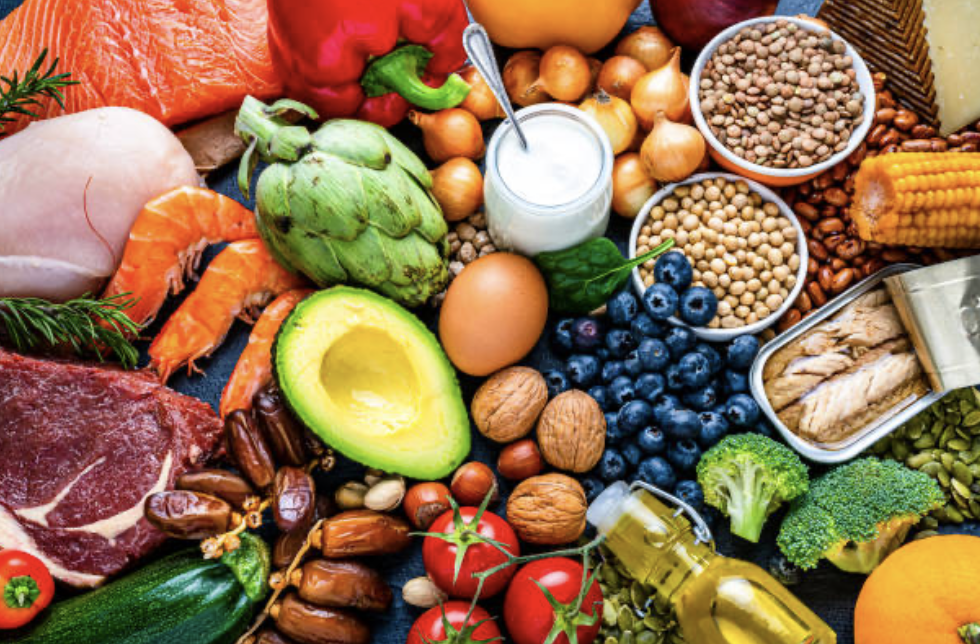
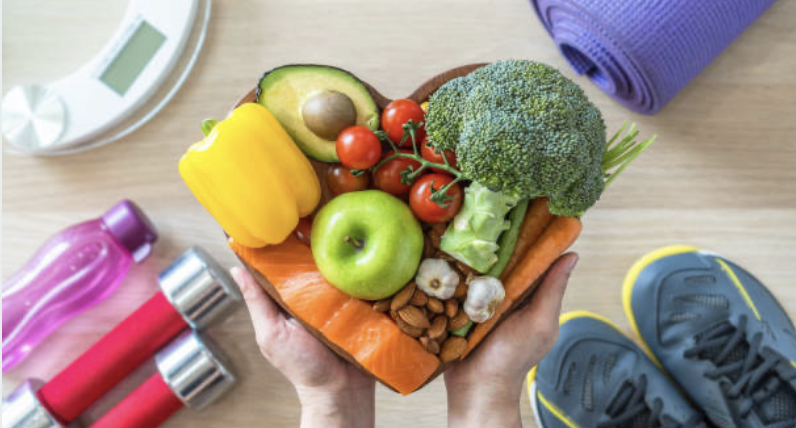
- 🌱 Veggies and Fiber First: Prioritize a generous portion of non-starchy vegetables. Think of this as your “appetizer.” This could be a side salad, a bowl of soup, steamed broccoli, or any green vegetable. The goal is to get fiber into your digestive tract immediately.
- 🥩 Protein and Fat Next: Move onto your main source of protein (chicken, fish, eggs, tofu, steak) and healthy fats (avocado, nuts, olive oil, cheese). This step ensures the release of satiety and gastric-slowing hormones.
- 🍚 Starches and Sugars Last: Consume your starchy carbohydrates (rice, bread, potatoes, corn, pasta) and any simple sugars (dessert, sweet fruit) last. By the time the glucose from these foods is released, your digestive system is already buffered by the fiber, protein, and fat.
Examples in Real Life:
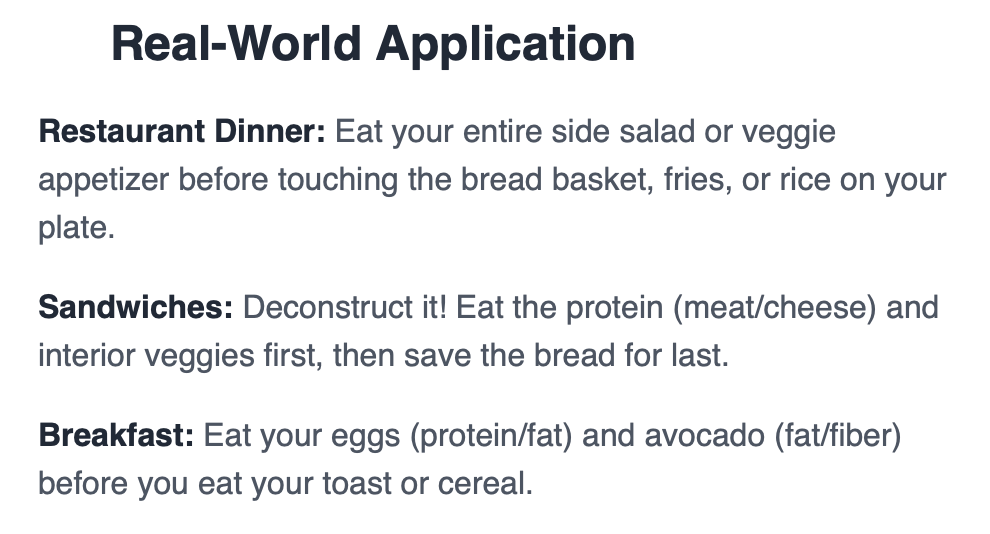
- Dinner at a Restaurant: Order a side salad or a veggie soup and eat the whole thing before touching the bread or your entree’s starchy sides.
- At Home: Scoop the vegetables and protein onto your plate first, and save the rice or pasta for the end.
- Sandwiches: Deconstruct it! Eat the protein, cheese, and inner vegetables first, then eat the bread.
- Buffets: Fill your plate mostly with vegetables and protein on the first pass, and only add a small portion of the dessert or carb dish on a second pass after you’ve finished the first half of your meal.
The 2-Minute Read Takeaway
The most important takeaway is that you are in control of your metabolism with every bite. You don’t need to eliminate your favorite carbohydrates; you just need to respect their power and strategically place them at the end of the line.
Your Goal: Create a metabolic shield with fiber (veggies) and hormonal regulators (protein/fat) before introducing the main sugar load (carbs).
In a world obsessed with calorie counting and restrictive diets, food sequencing offers a refreshingly simple, non-restrictive, and scientifically-backed approach. It proves that metabolic health isn’t just about the content of your plate, but the conscious, deliberate order in which you choose to enjoy it.