


SEO Summary:
- Cells possess metabolic flexibility, meaning mitochondria can efficiently switch their primary fuel source between glucose (sugar) and fatty acids (fat).
- Metabolic inflexibility (being stuck on sugar) is linked to chronic disease and accelerates aging.
- Intermittent fasting and a low-carb, high-fat diet are the most effective ways to trigger the fat-burning (ketosis) backup system for longevity.
The Power Trip: Discovering My Cells’ Secret Superpower

For most of my life, I viewed my body’s energy system as a simple fire—I ate carbohydrates, and my cells burned that sugar (glucose) for fuel. If I ran out, I “crashed.” This limited thinking made me feel reliant on constant snacking and frequent sugar hits.
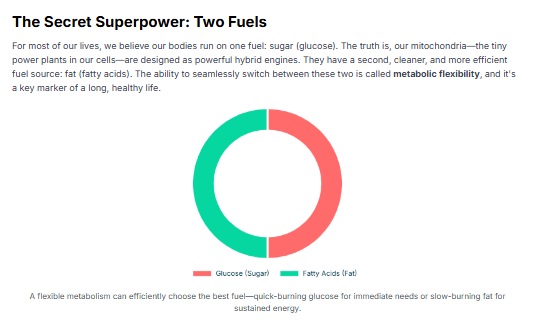
Then I learned the extraordinary truth: our cells, specifically the tiny power plants within them called mitochondria, have a backup energy factory that runs on a far more efficient, cleaner, and sustained fuel source: fat.
This ability to seamlessly switch between burning sugar and burning fat is called metabolic flexibility, and it is, in my opinion, the single most important marker of a healthy, resilient, and long-lived metabolism. The problem is, our modern diets—loaded with refined carbohydrates and processed snacks—unknowingly keep our cells stuck on “sugar mode,” preventing us from accessing the cleaner, longevity-boosting fat fuel.
The Trap: Why Cells Get Stuck on Sugar
Your body has two primary energy sources, and it always prefers the quickest, easiest one: glucose. When you consume refined carbohydrates, your glucose levels spike, and the hormone insulin is released to shuttle that sugar into your cells.
If you eat this way all day, every day, your cells never run out of glucose. Over time, the machinery inside your mitochondria that is designed to burn fat (a process called fat oxidation) becomes rusty and inefficient.
Metabolic Inflexibility and Aging
This metabolic inflexibility is not just an inconvenience; it’s a critical health issue. When your cells cannot access fat for fuel:
- Energy Crashes: You constantly crave quick sugar hits because you cannot tap into your stored body fat for sustained energy.
- Mitochondrial Damage: Constant sugar burning can be a “dirty” process, leading to a buildup of damaging free radicals and oxidative stress within the mitochondria, accelerating cellular aging.
- Insulin Resistance: Eventually, your cells become desensitized to insulin, leading to the metabolic dysfunction that underlies Type 2 diabetes and obesity.
The simple goal, I realized, is to become a hybrid car—a metabolism that can smoothly switch between both fuel sources as needed.
The Solution: Flipping the Fuel Switch

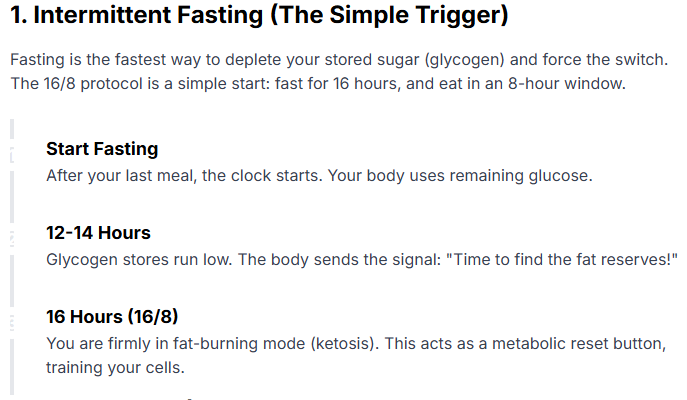
The key to regaining metabolic flexibility is forcing your cells to temporarily run out of sugar so that they must, by necessity, dust off the machinery and start burning fat. The two most effective ways to achieve this are through controlled diet and periods of fasting.
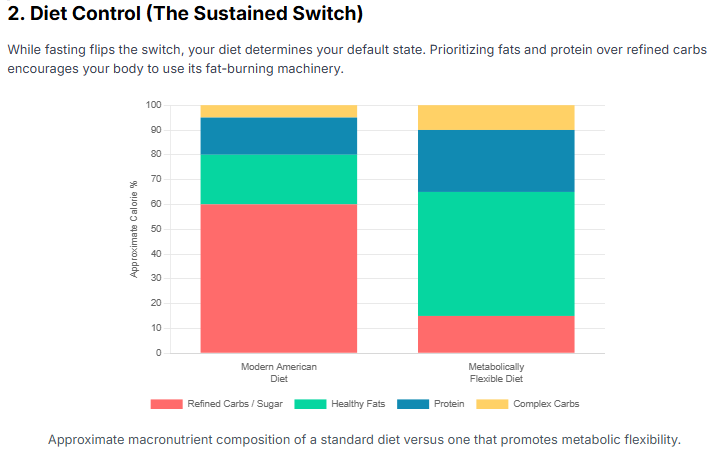
- Prioritize Healthy Fats: Focus on healthy fats (avocado, nuts, olive oil, fatty fish) and protein. These fuels burn cleaner and slower, giving your cells a sustained, high-quality energy source.
- Limit Refined Carbs: Drastically cut back on white bread, sugary drinks, pastries, and processed snacks. When you do eat carbs, choose complex sources like vegetables, beans, and whole grains, which release glucose slowly.
This combination of periodic fasting and consistent diet control ensures your mitochondria become highly efficient fat-burners, giving you access to a massive backup energy factory—your stored body fat.
My Personal Advice as a Health Advocate
I found that the most significant benefit of metabolic flexibility was not weight loss, but energy and focus. When my cells were relying on slow-burning fat, I experienced sustained energy throughout the day, without the mid-afternoon crash that used to plague me. My mind felt clearer, and my hunger pangs became much more manageable.
The fear of fasting is often the biggest hurdle. Start small. Simply skip that late-night snack and the early-morning breakfast, extending your natural overnight fast to 14 hours. That subtle change is often enough to send a powerful signal to your mitochondria: “Time to find the fat reserves!”
Once you feel the sustained energy that comes from being able to tap into your backup energy factories, you’ll never want to go back to being stuck on sugar mode again.
FAQs (Frequently Asked Questions)
Is the “keto flu” a sign of failure?
No. The “keto flu” (fatigue, headache) is often a sign that your body is successfully transitioning out of sugar-burning and into fat-burning (ketosis). It usually passes quickly as your body learns to use fat efficiently.
Will my brain run out of energy if I stop eating carbs?
Absolutely not. While glucose is its preferred fuel, the brain runs extremely well on ketones, the clean fuel source produced when your body burns fat. Many people report enhanced mental clarity when metabolically flexible.
Can I still work out while fasting?
Yes. Exercising in a fasted state is a powerful way to accelerate the “fuel switch” and increase mitochondrial biogenesis, which is great for longevity. Just ensure you hydrate well (with electrolytes!).
How long does it take to become metabolically flexible?
It varies, but consistent intermittent fasting and carb restriction usually start yielding noticeable results in energy and reduced cravings within 2 to 4 weeks.
Conclusion
Your cells are equipped with backup energy factories—your mitochondria—that hold the key to sustained energy and cellular longevity. If you are stuck in a cycle of sugar crashes and constant cravings, your metabolic machinery is stuck on a single, inefficient fuel source.
I urge you to take control and learn to flip that switch. Through simple, strategic fasting and a focus on healthy fats and protein, you can train your mitochondria to access your powerful fat reserves. Unlock your metabolic flexibility today, and you will unlock sustained energy and a more resilient, longer-lived body.
Sources:
Metabolic Flexibility and Health: Goodpaster, B. H., & Sparks, L. M. (2017). Metabolic Flexibility in Health and Disease. Cell Metabolism, 25(5), 1027–1034.
Fasting, Ketosis, and Longevity: Anton, S. D., Moehl, K., Donahoo, W. T., Phillips, T. E., Burke, J. R., et al. (2018). The Effects of Time-Restricted Eating on Health and Longevity. GeroScience, 40(5-6), 485–501.
Mitochondrial Function and Fuel Switching: Houtkooper, R. H., Auwerx, J., & Canto, C. (2012). The Metabolic and Molecular Actions of Exercise and Fasting on Health and Disease. Journal of Applied Physiology, 112(9), 1600–1611.
Ketones as a Clean Fuel Source: Volek, J. S., et al. (2017). Effects of Ketogenic Diets on Cardiovascular Risk Factors and Metabolic Health. Obesity Reviews, 18(S1), 7-24.