
We live in a world saturated with sugar. Whether it’s hidden in “healthy” granola bars, lurking in seemingly innocent savory sauces, or offered overtly in desserts and sugary drinks, the modern diet is a relentless conveyor belt of glucose.For decades, the public health message has centered on reducing total sugar intake, which is sound advice.
But what if the true villain isn’t the total amount of sugar you consume, but the speed and intensity with which it hits your bloodstream?
Emerging metabolic science reveals a crucial truth: it’s the blood sugar spikes that kill, and stability that heals. These rapid, towering peaks in glucose followed by precipitous drops are far more damaging than chronically elevated, yet stable, sugar levels. They are the hidden drivers of inflammation, crippling energy crashes, and insatiable cravings, acting as an accelerator pedal for aging and chronic disease.
The good news is that you possess immediate, actionable control over these spikes. The goal isn’t necessarily a life without carbohydrates, but a life with blunted, flattened glucose curves—achieved through simple, strategic habits that take mere seconds to implement.
https://www.youtube.com/watch?v=WeZNTIP0nIY
💡 The Problem with Peaks: Blood Sugar Spikes and Damage
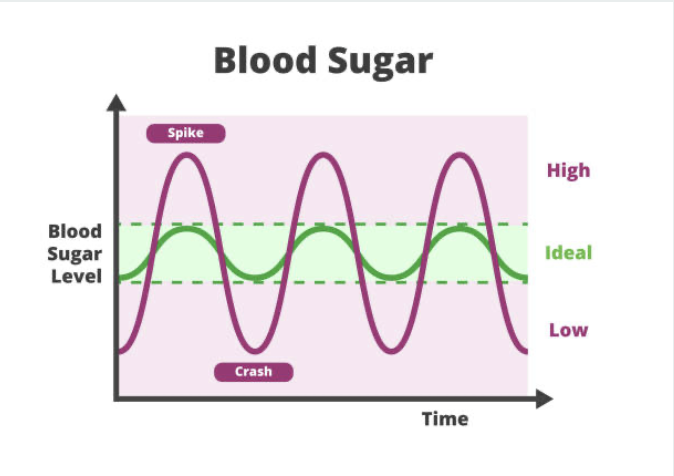
When you consume a meal rich in refined or fast-acting carbohydrates (like white bread, processed snacks, or sugary beverages), the glucose is rapidly absorbed into your bloodstream. This creates a sharp, steep spike on your continuous glucose monitor (CGM) graph.
1. Oxidative Stress and Glycation
The rapid influx of glucose overwhelms the system. One of the most immediate forms of damage is caused by:
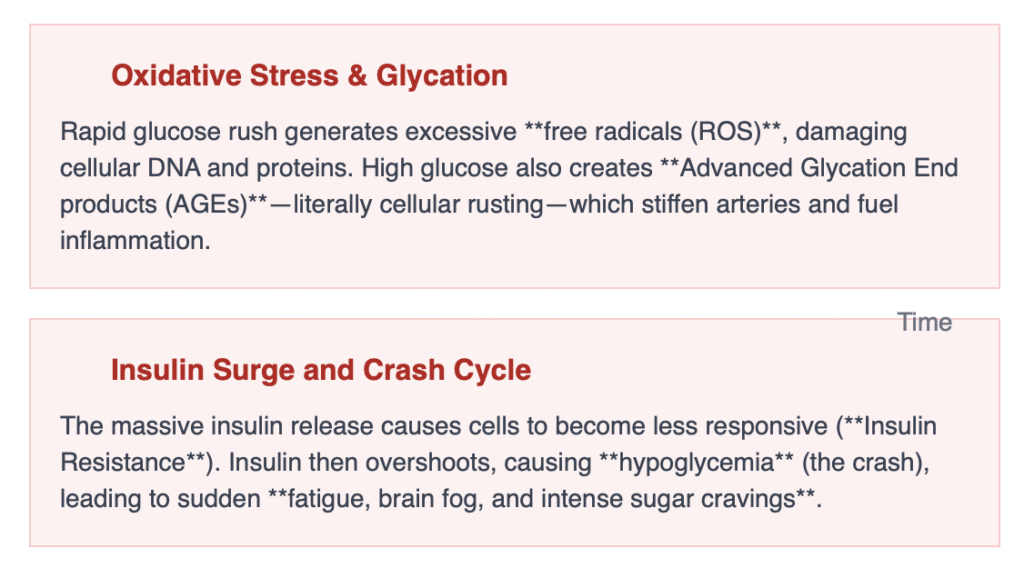
- Oxidative Stress: The cellular machinery struggles to process the sudden glucose rush, leading to the creation of excessive reactive oxygen species (ROS) or free radicals. These free radicals damage cell membranes, proteins, and DNA, contributing directly to cellular aging and dysfunction.
- Glycation: High levels of glucose can non-enzymatically attach themselves to proteins and fats in a process called glycation. This forms toxic compounds known as Advanced Glycation End products (AGEs). AGEs are the literal embodiment of cellular rusting; they stiffen arteries, damage collagen (causing wrinkles), and fuel inflammation. The higher the peak, the more opportunity for damaging glycation to occur.
2. The Insulin Surge and Crash Cycle
In response to a sharp glucose spike, your pancreas releases a massive, proportional surge of insulin—the hormone tasked with clearing the glucose from the blood.
- Insulin Resistance: Constant, repeated insulin surges are the primary mechanism that drives cells to become less responsive to insulin’s signal, leading to insulin resistance. This state is the precursor to pre-diabetes, Type 2 diabetes, and many other chronic diseases.
- Energy Crash and Cravings: The large insulin release overshoots the target, quickly clearing the blood sugar and often driving the levels too low (hypoglycemia) minutes or hours later. This drop is perceived by the brain as a crisis, triggering a sudden wave of fatigue, brain fog, and intense, immediate cravings for more sugar—perpetuating a vicious, unhealthy cycle. [Image illustrating a sharp blood sugar spike followed by a crash, next to a stable, flattened curve with no crash]
🧠 Stability Heals: The Benefits of a Flat Curve
In stark contrast, when blood sugar is stable—meaning the post-meal glucose curve is flattened and low—the body operates efficiently, reaping enormous benefits:
- Reduced Inflammation: Lower, slower spikes minimize oxidative stress and AGE formation, reducing the foundational chronic, low-grade inflammation that underlies cardiovascular disease, cancer, and autoimmune disorders.
- Sustained Energy: Avoiding the post-meal crash means stable energy, mental clarity, and focus that lasts hours. The brain is optimally fueled, not crashing from reactive hypoglycemia.
- Natural Weight Management: When insulin levels remain stable and low, the body switches from energy storage(which high insulin promotes) to energy burning. This makes it much easier for the body to access and utilize stored fat for energy.
- Hormonal Balance: Stable glucose is vital for balancing other key hormones, including cortisol and ghrelin (the hunger hormone), leading to better sleep and less food obsession.
The primary goal of metabolic health is therefore not to count calories, but to flatten your glucose curves.

👀 One Timing Trick Flattens the Spike: The Acidic Appetizer
While two major dietary tricks—fiber/protein sequencing and vinegar consumption—are powerful tools, they can be easily combined into one simple, actionable “pre-meal trick” that takes seconds: The Acidic Appetizer.
Before you eat a meal containing carbohydrates, strategically introduce an acidic element combined with a small source of fiber/protein.
The Mechanism: Vinegar and Acetic Acid
Research, particularly from studies focused on improving glucose tolerance, has demonstrated the potent glucose-lowering effect of acetic acid (the main component of vinegar).
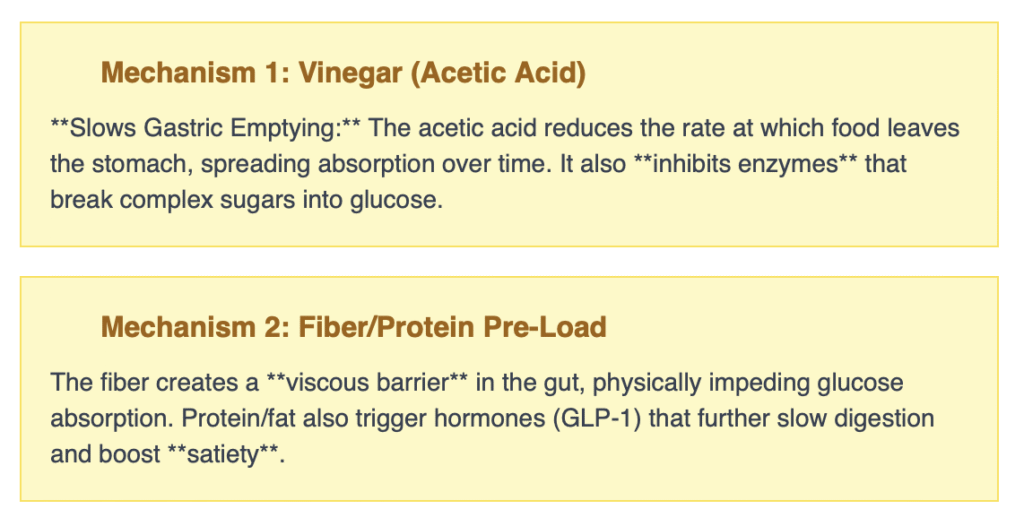
- Gastric Emptying Delay: Acetic acid works by slowing down the rate at which food leaves your stomach and enters the small intestine. This delay, known as slowing gastric emptying, means the carbohydrates are digested and absorbed into the bloodstream over a longer period, resulting in a lower, wider, and flatter glucose curve. [Image showing the stomach and small intestine, with vinegar slowing the passage of food from the stomach to the small intestine.]
- Enzyme Inhibition: Acetic acid also appears to temporarily inhibit certain enzymes (like disaccharidases) on the brush border of the small intestine, which are responsible for breaking down complex sugars into absorbable glucose. By inhibiting these enzymes, less sugar is available for immediate absorption.
- Muscle Glucose Uptake: Some evidence suggests acetic acid may also improve the ability of muscles to absorb glucose from the blood, making them more sensitive to insulin.
The Mechanism: Fiber/Protein Pre-Load
As explored in depth by metabolic researchers, starting the meal with a small amount of fiber and protein provides a crucial physical buffer:
- Fiber Barrier: The fiber (from vegetables or seeds) forms a viscous barrier in the digestive tract, physically impeding the rate of glucose absorption.
- Hormonal Satiety: Protein and fat trigger the release of gut hormones (like GLP-1) that further slow digestion and induce satiety, naturally causing you to eat less of the subsequent carbohydrates.

⏳ The Pre-Meal Trick: Your Optimal Protocol
To implement this simple, high-impact strategy, you need to combine the two elements into a Pre-Meal Acidic Fiber/Protein Shot.
The Optimal Pre-Meal Trick:
Consume this mixture 5 to 15 minutes before your meal containing carbohydrates.
- Ingredients:
- 1-2 teaspoons of Apple Cider Vinegar (ACV) or white vinegar.
- Mixed with a glass of water (dilution is key to protect tooth enamel).
- Optional Boost: Add a small piece of protein/fat/fiber, such as a couple of nuts, a spoonful of chia seeds, or a small handful of plain salad greens.
Practical Applications:
- The Salad Starter: At a restaurant, order a simple side salad with an oil and vinegar dressing (use a generous amount of vinegar) and eat it entirely before your main course. This provides fiber, fat, and acetic acid.
- The ACV Shot: At home, mix the vinegar into a small glass of water and drink it 10 minutes before sitting down. Chase it with two almonds or a tablespoon of pumpkin seeds.
- The Pickled Pre-Load: Eat a few slices of low-sugar pickles (fermented cucumbers) or pickled vegetables before your meal. The brine contains acetic acid and the vegetable provides fiber.
- The Smoothie Strategy: If you have a high-carb smoothie or juice, include a shot of vinegar in the mix.
Caveats and Considerations:
- Tooth Enamel Protection: Always dilute the vinegar heavily with water. Do not sip it straight. Rinse your mouth with plain water afterward and wait at least 30 minutes before brushing your teeth.
- Digestive Comfort: Start with a smaller dose (1 teaspoon) and gradually increase, as some individuals may experience mild acid reflux or stomach irritation initially.
- Consistency is Key: This trick is most effective when used consistently, particularly before meals that are likely to cause a significant spike (e.g., pasta, pizza, desserts, large servings of starchy foods).

The Longevity Dividend: Stabilizing Your Future
The cumulative effect of consistently blunting glucose spikes is a profound shift in your metabolic landscape. Over years and decades, this simple, conscious choice transforms the body’s internal environment:
- Less Chronic Damage: Reduced AGE formation and oxidative stress slow down the aging process in vital organs and tissues.
- Improved Mitochondria: Stable glucose provides a smoother energy supply, allowing your cellular powerhouses (mitochondria) to operate more efficiently, reducing energy waste and ROS production.
- Reversed Insulin Resistance: Consistent stability gives the pancreas a rest and allows cells to regain their sensitivity to insulin, which can reverse metabolic dysfunction over time.
You don’t need to commit to an extreme diet. You need a commitment to metabolic order. By applying this pre-meal trick, you are inserting a powerful chemical and mechanical buffer into your digestive process, ensuring that the carbohydrates you choose to eat are delivered to your system on an escalator, not dropped off a cliff.
The lesson is clear: If you want to heal, gain sustained energy, shed cravings, and age gracefully, stop focusing on elimination and start mastering stabilization.