


Imagine having a remote control for your nervous system, a simple, instantaneous switch that could shift you out of panic and into a state of profound calm. You do, and it’s not a gadget—it’s a sheet of muscle located at the base of your ribs: your diaphragm.
In our high-stress, always-on world, chronic anxiety, rapid heart rate, and tension are often treated as purely psychological problems. However, the root cause for many lies in a simple mechanical dysfunction: the way we breathe. Most people breathe shallowly from their chest, a pattern that constantly signals danger to the brain, locking the body into a perpetual state of “fight or flight.”
The diaphragm, the primary muscle of respiration, is the physical key to unlocking the body’s “rest and digest” state.When used correctly, it is the most potent, drug-free tool available for instantly regulating your stress levels, lowering your blood pressure, and improving your physical and mental health. The good news? You can instantly adjust your posture to unlock this powerful breathing mechanism.
https://www.youtube.com/watch?v=Mg2ar-7_HfA
💡 The Two Ways to Breathe: Chest vs. Diaphragm
Breathing is an autonomic (involuntary) process, but it has two distinct modes, each tied to a different branch of the nervous system.
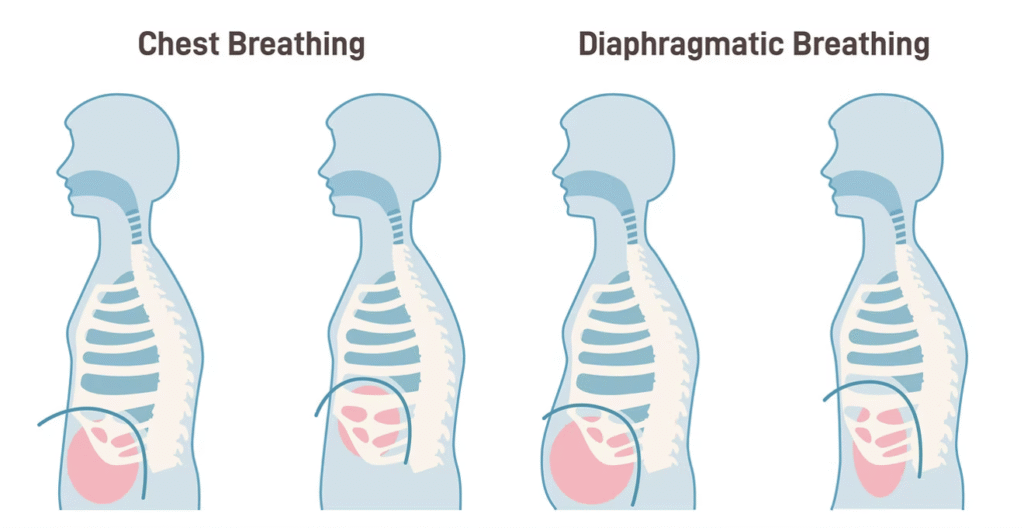
1. Thoracic (Chest) Breathing: The Stress Signal
When you breathe rapidly, lifting your shoulders and expanding only your upper chest, you are engaging in thoracic breathing. This is the emergency mode of respiration.
- Mechanism: It relies heavily on smaller, accessory muscles in the neck (scalenes and sternocleidomastoid) and shoulders. These muscles are designed for short, powerful bursts of air, usually during periods of intense physical exertion or acute stress.
- The Message to the Brain: By using these muscles, the body interprets the breathing pattern as a sign of imminent threat (e.g., running from danger or preparing for a confrontation). This activates the Sympathetic Nervous System (SNS), initiating the fight-or-flight response.
- The Result: The SNS releases stress hormones (cortisol and adrenaline), heart rate and blood pressure increase, digestion slows, and muscles tense. When this pattern becomes chronic, the body remains in a constant state of hyperarousal and anxiety.
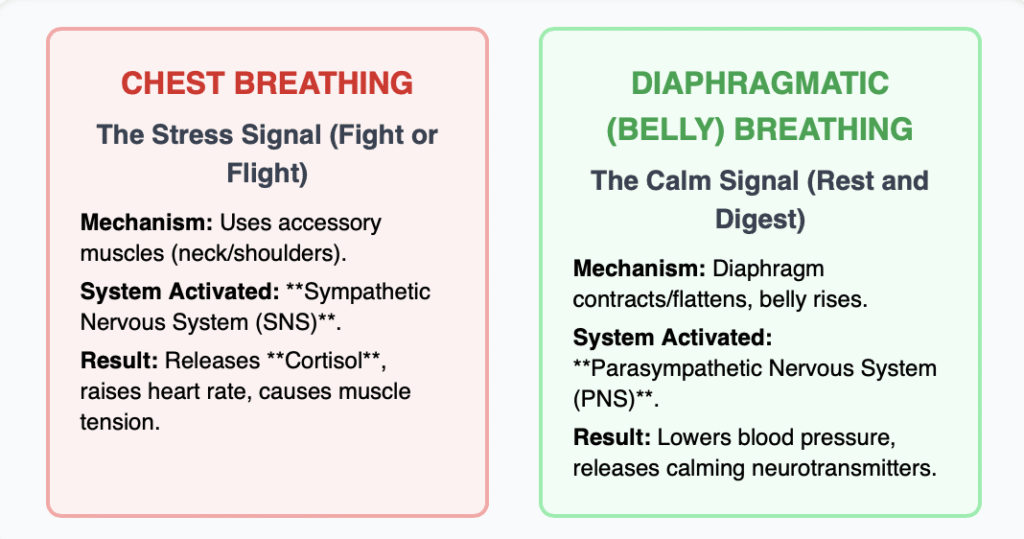
2. Diaphragmatic (Belly) Breathing: The Calm Signal
When you breathe deeply, allowing your belly to rise and fall while your chest remains relatively still, you are using your diaphragm. This is the intended, default mode of rest and calm.
- Mechanism: The diaphragm, a dome-shaped muscle beneath the lungs, contracts and flattens, pulling air deep into the lower lobes of the lungs where gas exchange is most efficient. This movement creates a gentle pressure that massages the abdominal organs.
- The Message to the Brain: This slow, rhythmic movement signals safety. The gentle, consistent motion of the diaphragm directly stimulates the Vagus Nerve, which is the main highway of the Parasympathetic Nervous System (PNS), the rest-and-digest branch.
- The Result: The PNS releases calming neurotransmitters, heart rate slows (often causing a noticeable, immediate reduction in resting heart rate), blood pressure drops, muscle tension eases, and the body can properly focus on digestion and repair.
The diaphragm is not just a muscle for breathing; it’s a direct physical regulator of your nervous system state.
🧠 The Vagus Nerve Connection: Hitting the Nervous System’s Reset Button
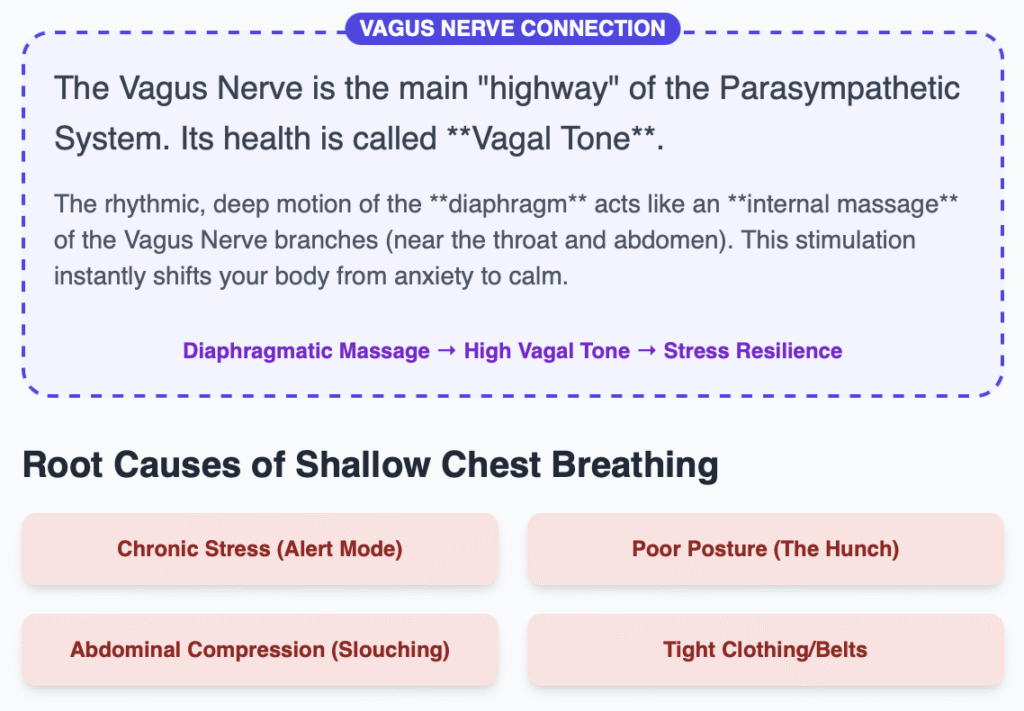
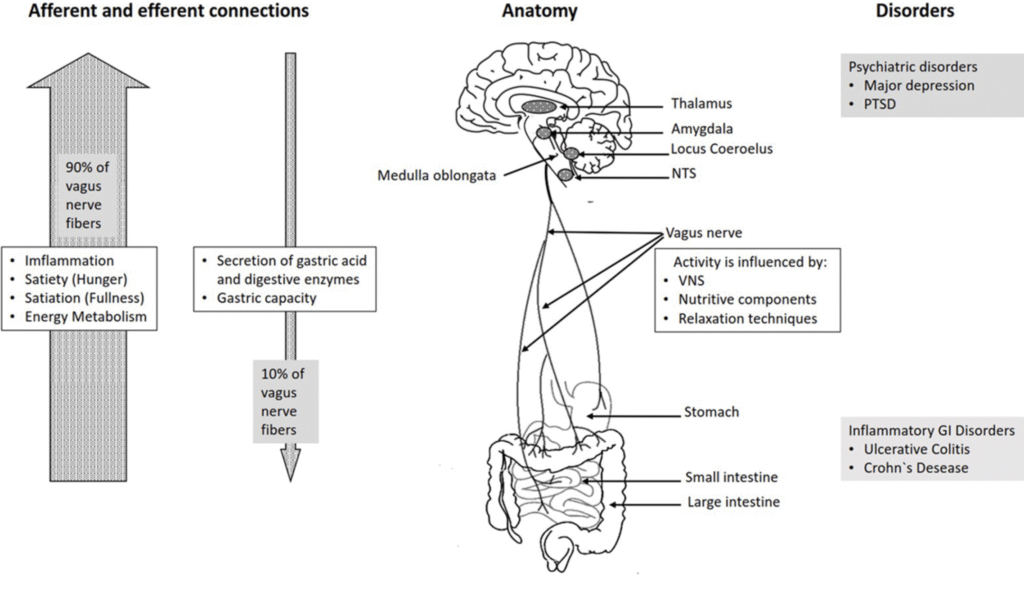
The most powerful effect of diaphragmatic breathing stems from its influence on the Vagus Nerve.
The Vagus Nerve is the tenth cranial nerve and the longest nerve in the autonomic nervous system, running from the brainstem down to the abdomen, touching the heart, lungs, and gut. It is essentially the body’s superhighway for communicating the state of the organs back to the brain.
- Vagal Tone: The health and activity of the Vagus Nerve are referred to as Vagal Tone. A high Vagal Tone is associated with resilience to stress, faster recovery from stressful events, and better overall physical and mental health.
- The Diaphragmatic Massage: The rhythmic, deep motion of the diaphragm as it contracts and releases acts like an internal massage of the Vagus Nerve (specifically the branches near the throat and abdomen).
- Instant Calm: This constant, gentle stimulation of the Vagus Nerve is what instantly shifts the body from SNS dominance (fight or flight) to PNS dominance (rest and digest), literally reversing the physiological markers of stress within seconds.
By adopting diaphragmatic breathing, you are physically exercising and strengthening your Vagal Tone, improving your capacity to handle stress over time, not just in the moment.
The Root Cause: Why We Became Chest Breathers
If diaphragmatic breathing is our natural state (infants and sleeping people breathe from their bellies), why do so many adults default to shallow chest breathing? The reasons are a blend of biology, lifestyle, and culture:
- Chronic Stress: Repeated exposure to minor, daily stressors (traffic, emails, deadlines) teaches the body to adopt the “alert” chest-breathing pattern, which becomes habitual.
- Poor Posture (The Hunch): Slouching at a desk or looking down at a phone compresses the abdominal cavity.This physically restricts the diaphragm’s ability to descend, forcing the body to rely on the smaller, upper chest muscles for air.
- Cultural Pressure: Social and cultural pressures, particularly for women, often promote “sucking in” the stomach for aesthetic reasons, which actively prevents the diaphragmatic expansion needed for deep breathing.
- Tight Clothing: Restrictive belts and tight clothing around the waist and ribs can also physically impede the diaphragm’s full range of motion.
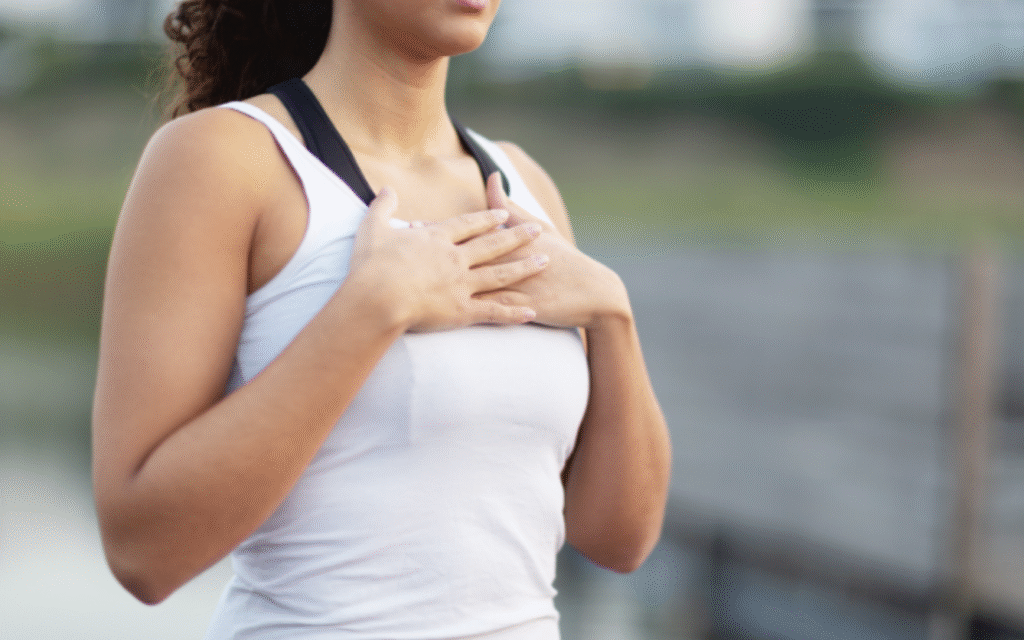
👀 One Posture Adjustment Unlocks Diaphragmatic Breathing Instantly
The fastest and most effective way to reconnect with your diaphragm is not by intellectual effort or conscious muscle control, but by physically repositioning your body to remove the mechanical obstructions.
The most powerful “trick” is to restore your pelvic alignment and open your lower rib cage.
The Posture Adjustment: The Simple Sit or Stand
The key is to create the space required for the diaphragm to move freely:
- Sit or Stand Tall: Whether sitting at a desk or standing, ensure your spine is elongated.
- Find Your “Neutral Pelvis”: Instead of slouching (tucking the pelvis under, flattening the low back) or arching excessively (pushing the belly out, swaying the low back), find the position in between. Imagine your pelvis is a bucket of water—keep the water level.
- The Key Action: Gently let your lower abdominal muscles relax. Allow a slight, natural inward curve in your lower back (lumbar lordosis). This posture naturally encourages the diaphragm to drop down.
- Widen Your Rib Cage: Focus on allowing your lower ribs to expand laterally (out to the sides) and slightly forward during inhalation, rather than just lifting the chest up.
- Shoulder Check: Gently roll your shoulders back and down. This relaxes the accessory neck and chest breathing muscles, forcing the diaphragm to take over the work.
When you achieve this alignment, the diaphragm has the necessary room to drop and flatten, immediately activating deep, abdominal breathing.
The Practice Protocol (The 2-Minute Reset)
Once you’ve found the correct posture, try this simple sequence to retrain your nervous system:
- Sigh First: Take one large, audible sigh out of your mouth. This acts as a physical reset, immediately releasing any trapped tension and signaling to the brain to slow down.
- The 4-6-8 Count:
- Inhale Slowly for 4 seconds: Breathe in through your nose, focusing on the feeling of your belly expandingoutward and your lower ribs widening. Keep your chest still.
- Hold for 6 seconds: A gentle pause helps increase oxygen absorption.
- Exhale Slowly for 8 seconds: Purse your lips slightly and exhale slowly through your mouth. The extended exhale is the most powerful component for activating the Vagus Nerve.
- Repeat: Do this cycle for 2 to 5 minutes, or any time you feel a wave of anxiety, stress, or anger coming on.
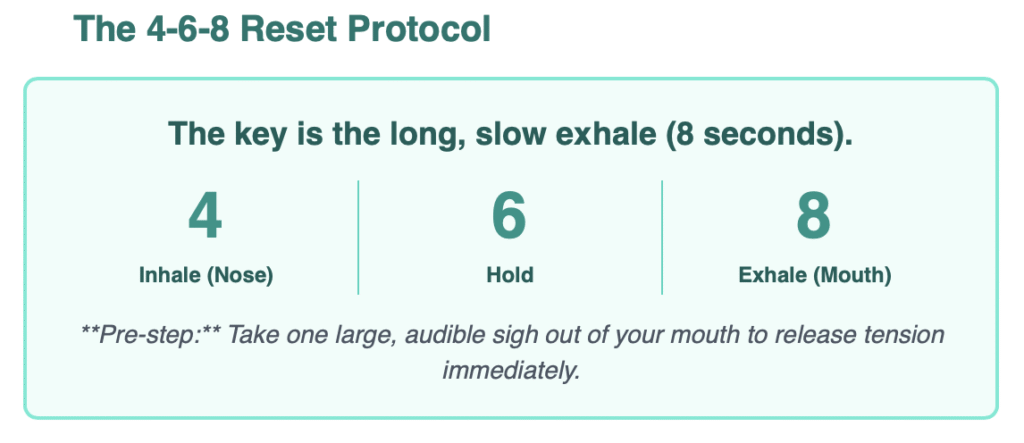
The extended, gentle exhale of 8 seconds is the key to immediately slowing the heart rate variability and sending a powerful “all clear” signal via the Vagus Nerve.

The Longevity and Health Implications
Mastering diaphragmatic breathing is not just about feeling less stressed; it’s about optimizing physiological function for long-term health:
- Improved Digestion: The massaging action of the diaphragm stimulates the gut (peristalsis) and promotes the PNS state necessary for efficient nutrient absorption.
- Stronger Core: The diaphragm works synergistically with the deep abdominal muscles (transversus abdominis) and the pelvic floor. Using it correctly is essential for a stable, strong core and healthy posture.
- Better Sleep: Switching from SNS-dominant chest breathing to PNS-dominant diaphragmatic breathing before bed is one of the most effective ways to treat stress-induced insomnia.
- Immune System Boost: By reducing cortisol and inflammation, and by stimulating lymphatic flow through its pumping action, diaphragmatic breathing supports a more robust immune response.

Takeaway
Your breath is the single most controllable factor tied directly to your nervous system. By defaulting to shallow chest breathing, you are inadvertently holding your body captive in a high-alert, fight-or-flight state.
The fastest way to unlock your internal calming mechanism is not through meditation, but through mechanical alignment and physical posture.
The pre-meal trick is simple: Sit or stand tall, relax your lower abdomen, and feel your lower ribs widen on the inhale.
Commit to the 4-6-8 breathing protocol for just two minutes a few times a day, focusing on the long, slow exhale. By making this simple postural and breathing adjustment, you seize control of your diaphragm, silence the stress signals, and activate your body’s innate power to heal and find calm.