


For decades, the health narrative around exercise and cancer was straightforward: staying active reduces cancer risk primarily by maintaining a healthy weight and improving general metabolic health. The benefits were viewed as indirect, secondary effects of calorie burning and better insulin sensitivity.
But modern nutritional and exercise science is rewriting this entire story.
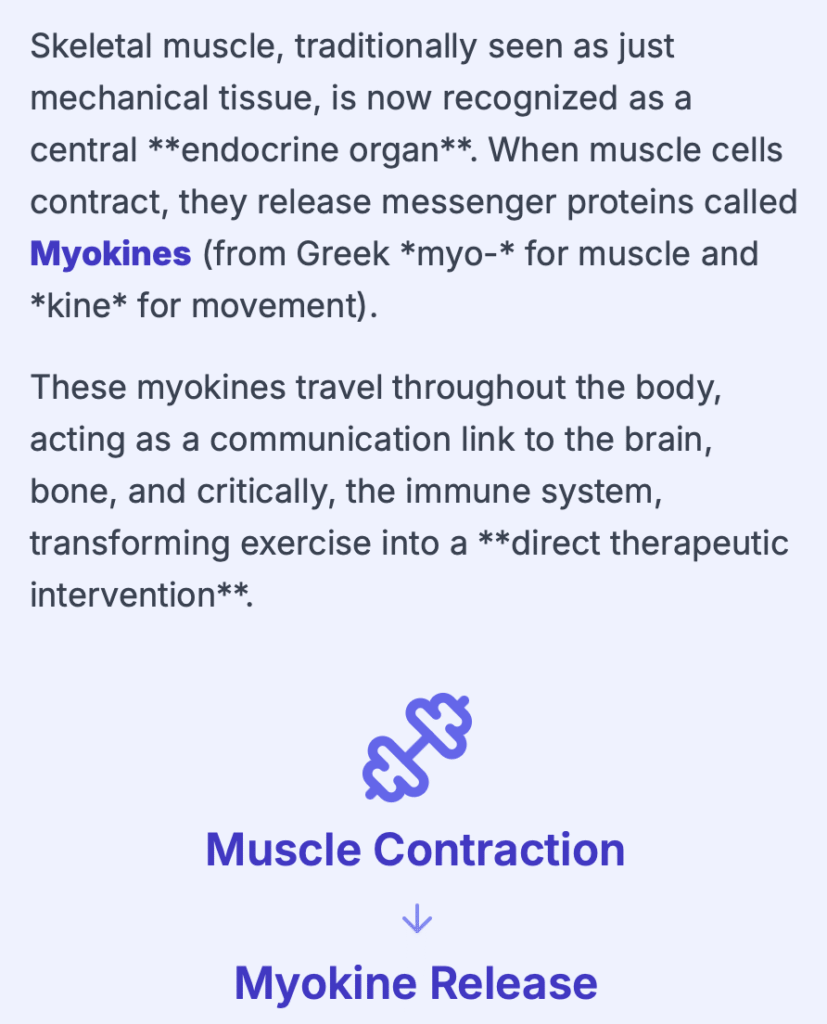
We are no longer just talking about fitness; we are talking about biochemistry. Research, especially over the last decade, has revealed a far more profound mechanism: when you contract a muscle—especially during strength training—it acts like a tiny pharmacy, flooding your bloodstream with powerful signaling molecules known as myokines. These myokines are direct, potent, anti-inflammatory agents that can actively suppress tumor growth, promote cancer cell death, and re-educate your immune system to hunt down malignant cells.
This revelation completely changes how we view exercise—from a mere preventative measure to a direct, therapeutic intervention. The greatest surprise? The amount of effort needed to trigger this internal pharmacy is far less than previously assumed. It’s time to look past the sweat and see the science.
The Biochemistry of Hope: The Muscle as an Endocrine Organ

To appreciate the anti-cancer effect of strength training, we must first understand the fundamental shift in biological thinking: Skeletal muscle is an endocrine organ.
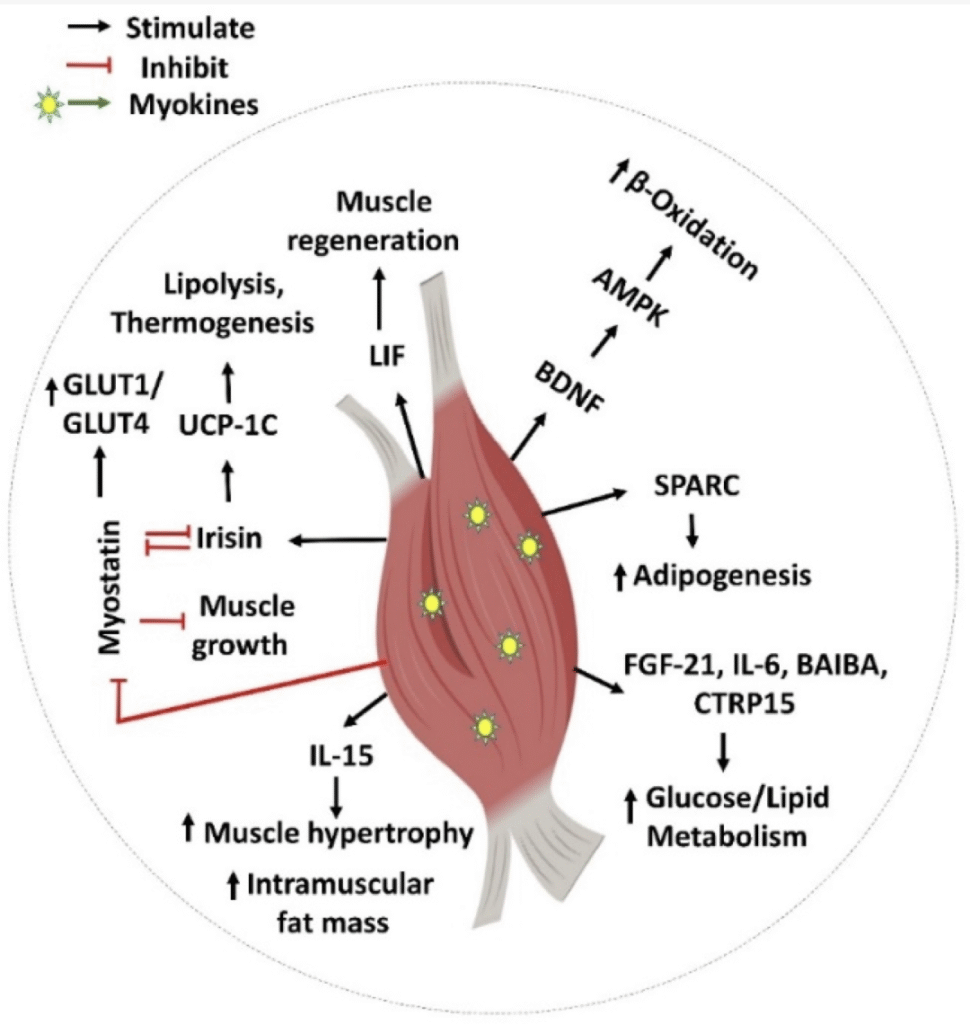
Traditionally, endocrine organs were defined as glands that secrete hormones into the bloodstream (like the thyroid, pancreas, and adrenal glands). We thought of muscle tissue only in terms of movement and energy storage. But when muscle cells contract—a process called excitation-contraction coupling—they release messenger proteins and peptides directly into the circulation. These are the myokines (derived from the Greek myo- for muscle and kine for movement).
These sophisticated molecules travel throughout the body, acting as communication links between the muscle, the brain, adipose tissue, bone, and, crucially, the immune system and cancer cells. This discovery moves muscle from a simple mechanical machine to a central regulator of whole-body health and disease management.
It also provides a stark contrast to the molecules released by fat tissue, known as adipokines. While some adipokines are beneficial, excess visceral fat secretes pro-inflammatory adipokines that fuel systemic, low-grade inflammation—the perfect breeding ground for cancer development and progression. Myokines, in essence, act as the body’s natural counter-regulatory mechanism against the toxic signals of chronic inactivity and excess fat.
The Anti-Cancer Arsenal: Key Myokines in Action

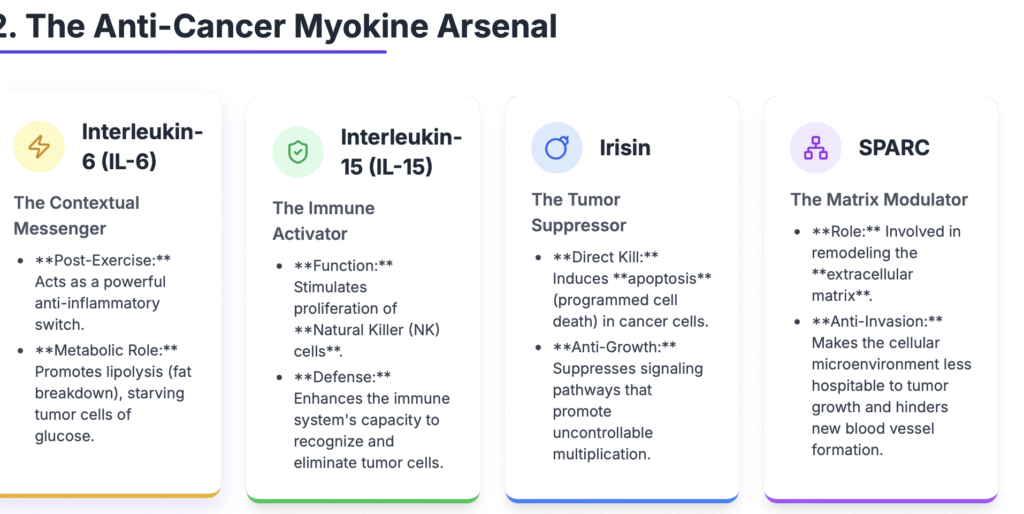
Dozens of myokines have been identified, each with a unique physiological role. However, several stand out for their direct, documented effects against tumor cells and cancer pathways. They represent a pharmacological cocktail released by your own body, designed for defense.
1. Interleukin-6 (IL-6) – The Contextual Messenger
IL-6 is perhaps the most misunderstood myokine. In its chronic state—released by fat tissue or stressed cells—IL-6 is pro-inflammatory and linked to autoimmune disease, heart disease, and cancer progression.
However, IL-6 released by contracting muscle (often spiking 100-fold after intense exercise) is acute and therapeutic. Post-exercise, IL-6 acts as a powerful anti-inflammatory switch, inhibiting the production of other damaging inflammatory factors. It also plays a key role in metabolic health, regulating glucose uptake and promoting lipolysis (fat breakdown), thereby starving tumor cells that rely heavily on glucose.
2. Interleukin-15 (IL-15) – The Immune Activator
IL-15 is a critical player in immune surveillance. Its primary function is to stimulate the proliferation and activation of T-cells and Natural Killer (NK) cells. NK cells are the immune system’s frontline defense; they are responsible for identifying and destroying cells that are either virally infected or cancerous.
By boosting NK cell activity, strength training directly enhances the immune system’s capacity to recognize and eliminate nascent or circulating tumor cells before they can establish a dangerous colony. Research suggests IL-15 can directly inhibit the growth of various cancer lines, including melanoma and breast cancer.
3. Irisin – The Tumor Suppressor
Irisin is a myokine released in response to both resistance and aerobic exercise. It was first identified for its role in converting white adipose tissue (fat storage) into brown adipose tissue (metabolically active, calorie-burning fat).
Beyond metabolic benefits, Irisin has demonstrated direct anti-tumor properties:
- Apoptosis Induction: Irisin can induce apoptosis, or programmed cell death, in several types of cancer cells, including those found in colon and prostate cancer.
- Anti-Proliferative: It suppresses the signaling pathways that tell cancer cells to multiply uncontrollably.
- Reduced Metastasis: It may inhibit the ability of tumor cells to migrate and form secondary tumors (metastasis).
https://youtu.be/Aw7UP167SYQ?si=1N6MDmbx-9lrWRve
4. Secreted Protein Acidic and Rich in Cysteine (SPARC) – The Matrix Modulator
SPARC, also known as osteonectin, is involved in remodeling the extracellular matrix (the scaffolding that surrounds cells). In the context of cancer, SPARC is crucial because tumors require specific matrix conditions to grow and invade. Myokine-derived SPARC is thought to help normalize the microenvironment, making it less hospitable to tumor growth and hindering the formation of new blood vessels needed to feed the tumor (anti-angiogenesis).
The Triple Threat Mechanism: How Myokines Kill
The anti-cancer effect of exercise is not a single event but a coordinated biochemical attack driven by the collective action of myokines. The muscle signals launch a comprehensive defense system that acts on three distinct fronts: seen againnnn. Anti-Cancer Arsenal
1. Direct Targeting and Apoptosis
Myokines like Irisin and IL-15 directly bind to receptors on the surface of tumor cells. This binding initiates an internal cascade that triggers cell suicide. This is the body’s natural way of cleaning up damaged or malignant cells. This mechanism is especially relevant for common cancers like breast, colon, and prostate, suggesting that active muscle tissue provides trunk passes.
2. Systemic Inflammation Suppression
Chronic, low-grade inflammation is arguably the single most important lifestyle-related factor contributing to cancer development. It creates persistent cellular stress that damages DNA and allows tumor cells to evade the immune system.
By releasing high levels of anti-inflammatory IL-6 and other modulators, an active person’s muscles effectively perform a systemic “flush,” rapidly clearing inflammatory signals and resetting the immunological tone of the body. A cool, calm environment is one where cancer struggles to thrive.
3. Enhanced Immune Surveillance
Cancer cells are masters of hiding. They evolve mechanisms to become invisible to T-cells and NK cells. Myokines counteract this evasion by boosting the immune system’s detection and attack capabilities. This ensures that the immune system remains alert and aggressive, constantly patrolling the body for rogue cells. This is particularly important for patients undergoing treatment, as exercise can make chemotherapy and radiation more effective by priming the immune response.
The Minimum Effective Dose: The Power of Intent

The most encouraging finding for the general population is that you don’t need to train for hours every day to reap these deep biochemical rewards. The myokine flood is primarily triggered by muscle contraction and intensity, not necessarily duration.
This addresses the common barrier to exercise: the perception that one must dedicate significant blocks of time to achieve therapeutic benefits. The myokine response begins almost immediately upon reaching sufficient resistance or intensity.
While specific protocols vary, the general consensus on the minimum effective dose for eliciting a robust anti-cancer myokine response centers on two to three sessions of resistance training per week.
Key Elements of the Minimum Effective Dose:
- Frequency: 2–3 full-body sessions per week.
- Duration: 30–45 minutes per session.
- Intensity: Focus on resistance training (lifting weights, using bands, or bodyweight exercises) that causes muscle fatigue within 8–12 repetitions. This high level of contraction is what signals the muscle to release the myokines.
- Focus: Compound movements (squats, lunges, push-ups, rows) engage the largest muscle groups, maximizing the sheer volume of myokine release.
A quick, high-intensity strength session is disproportionately effective compared to a long, slow walk for this specific biochemical outcome. You are intentionally demanding a response from your muscle tissue, and the myokine reward is the body’s highly potent, anti-cancer repayment for the effort.
Beyond Cancer: The Myokine Master Regulator

The benefits of myokines extend far beyond oncology, solidifying the muscle’s status as a master regulator of health:
- Metabolic Health: Myokines significantly improve insulin sensitivity, helping the body manage blood sugar and reducing the risk of Type 2 diabetes.
- Brain Health: Contracting muscles release Brain-Derived Neurotrophic Factor (BDNF), a myokine often called “Miracle-Gro for the brain.” BDNF promotes the growth of new neurons, improves cognitive function, and acts as an anti-depressant.
- Bone Density: Myokines play a role in signaling to bone tissue, improving density and strength, and guarding against osteoporosis.
In essence, strength training is not just about looking better or getting stronger; it is the most efficient way to modulate your entire internal biochemistry, turning on protective genes and flooding your system with healing hormones.
The research is clear: the most sophisticated cancer-fighting compound is one you can generate yourself, on demand, with a manageable amount of targeted effort. The muscle, once seen as purely mechanical, is now understood as a powerful endocrine pharmacy, and you hold the prescription. The minimum effective dose is startlingly small, but the biological payout is immense. Your body is ready for the upgrade—all it takes is a few intentional, forceful contractions each week.