
The standard morning caffeine ritual is a lie.
We chase the sudden, sharp spike—the electric jolt of a coffee shot—believing that maximum energy output requires maximum input. But the truth is, this “boost” is often a biological panic button, kicking the body into a sympathetic (fight-or-flight) state fueled by cortisol, culminating in the inevitable, crushing crash a few hours later.
Matcha is different. Its reputation for providing “energy” is fundamentally misunderstood. Matcha doesn’t offer a boost; it offers stability. It smooths the sharp peaks of caffeine into a long, four-hour plateau of calm, yet intense, focus. This transformative effect is the result of a fascinating chemical partnership, a synergy that redefines what a stimulant can be.
The secret lies not just in the caffeine content, but in a specific amino acid found in high concentrations in quality, shade-grown tea: L-theanine. Understanding this molecule is the key to unlocking true, sustainable cognitive performance.
https://www.youtube.com/watch?v=bDTviImOjl4
The Jitter Paradox: Why Coffee Leads to the Crash

To truly appreciate matcha, we must first recognize the fundamental flaw in standard caffeine consumption.
When you consume a regular cup of coffee, caffeine—a powerful central nervous system stimulant—is absorbed rapidly into the bloodstream. This rapid absorption triggers a cascade of effects:
- Adrenaline Surge: Caffeine blocks adenosine receptors, which are responsible for signaling fatigue. This, in turn, often prompts the release of adrenaline, making you feel alert, but also potentially anxious, tense, and jittery.
- Vasoconstriction: Caffeine causes blood vessels to narrow (vasoconstriction), which is why it’s a common ingredient in headache medications, but it can also contribute to feelings of restlessness.
- The Crash: After the liver metabolizes the caffeine, the blocked adenosine receptors are suddenly flooded with the fatigue molecule, resulting in a steep, abrupt drop in energy, often accompanied by brain fog, irritability, and a powerful urge to seek another stimulant.
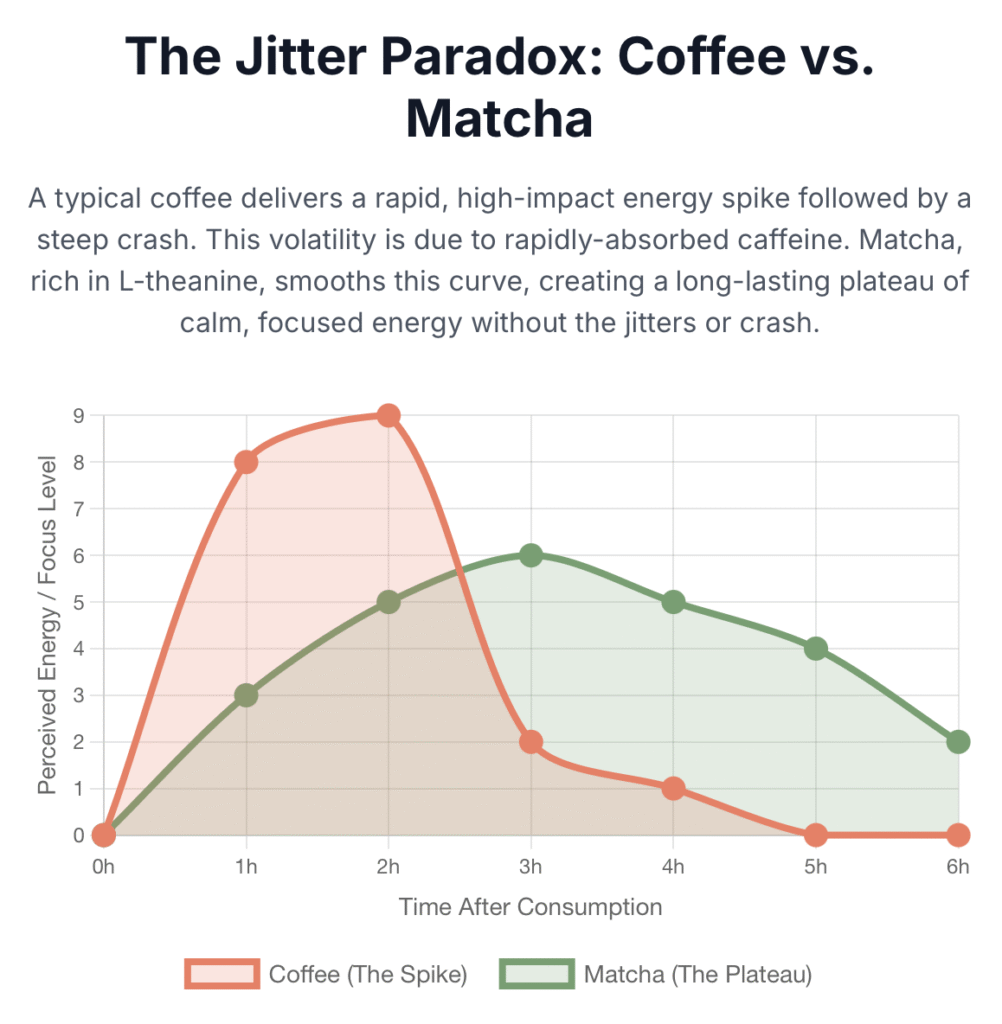
The entire process is a high-stakes, volatile energy transaction. It’s effective for short bursts of physical or mental urgency, but it’s disastrous for long-term, sustained cognitive performance or creative flow. This is where the gentle, guiding hand of matcha’s unique chemistry steps in.
The Zen Master Chemist: L-Theanine’s Role
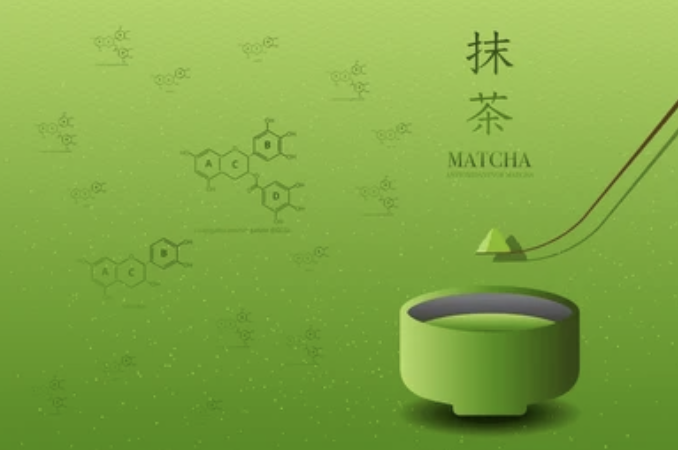
Matcha’s profound difference stems directly from the practice of shade-growing. During the last few weeks before harvest, true matcha tea leaves are covered, starving them of sunlight. This stress forces the plant to massively overproduce chlorophyll (giving it the signature electric-green color) and, more importantly, L-theanine.
L-theanine is an amino acid that functions as a natural anxiolytic (anti-anxiety) agent. Unlike caffeine, which is a stimulant, L-theanine is a neuromodulator that exerts calming, yet non-sedating, effects.
The Mechanism of Calm
The magic happens in the brain:
- Crossing the Barrier: L-theanine is one of the few dietary compounds that can easily cross the blood-brain barrier (BBB), directly influencing neurotransmitter activity.
- Alpha Wave Generation: Once in the brain, L-theanine promotes the generation of alpha brain waves. These waves are associated with a state of “wakeful relaxation,” similar to what experienced practitioners achieve during meditation, deep creative thinking, or the moments just before falling asleep. The mind is active and aware, but profoundly quieted.
- GABA Boost: L-theanine increases the levels of several calming neurotransmitters, particularly GABA (gamma-aminobutyric acid), which acts as the primary inhibitory neurotransmitter in the central nervous system. GABA counteracts overstimulation and helps regulate the brain’s “volume control.”
When you consume high-quality matcha, L-theanine and caffeine are released together in a complex matrix. L-theanine enters the brain and initiates the calming alpha wave state, while the caffeine provides the essential alert signal.
The L-theanine does two critical things to the caffeine curve:
- Mitigation: It dampens the negative, peripheral effects of caffeine, preventing the rapid heart rate, jitters, and anxiety typically associated with a caffeine dose.
- Prolongation: It alters the metabolism of caffeine, allowing it to be absorbed and released more slowly over time. This is why the “energy” from matcha is often described as a smooth, gentle ascent and a prolonged, stable four-to-six-hour focus period, rather than a spike and crash.
It is this synergistic combination—alertness guided by calm—that makes matcha a unique cognitive tool, achieving the rare blend of focused attention without nervous energy.
Sustained Attention: Meditation in a Cup

The stable energy curve provided by the L-theanine-caffeine pairing translates directly into measurable improvements in cognitive function. The brain state produced is highly desirable for complex, multi-tasking, or demanding intellectual work.
Research consistently shows that subjects consuming the L-theanine/caffeine combination demonstrate better performance in areas relating to:
- Attention Shifting: The ability to move focus efficiently between different tasks without cognitive lag.
- Working Memory: The capacity to hold and manipulate multiple pieces of information simultaneously.
- Reaction Time: Improved speed and accuracy in response to stimuli.
This isn’t just anecdotal; it reflects a deep, sustained physiological difference. By stabilizing the energy, matcha allows the brain to operate at its highest functional level for longer, without the distraction of peripheral discomfort (jitters) or the internal noise associated with the fight-or-flight response.
The Zen Buddhist monks of Japan recognized this effect centuries ago. Matcha was not consumed as a casual morning drink but as a necessity for their intense, sustained meditation sessions (Zazen). The calm focus was not accidental; it was the direct, intended outcome of their consumption. Matcha provided the alertness required to remain motionless and present for hours, while simultaneously offering the deep, centered calm needed to achieve a meditative state.
The Commercial Conspiracy: Oxidation and Degradation
The cognitive benefits detailed above are conditional upon one crucial factor: quality.
Unfortunately, the global rise in matcha’s popularity has led to mass commercial production that cuts corners, compromising the delicate balance of the L-theanine/caffeine ratio. The difference between real, ceremonial-grade matcha and its common, often disappointing, counterpart comes down to a process called oxidation.
Real matcha production is painstaking:
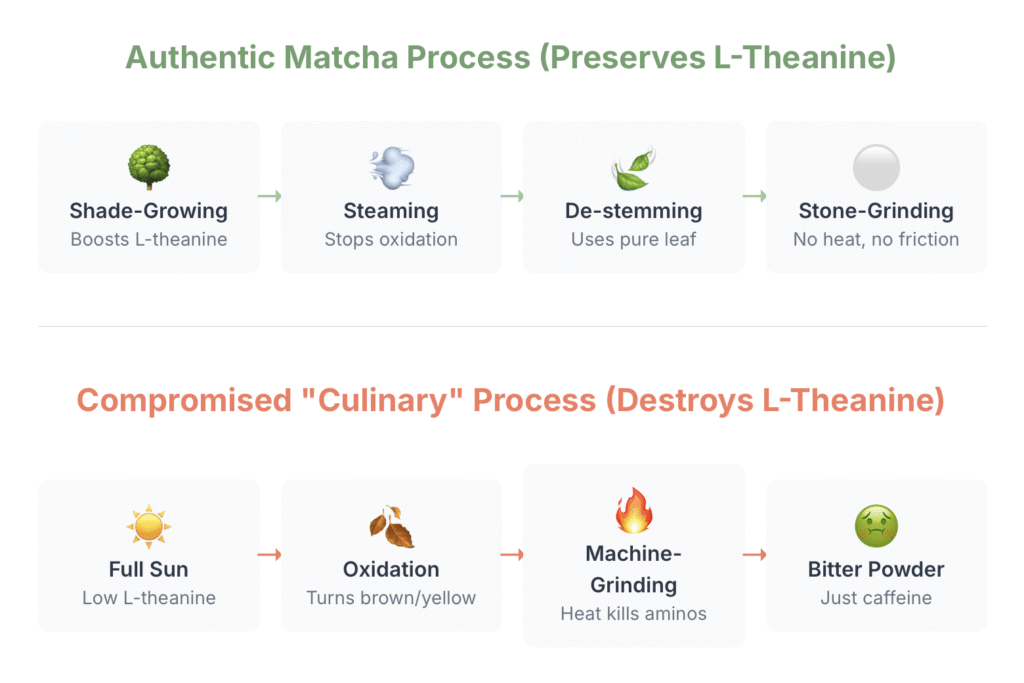
- Shade-Growing: Mandatory for L-theanine creation.
- Steaming: Immediately after picking, the leaves are flash-steamed to prevent oxidation (browning).
- De-stemming/De-veining (Tencha): Only the pure leaf flesh (Tencha) is used.
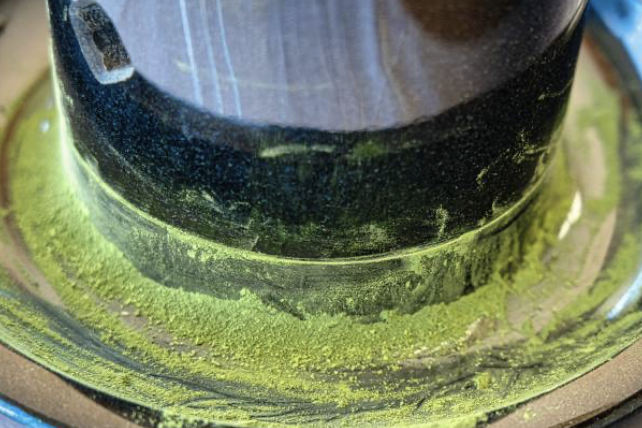
- Stone-Grinding: The Tencha is slowly ground by granite stone mills in a dark, climate-controlled environment, preserving the chlorophyll and L-theanine. This process takes approximately one hour to produce 30 grams of matcha.
When these steps are rushed or skipped—as is common in lower-cost, high-volume production—the L-theanine content degrades, and the chlorophyll oxidizes.
The Chemical Loss
- Heat/Friction: Machine-grinding generates friction and heat, which causes the delicate amino acids, like L-theanine, to break down and oxidize.
- Light/Air Exposure: Once ground, matcha powder must be stored in airtight, opaque containers. Exposure to oxygen and light rapidly degrades both the L-theanine and the vibrant green color.
- “Culinary Grade” Deception: Much of the matcha sold as “culinary grade” is composed of lower-quality leaves (often ground with stems/veins) that were never properly shade-grown, were not steamed rapidly, or were exposed to excessive heat during grinding. The result is a powder that is functionally different: it retains its caffeine but has lost much of its essential L-theanine.
This oxidized, low-theanine powder delivers a caffeine experience much closer to coffee—a spike, jitters, and a subsequent crash—leaving consumers to wrongly conclude that the “calm focus” of matcha is a myth.
Identifying Authentic Matcha
The good news is that you don’t need a chemistry lab to distinguish real, stabilizing matcha from compromised powder. Your senses are your best guide.
1. The Color Check: Vibrancy vs. Dullness
The most immediate indicator of L-theanine and chlorophyll preservation is color.
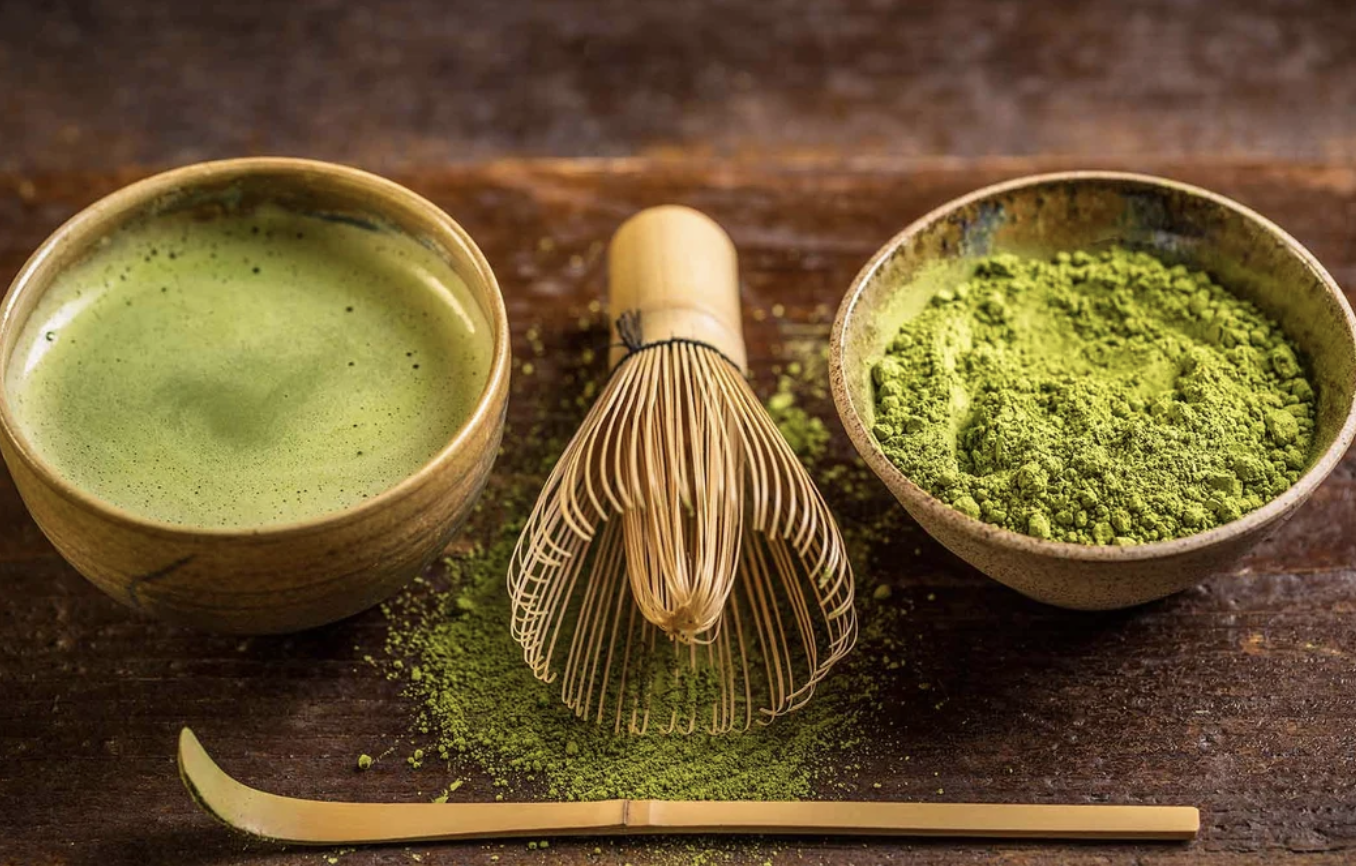
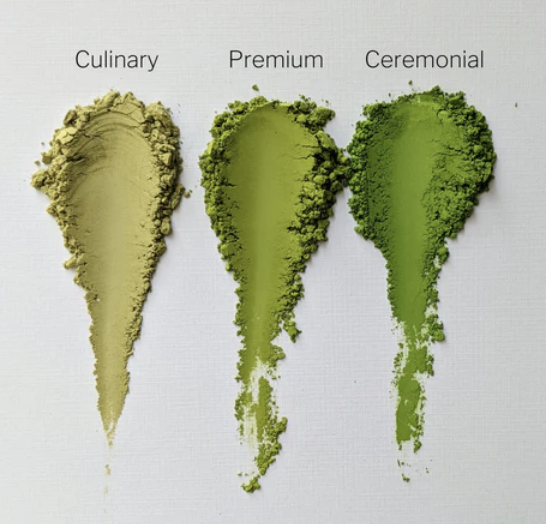
- Authentic Matcha: Should be an incredibly vibrant, almost electric or neon green. This depth of color confirms the tea was properly shade-grown and immediately processed to prevent oxidation.
- Oxidized Matcha: Will appear dull, mossy, yellow-green, or brownish. This visual dullness signals that the chlorophyll has oxidized, and along with it, much of the L-theanine content is likely degraded. If it looks like dried herbs or peas, it’s likely compromised.
2. The Texture Test: Powder vs. Grit
The quality of the grind dictates how the tea dissolves and feels.
- Authentic Matcha: Should be impossibly fine—finer than flour or baby powder. When rubbed between two fingers, it should disappear completely without any grittiness. This ultra-fine texture is the result of slow, traditional stone-grinding.
- Compromised Matcha: May feel gritty or chunky, indicating high-speed machine grinding that generated heat, degrading the L-theanine and resulting in larger, inconsistent particles that will not whisk well.
3. The Taste Profile: Umami vs. Astringency
The taste is the final, definitive check.
- Authentic Matcha: The dominant flavor should be umami (savory, rich, and full-bodied) with a natural, subtle sweetness. This distinct umami flavor is produced directly by high concentrations of L-theanine and other amino acids. It should be palatable and smooth, even when unsweetened.
- Oxidized Matcha: Will taste intensely bitter or astringent. This harshness is the taste of degraded chlorophyll and oxidized catechins, confirming the powder is too old or was poorly processed. If you need copious amounts of sugar to make it drinkable, you are likely drinking low-quality, low-theanine powder.
4. The Source and Grade Check
Always look for a few key phrases on the packaging:
- Grade: Look for “Ceremonial Grade” or labels that indicate the use of first-harvest leaves.
- Origin: The highest quality matcha comes from Japan, specifically from regions like Uji (Kyoto) or Nishio (Aichi).
- Storage: The packaging should be opaque, airtight, and sealed. Once opened, it should be kept sealed and cool.
By focusing on these four criteria, you move beyond the marketing hype and ensure you are buying a product that delivers the powerful, stabilizing synergy of L-theanine and caffeine.
Conclusion: The Power of Stable Energy
The journey to sustained energy is not about seeking a harder hit; it’s about establishing a foundation of physiological calm. Matcha provides this foundation by utilizing L-theanine to tame the sharp edges of caffeine, transforming it from a frantic boost into a reliable, prolonged state of focused attention.
If your matcha experience is still resulting in jitters and a crash, the problem is not the tea itself—it’s the quality of the powder. Re-evaluate your brand based on color, texture, and taste. By investing in authentic, high-quality matcha, you aren’t just buying a premium product; you are purchasing a powerful, natural tool designed for optimized cognitive performance, allowing you to achieve the coveted state of calm focus that the Zen masters perfected centuries ago.
Have you ever consciously compared the energy curve of high-quality, ceremonial matcha against your usual coffee?