

The human body is an intricate, self-regulating marvel, equipped with sophisticated mechanisms for survival, repair, and maintenance. While much of this internal maintenance happens seamlessly in the background, one of the most critical and fascinating processes occurs when we are at our most vulnerable—while we sleep. For centuries, sleep was viewed as a passive state, a period of reduced activity necessary for energy conservation. However, modern neuroscience has revealed that sleep is, in fact, an intensely active and restorative period, essential for memory consolidation, emotional regulation,and, critically, the physical cleansing of the brain. At the heart of this cleansing process lies a recently discovered biological system—the glymphatic system, often called the brain’s “trash removal system.”
This revelation has profound implications not only for general brain health but, more specifically, for the prevention and progression of neurodegenerative diseases like Alzheimer’s. The key to optimizing this nightly detoxification, researchers suggest, may come down to something as simple as the position we choose to sleep in.
The Brain’s Plumbing: Understanding the Glymphatic System

For decades, the brain was considered to be largely excluded from the body’s lymphatic network, a vascular system responsible for clearing waste, toxins, and immune cells from peripheral tissues. This absence of a conventional lymphatic system in the central nervous system (CNS) posed a puzzle: how does the brain, which is intensely metabolic and produces a significant amount of cellular waste, manage its clean-up?
The answer came with the groundbreaking discovery, primarily in animal models in the early 2010s, of the glymphatic system—a specialized perivascular network that performs the vital function of waste clearance. The term “glymphatic” is a portmanteau, combining “glia” (referencing glial cells, specifically astrocytes, which are key to the system’s function) and “lymphatic” (due to its waste-clearing role).
**How the Glymphatic System Works **
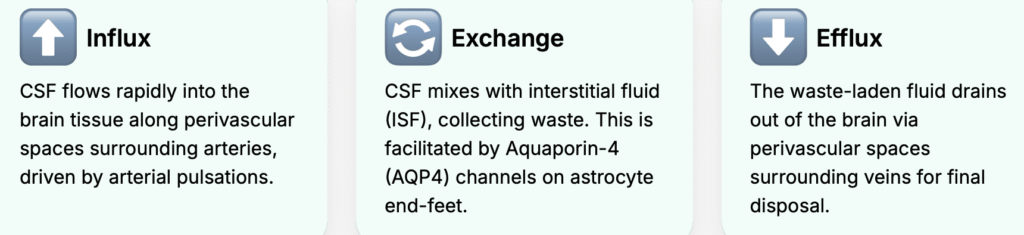
The glymphatic system functions like a sophisticated plumbing network. It utilizes the brain’s existing cerebrospinal fluid (CSF)—the clear fluid that bathes the brain and spinal cord—to flush out metabolic byproducts from the interstitial fluid (ISF), the fluid surrounding brain cells.
- Influx: CSF from the subarachnoid space flows rapidly into the brain parenchyma (the functional tissue of the brain) along the perivascular spaces (or paravascular channels) that surround penetrating arteries. This influx is thought to be driven largely by the rhythmic pulsations of the arteries.
- Exchange and Clearance: Once inside the parenchyma, the CSF mixes with the ISF, primarily facilitated by water channels called aquaporin-4 (AQP4), which are strategically located on the end-feet of astrocytes (a type of glial cell) that hug the brain’s blood vessels. This exchange acts like a microscopic sponge, washing the interstitial space and collecting metabolic waste.
- Efflux: The waste-laden fluid (now a mixture of CSF and ISF) exits the brain via the perivascular spaces surrounding the draining veins, eventually finding its way into the meningeal lymphatic vessels and deep cervical lymph nodes for final disposal from the CNS.
The Sleep-Glymphatic Nexus: Why We Must Sleep
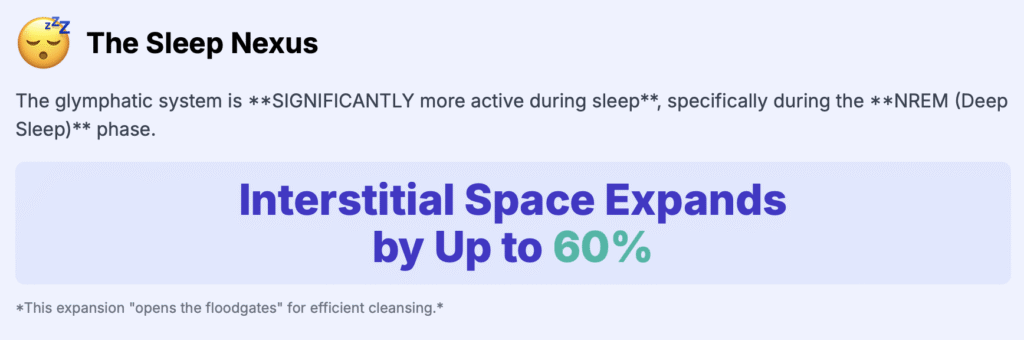
The most astonishing discovery about the glymphatic system is its dramatic change in activity between the waking and sleeping states. Researchers observed that the system is significantly more active during sleep, particularly during the deep, non-rapid eye movement (NREM) stage (also known as slow-wave sleep).
During sleep, the interstitial space in the brain—the fluid-filled area between neurons and glia—can expand by as much as 60%. This expansion, which is thought to be partly regulated by a decrease in the concentration of the neurotransmitter norepinephrine during sleep, allows the CSF-ISF exchange to become much more efficient, essentially opening the floodgates for the flushing process.
This biological necessity for waste clearance has led scientists to hypothesize that the primary, evolutionary reason for sleep across species may be this very function: to allow the brain to physically clean itself of the metabolic byproducts accumulated during the day’s high-energy activity.
The Toxin Trouble: Alzheimer’s and the Protein Problem
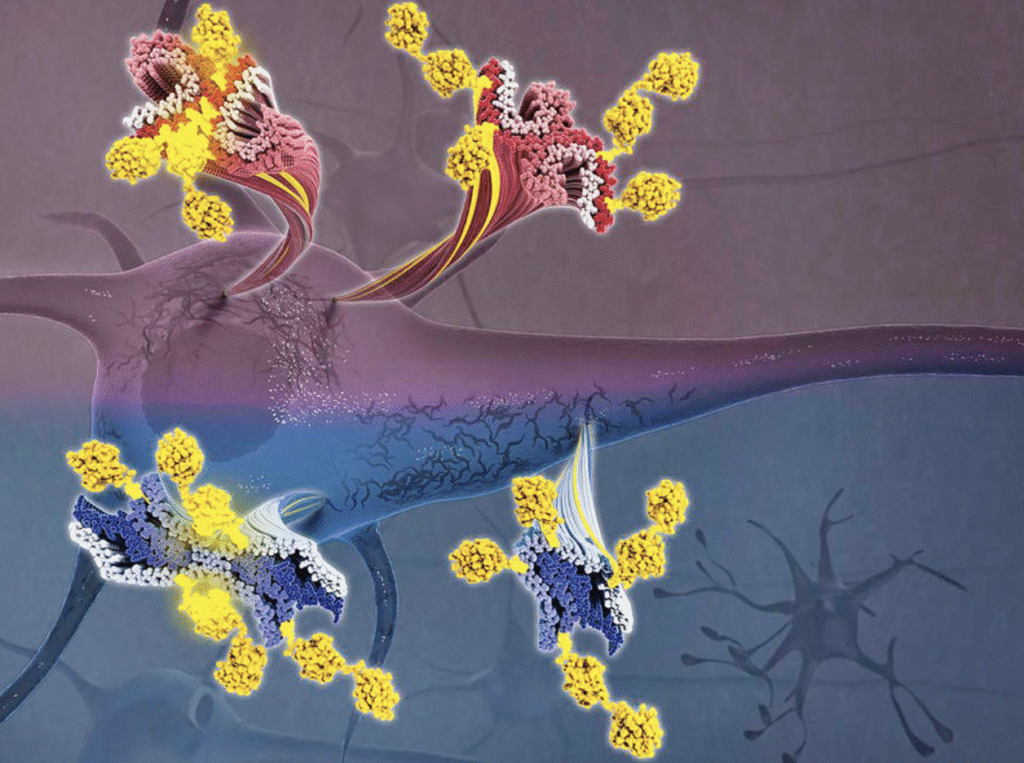
The implications of this nighttime cleaning crew are most relevant when considering neurodegenerative diseases.Conditions like Alzheimer’s disease (AD) and Parkinson’s disease (PD) are characterized by the abnormal accumulation and aggregation of specific proteins in the brain:
- Alzheimer’s Disease: Characterized by the buildup of amyloid-beta plaques (extracellular deposits) and tautangles (intracellular deposits).
- Parkinson’s Disease: Associated with the accumulation of alpha-synuclein (found in Lewy bodies).
These proteins, when misfolded or in excess, are neurotoxic and are strongly implicated in the onset and progression of cognitive decline and dementia. Research strongly suggests that the glymphatic system is a major pathway for the clearance of these very proteins. Therefore, an impairment in glymphatic function, which can occur due to age, chronic sleep deprivation, or other risk factors, is believed to contribute to the pathogenic buildup of these neurotoxic proteins.
This establishes a critical, two-way relationship: poor sleep impairs glymphatic function, leading to a greater accumulation of AD-related proteins, which, in turn, can further disrupt sleep architecture and quality, creating a vicious cycle of toxicity and cognitive decline. Improving the efficiency of the glymphatic system, therefore, presents a highly promising, non-pharmacological target for the prevention or slowing of neurodegenerative diseases.
The Critical Posture: How You Sleep Matters
https://youtu.be/zxVvGZ3r36g?si=1stCT7ZyXTZRufg5
Which brings us to the surprisingly simple, yet often overlooked, variable: sleep posture.
The premise is intuitive: just as water flow in a pipe is affected by the pipe’s angle and obstructions, the flow of CSF and ISF through the brain’s perivascular spaces might be affected by the head and body’s position during sleep.
The first key evidence came from a landmark 2015 animal study published in The Journal of Neuroscience. Researchers used dynamic contrast magnetic resonance imaging (MRI) on anesthetized rodents to track the exchange and clearance of fluid from the brain in three common sleeping positions:
- Lateral (Side) Position: Curled up on the side.
- Supine (Back) Position: Lying flat on the back.
- Prone (Stomach) Position: Lying flat on the stomach/belly.
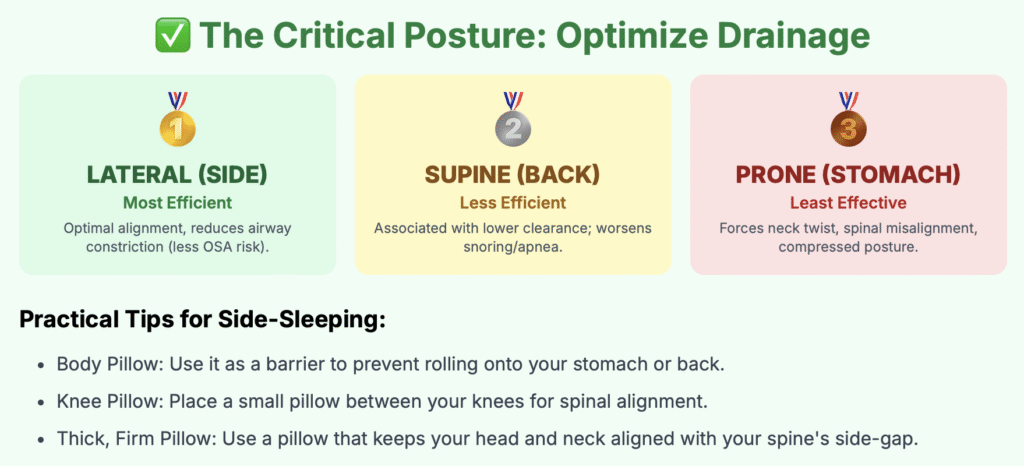
The results were compelling: the lateral (side) position was consistently associated with the most efficient glymphatic transport and clearance of waste macromolecules, significantly outperforming the supine and prone positions.
While rodents are not humans, the physiological mechanisms of fluid dynamics in the brain are expected to share key similarities. Human studies have since corroborated the importance of sleeping position, observing a correlation:individuals with mild cognitive impairment or Alzheimer’s disease tend to spend more time sleeping on their backs (supine position) compared to those with healthy cognition. This observation raises the “intriguing possibility that head position during sleep could influence the clearance of neurotoxic proteins from the brain.”
The Optimal Position: Side-Sleeping (Lateral)
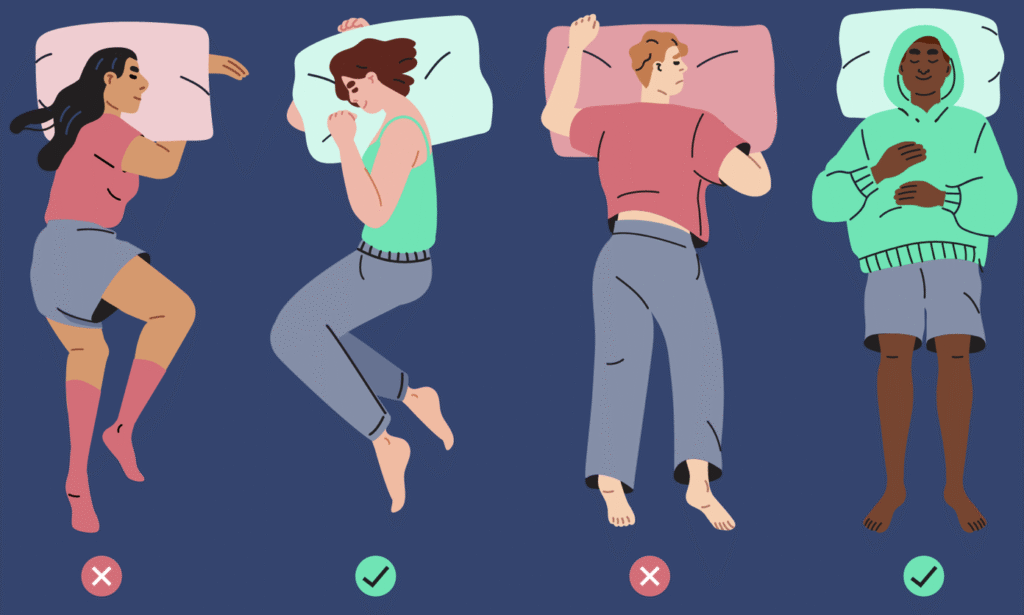
The current consensus, based on the anatomical and physiological rationale derived from these studies, points to the side-sleeping (lateral) position as the optimal posture for brain detoxification.
Why the Lateral Position is Superior:
- Optimal Alignment: The lateral position is thought to allow for the most natural alignment of the head and neck,potentially minimizing compression or constriction of the perivascular channels that facilitate glymphatic flow.
- Reduced Resistance: In the lateral position, the brain’s resistance to the CSF flow might be reduced compared to the prone or supine positions, maximizing the fluid exchange.
- Airway Clearance: Importantly, side-sleeping is also beneficial for maintaining an open airway, which can reduce the incidence and severity of snoring and obstructive sleep apnea (OSA). OSA is a major, modifiable risk factor for Alzheimer’s disease, as repeated episodes of reduced oxygenation (hypoxia) during sleep are detrimental to overall brain health and vascular function.
Left vs. Right: Does the Side Matter?
While the general lateral position is the key recommendation, some studies and health practitioners often specify the left side as potentially having additional benefits. This is primarily based on peripheral, non-glymphatic reasons:
- Digestive and Circulation: Sleeping on the left side is often recommended in certain digestive conditions (like acid reflux/GERD) and for improved overall circulation and lymphatic drainage in the rest of the body, due to the anatomical arrangement of internal organs.
- Jugular Vein Drainage: Some theories suggest that sleeping on the right side might maximize the drainage of blood from the brain via the dominant right internal jugular vein. Conversely, this same vein may become compressed in the lateral position, though the evidence is not conclusive.
For the purposes of the glymphatic system itself, the neurology literature suggests that both the left and right lateral positions are significantly better than the supine (back) or prone (stomach) positions, making the consistent habit of side-sleeping the most critical factor.
The Most Common—And Least Effective—Postures
The challenge is that many people naturally adopt positions that are less than ideal for their glymphatic system:
- The Supine (Back) Sleeper: While comfortable for spinal alignment (with proper support), back-sleeping is associated with lower glymphatic efficiency. More critically, it can significantly worsen snoring and increase the severity of sleep apnea, which, as noted, is disastrous for brain health due to chronic, low-level oxygen deprivation.
- The Prone (Stomach) Sleeper: The stomach position is widely considered the most dangerous for overall health. It forces the neck to be twisted for hours, leading to spinal misalignment, and can compress the chest and abdomen,restricting lung expansion and potentially reducing oxygen delivery to the brain. For the glymphatic system, this twisted, compressed posture is thought to further impede optimal fluid exchange.
Given that a large percentage of the population defaults to back or stomach sleeping at various points in the night, the revelation about the glymphatic system serves as a powerful call to re-evaluate one of our most fundamental daily habits.
A Call to Action: Adopting the Optimal Position
The benefits of proper sleep posture are not just theoretical; they are backed by an understanding of the brain’s physical clean-up crew. While a single night on your stomach won’t cause Alzheimer’s, a lifetime of suboptimal drainage and chronic, low-level hypoxia due to poor posture (especially if accompanied by sleep apnea) may compound the risk.
Practical Tips for Side-Sleeping
For those who are not natural side-sleepers, the habit can be learned:
- Use a Body Pillow: Place a firm body pillow in front of you and/or behind your back. This provides comfort,support, and acts as a physical barrier to prevent you from rolling onto your stomach or back.
- The Knee Pillow: For maximum comfort and spinal alignment, place a small pillow between your knees. This keeps your hips level and reduces strain on the lower back.
- Neck Support: Use a pillow that keeps your head and neck aligned with your spine. The gap between your head and the mattress is larger when you are on your side, so a thicker, firmer pillow is often necessary.
- Positional Therapy: For chronic back-sleepers, the “tennis ball technique” (sewing a tennis ball or similar object into the back of a shirt) is an old-school method that makes lying on the back uncomfortable, encouraging a shift to the side.
Beyond Position: Holistic Sleep Health
While position is a critical factor, the glymphatic system’s efficiency is equally dependent on the quality and duration of your sleep. No posture can compensate for a lack of sufficient, deep sleep.
- Prioritize 7-9 Hours: Most adults need between 7 and 9 hours of sleep per night to allow for multiple, complete sleep cycles, including the crucial NREM deep sleep phase where the glymphatic system is most active.
- Practice Sleep Hygiene: Maintain a consistent sleep schedule (even on weekends), minimize blue light exposure (from screens) at least an hour before bed, and ensure your bedroom is dark, cool, and quiet.
- Address Sleep Disorders: If you snore heavily, often wake up gasping, or feel perpetually tired despite a full night’s rest, consult a doctor for a sleep apnea evaluation. Treating sleep apnea is perhaps the single most impactful action you can take to protect your brain health.

Conclusion: The Gift of Restorative Sleep
The discovery of the glymphatic system has fundamentally changed our understanding of sleep, elevating it from a simple resting period to a life-sustaining, active process of brain decontamination. The knowledge that our brain has a powerful,nightly ‘trash removal system’ capable of flushing out the very proteins implicated in Alzheimer’s disease is both fascinating and motivating.
The final, actionable takeaway is clear: while we continue to search for pharmacological cures for neurodegenerative diseases, one of the most effective, accessible, and scientifically-supported interventions is right beneath our heads. By consciously adopting the lateral (side-sleeping) position and prioritizing restorative, deep sleep, we are giving our brain the best possible chance to clean, consolidate, and regenerate, laying the foundation for a healthier, more cognitive future.Sleeping on your side is not just a habit—it’s a critical, nightly investment in your long-term brain health.